Question
Briefly describe the importance of classification.

Answer

Importance of classification:
  1. It makes the study of such a wide variety of organisms easy.
  2. It projects before us a good picture of all life forms at a glance.
  3. It helps us understand the interrelationship among different groups of organisms.
  4. It serves as a base for the development of other biological sciences such as biogeography etc.
  5. Various fields of applied biology such as agriculture, public health and environmental biology depends on classification of pests, disease vectors, pathogens and components of an ecosystem.

Need a full question paper?

Generate a complete, print-ready paper with questions like this in minutes — across 16+ boards, with answer keys.
Start Generating Free

Similar questions

Name the gases that cause air pollution other than carbon dioxide.
Write the formulae of the following compounds. Also name the elements present in them.
  1. Water.
  2. Ammonia.
  3. Methane.
  4. Sulphur dioxide.
  5. Ethanol.
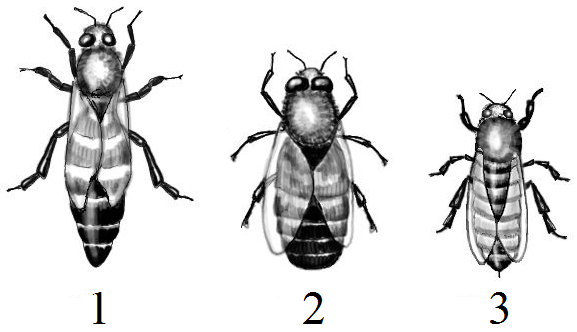
Look at Figures $1, 2$ and $3$ given alongside and answer the following questions.
  1. What do these figures show all together$?$
  2. Which one is queen bee$?$
  3. Which one of them is the haploid, fertile male$?$ What is it called$?$
  4. What is the status of the insect shown in the figure: individual/ social$?$
Give reasons for: Meristematic cells have a prominent nucleus and dense cytoplasm but they lack vacuole.
Explain the structure of neuron with the help of a labelled diagram
Calculate the work done by the brakes of a car of mass $1000kg$ when its speed is reduced from $20m/s$ to $10m/s$?
There is a large group of materials $P$ which can be divided into three groups $Q, R,$ and $S$ on the basis of their properties. The substances belonging to group $Q$ can be solids, liquids or gases. The solids belonging to group $Q$ are usually electrical insulators. Most of the substances of group $R$ are solids which are good conductors of electricity. The substances belonging to group S are neither insulators like $Q$ nor good conductors like $R$. The properties of S are intermediate between those of $Q$ and $R$.
  1. What could the group of materials $P$ be?
  2. Name the substances $Q$. Give two examples of such substances.
  3. Name the substances $R$. Write two examples of such substances.
  4. Name the substances $S$. Give two examples of such substances.
  5. Out of $Q, R$ and $S$, which substances are malleable and ductile?
An atom of element $E$ contains $3$ protons, $3$ electrons and $4$ neutrons:
  1. What is its atomic number?
  2. What is its mass number?
  3. Write the electronic configuration of the element $E$.
  4. State whether element $E$ is a metal or non-metal. Why?
  5. What type of ion, cation or anion, will be formed by an atom of element $E$? Why?
  6. Write the symbol of the ion formed by an atom of element $E$.
  7. What could element $X$ be?
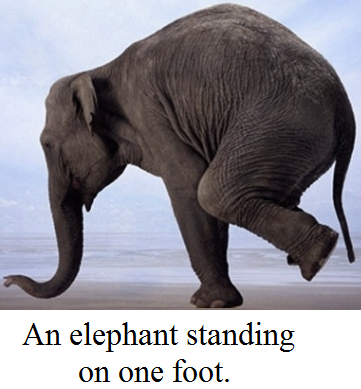
An elephant weighing $40,000N$ stands on one foot of area $1000cm^2$ whereas a girl weighing $400N$ is standing on one ‘stiletto’ heel of are

a $1cm^2.$
  1. Which of the two, elephant or girl, exerts a larger force on the ground and by how much?
  2. What pressure is exerted on the ground by the elephant standing on one foot?
  3. What pressure is exerted on the ground by the girl standing on one heel?
  4. Which of the two exerts larger pressure on the ground: elephant or girl?
  5. What is the ratio of pressure exerted by the girl to the pressure exerted by the elephant?
What is momentum$?$ Write its $SI$ unit. Interpret force in terms of momentum. Represent the following graphically
  1. momentum versus velocity when mass is fixed.
  2. momentum versus mass when velocity is constant.