Question
Briefly explain IVF and ET What are the conditions in which these methods are advised?

Answer

IVF stands for in-vitro fertilization. In this technique, sperm from the male (or donor) and ovum from the female (or donor) are taken out. Ovum is then fertilized in the laboratory; usually in a petri dish. ET stands for embryo transfer and is the next procedure after IVF. Embryo up to 8 blastomere stage is transferred in the fallopian tube. Embryo with more than 8 blastomeres is transferred to the uterus. Since, the technique involves carrying out fertilization and some development of zygote in the laboratory hence babies born out of this method are often called test tube babies. These methods are parts of Assisted Reproductive Technologies (ART). These methods are employed when medical treatment and psychotherapy may have failed in helping the couple in conception. These methods require very high degree of precision and can only be carried out by highly specialized doctors. Moreover, employing these technologies require costly equipments. Hence, facilities for IVF or ET are available only at select centres across the country.
Need a full question paper?

Generate a complete, print-ready paper with questions like this in minutes — across 16+ boards, with answer keys.

Start Generating Free

Similar questions

Discuss in detail the contributions of Morgan and Sturvant in the area of genetics.
What is apiculture? What is its importance?
Only 20 amino acids are considered as standard.
Explain "the law of independent assortment" with a suitable example.
What is day neutral plant (DNP)? Give any two examples.
With a neat, labelled diagram, describe the parts of a typical angiosperm ovule.
Read the following and answer any four questions from (i) to (v) given below:
Gene therapy is the technique of genetic engineering to replace a faulty gene by a normal healthy functional gene. It is a way of treating genetic disease by introducing a piece of DNA into the cells of an affected individual. Liposomes can be used for gene therapy as they target the cells affected by a genetic disease.
  1. A patient suffers from adenosine deaminase (ADA) deficiency, an autosomal recessive immune deficiency in which bone marrow lymphoblasts cannot replicate to generate immuno-competent lymphocytes. The treatment option that would cure the patient is:
  1. Germ-line gene therapy to replace one ADA gene copy.
  2. Germ-line gene therapy to replace both ADA gene copies.
  3. Somatic cell gene therapy to replace both ADA gene copies in circulating lymphocytes.
  4. Somatic cell gene therapy to replace one ADA gene copy in bone marrow lymphoblasts.
  1. Which type of gene therapy is least effective in transferring DNA to the nucleus?
  1. Adenoviruses.
  2. DNA attached to a ligand.
  3. Liposomes.
  4. Retroviruses.
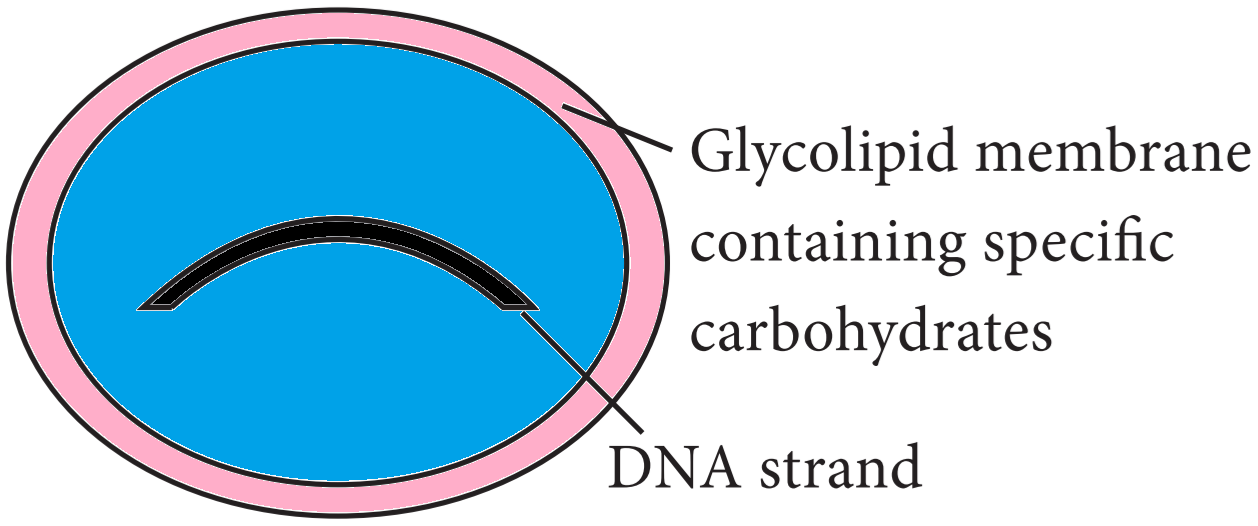
  1. Liposomes can be used for gene therapy as they target the cells affected by a genetic disease. The diagram shows the structure of a liposome.


What feature of a cell surface membrane allows the liposome to target cells affected by a genetic disease?
  1. Carrier molecules.
  2. Phosphate groups.
  3. Protein channels.
  4. Receptor molecules.
  1. Which of the following disorders would gene therapy be least effective?
  1. Cystic fibrosis.
  2. Huntington's disease.
  3. Sickle cell anaemia.
  4. Type II diabetes.
  1. Following are some reasons explaining why gene therapy is not yet fully an effective treatment for genetic diseases.
  1. Lack of knowledge of DNA sequences.
  2. Lack of efficient and safe gene delivery system.
  3. Cost of the technology.
  4. Some diseases involve multiple genes.
  5. Problems with appropriate gene regulation.
Select the correct option.
  1. I, III and V only
  2. II, IV and V only
  3. Ill, IV and V only
  4. I, III and IV only
Floods in Sangli and Kolhapur in August 2019, were responsible for many problems during and after the floods. Think and enlist different types of problems faced by flood affected areas.
Enumerate the different measures for control and prevention of drug/ alcohol abuse among adolescent.
Taking a small pond as an example of an ecosystem, list the four components of this ecosystem. How do these components function as a unit in a small pond?