Question
Calculate Current Ratio, Quick Ratio and Debt to Equity Ratio from the figures given below:
Particulars
Inventory.
Prepaid Expenses.
Other Current Assets.
Current Liabilities.
12% Debentures.
Accumulated Profits.
Equity Share Capital.
Non-current Investments.
30,000
2,000
50,000
40,000
30,000
10,000
1,00,000
15,000

Answer

  1. Current Assets = Inventory + Prepaid Expenses + Other Current Assets
= 30,000 + 2,000 + 50,000 = 82,000
Current Liabilities = 40,000
Current Ratio = $\frac{\text{Current Assets}}{\text{Current Liabilities}}$
= $\frac{82,000}{40,000}=2.05:1$
  1. Liquid Assets = Current Assets - Inventory - Prepaid Expenses
= 82,000 - 30,000 - 2,000 = 50,000
Quick Ratio = $\frac{\text{Liquid Assets}}{\text{Current Liabilities}}$
$\frac{50,000}{40,000}=1.25:1$
  1. Long-term Debts = 12% Debentures = 30,000
Equity = Accumulated Profits + Equity Share Capital
= 10,000 + 1,00,000 = 1,10,000
Debt- Equity Ratio = $\frac{\text{Long-Term Debts}}{\text{Equity}}$
$\frac{30,000}{1,10,000}=0.27:1$

Need a full question paper?

Generate a complete, print-ready paper with questions like this in minutes — across 16+ boards, with answer keys.

Start Generating Free

Similar questions

Following information is given to you:
Trade Receivables on 1st April, 2017
₹ 6,80,000
Trade Receivables on 31st March, 2018
₹ 8,20,000
Trade Receivables Turnover Ratio
6 times
Credit Revenue from Operations
80% of Revenue from Operations
Working Capital Turnover Ratio
9 times
Current Ratio
2.25
Calculate:
  1. Revenue from Operations.
  2. Working Capital.
  3. Current Assets.
Prepare a comparative statement of profit & loss from the following:

Interest on investment @ ₹ 50,000 each year.
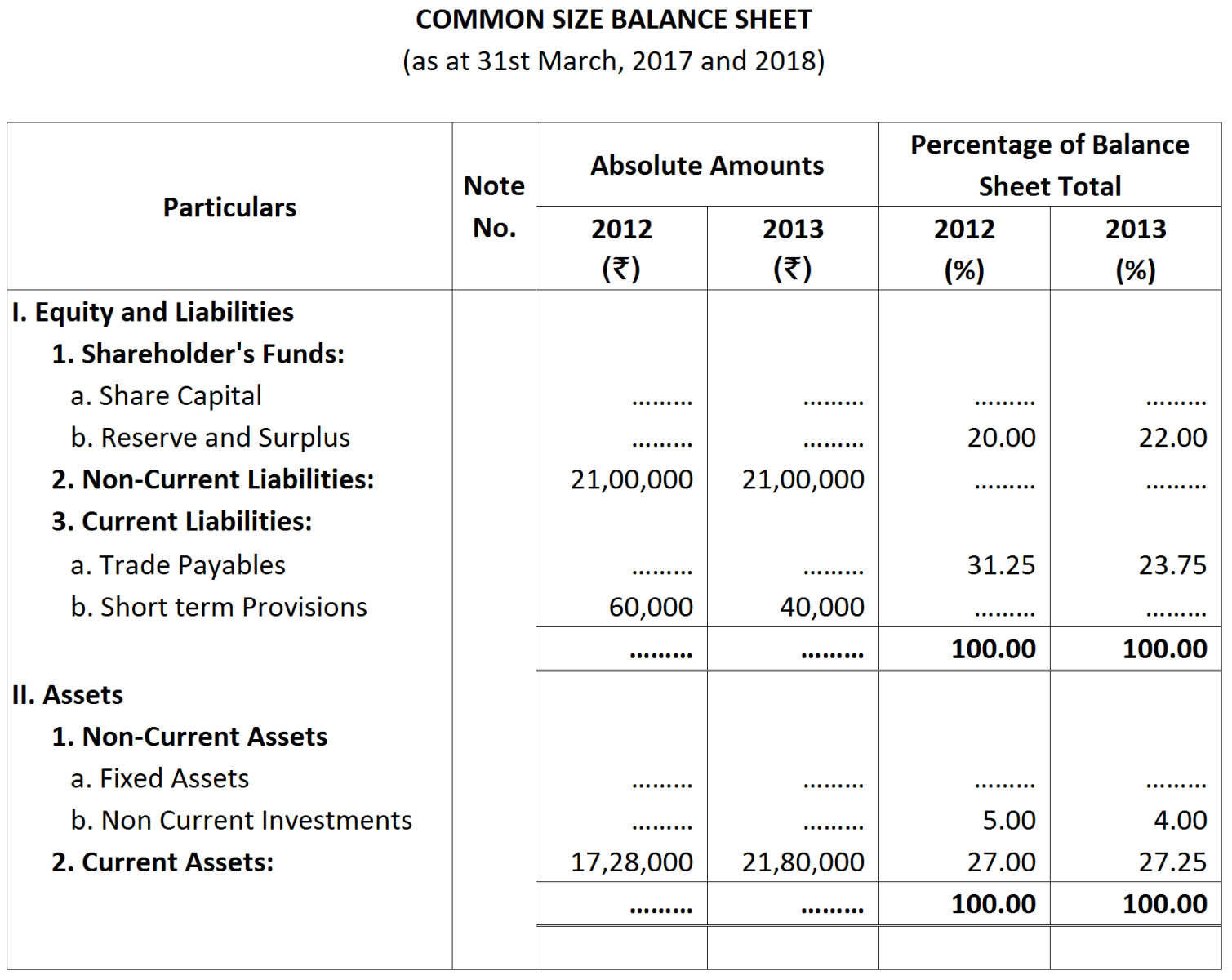
  1. you are required to fill in the missing figure in the following Commomn Size Balance Sheet:
  1. Also calculate the Debt Equity Ratio.
Pass necessary Journal entriesforthe following transactions in the books of Fortune Ltd:
  1. Redeemed ₹ 96,000, 12% Debentures by conversion into Equity Shares of ₹ 100 each. The Equity Shares were issued at a discount of 4%.
  2. Converted 4,800, 12% Debentures of ₹ 100 each into New 13% Debentures of ₹ 100 each. The New Debentures were issued at a premium of 25%.
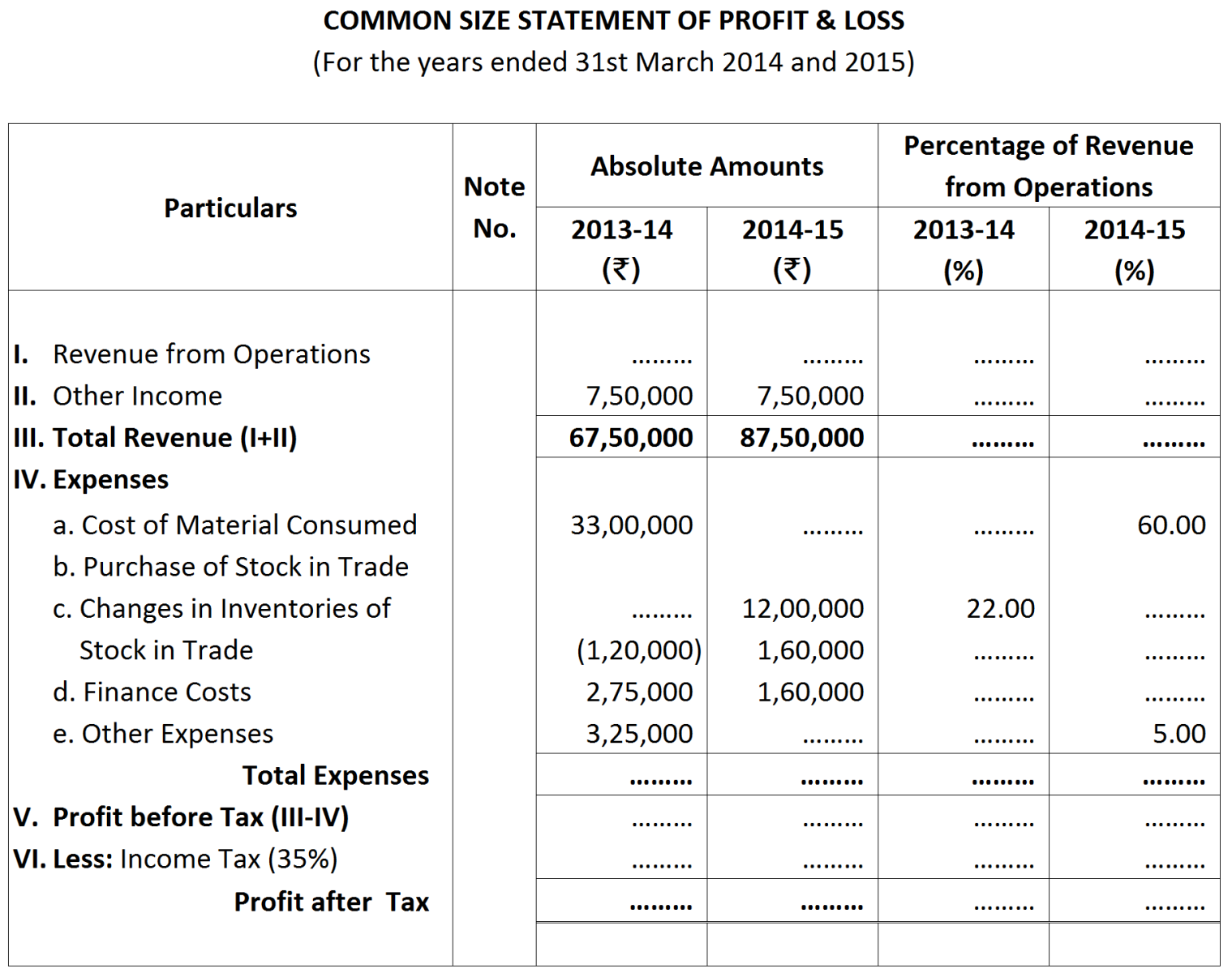
Following is the Common-Size Statement of Profit and Loss:
You are required to:
  1. Fill in the missing figures.
  2. Compute the following ratios:
  1. Gross Profit Ratio.
  2. Interest Coverage Ratio.
Under which main head and sub-heads the following items on the Equity and Liabilities side of the Balance Sheet of a Company will be presented:
  1. Shares Options Outstanding Account.
  2. Excess Application money due for refund.
  3. VAT Payable.
  4. Debenture Redemption Reserve.
  5. Premium Payableon Redemption of Debentures.
  6. Provision for Gratuity.
  7. Outstanding Expenses.
Khushboo Ltd. issued for Public subscription 50,000 equity shares of ₹ 10 each at a premium of 30% payable as under:
₹ 4 on application
₹ 5 on allotment (including premium)
₹ 4 on first & final call
Applications were received for 1,00,000 shares. Allotment was made pro-rata to the applicants for 80,000 shares, the remaining applications being refused. Money overpaid on application was utilised towards sums due on allotment.
Chatterjee, to whom 1,000 shares were allotted, failed to pay the allotment and call money and the shares were subsequently forfeited. Half of the forfeited shares were reissued as fully paid at a discount of 10%. Show the journal entries to record the above transactions.
State any two limitations of analysis of financial statements?
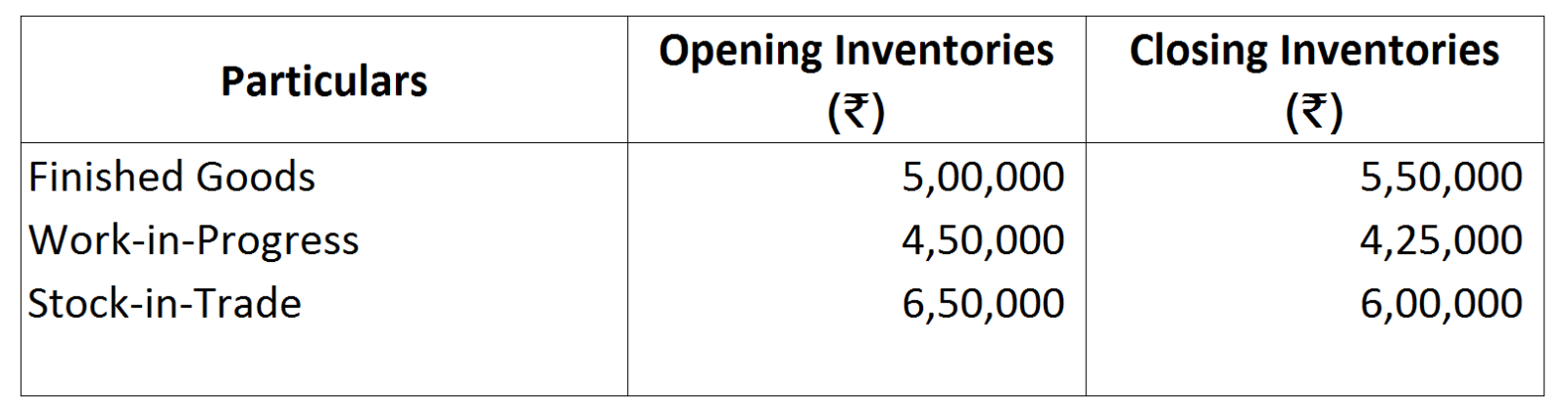
From the following information of Hospitality Ltd. for the year ended 31st March, 2018, calculate amount that will be shown in the Note to Accounts on Changes in Inventories of Finished Goods, WIP and Stock-in-Trade:
XYZ Ltd. is registered with an authorised capital of ₹ 2,00,000 divided into 2,000 shares of ₹ 100 each of which, 1,000 shares were offered for public subscription at a premium of ₹ 5 per share, payable as:
On Application - ₹ 10 per share,
On Allotment - ₹ 25 per share (including premium)
On First Call - ₹ 40 per share,
On Final call - ₹ 30 per share
Applications were received for 1,800 shares, of which applications for 300 shares were rejected outright; the rest of the application were allotted 1,000 shares on pro rata basis. Excess application money was transferred to allotment.
All the money was duly received except from Sundar, holder of 100 shares, who failed to pay allotment and first call money. His shares were later forfeited and reissued to Shyam at ₹ 60 per share ₹ 70 paid-up. Final call has not been made.
Pass necessary Journal entries and prepare Cash Book in the books of XYZ Limited.