MCQ
Carbohydrate rich food is got from
- ABrassicaceae
- ✓Poaceae
- CFabaceae
- DAsteraceae
They are rich in carbohydrate, poor in lysine and tryptophan.
Cereals comes under family Poaceae.
Generate a complete, print-ready paper with questions like this in minutes — across 16+ boards, with answer keys.
$\begin{array}{|p{0.45\linewidth}|p{0.45\linewidth}|} \hline Column\,\,-I & Column\,\,-II \\ \hline 1.\,\,\,1733\,\,-\,\,1804 & p.\,\,Jan\,\,Ingen\,\,house \\ \hline 2.\,\,\,1730\,\,-\,\,1799 & q.\,\,T.W\,\,Engelman \\ \hline 3.\,\,\,1897\,\,-\,\,1985 & r.\,\,Joseph\,\,Priestley \\ \hline 4.\,\,\,1843\,\,-\,\,1909 & s.\,\,Cornelius\,\,Van\,\,Niel \\ \hline \end{array}$
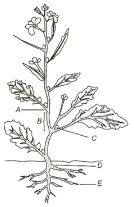
Select the part correctly matched with its function.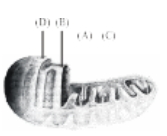
$I.$ In Chlorophyceae, the stored food material is starch and the major pigments are chlorophyll-a and chlorophyll - d
$II$. In Phaeophyceae, laminarian is the stored food and major pigments are chlorophyll-a and chlorophyll b
$III$. In Rhodophyceae, floridean starch is the stored food and major pigments are chlorophylla-a,d and phycoerythrin.