MCQ
Carbohydrates are
  • A
    Hydrates of carbon
  • Polyhydroxy aldehydes or ketones
  • C
    Polyhydroxy acid compounds
  • D
    None of these

Answer

Correct option: B.
Polyhydroxy aldehydes or ketones
b
They are organic compounds organized in the form of aldehydes or ketones with multiple hydroxyl groups coming off the carbon chain. The general empirical structure for carbohydrates is $(CH_ 2O)_n$ ​

Need a full question paper?

Generate a complete, print-ready paper with questions like this in minutes — across 16+ boards, with answer keys.

Start Generating Free

Similar questions

Co-ordinate bond is absent in
For electroplating a spoon, it is placed in the voltameter at
Which is correct $ IUPAC$ name of the following compound

$\begin{array}{*{20}{c}}
  {\,\,C{H_3}\,\,\,\,\,\,\,\,\,\,\,\,\,\,\,\,\,C{H_3}} \\ 
  {|\,\,\,\,\,\,\,\,\,\,\,\,\,\,\,\,\,\,\,\,\,\,\,\,\,\,\,\,\,|\,\,} \\ 
  {C{H_3} - CH - CH - CH - C{H_3}} \\ 
  {\,|\,\,\,} \\ 
  {\,\,\,\,\,\,\,\,\,\,\,\,\,\,\,\,\,\,\,\,\,\,C{H_2} - C{H_3}\,\,\,\,\,\,} 
\end{array}$

The type of hybridisation of boron in diborane is
Which part of the protein molecule is responsible for function and activity of the proteins
What will be the $H^+$ ion concentration when $4g\, NaOH$ is dissolved in $1000\, ml$ solution
For reaction $A \to B$, rate constant ${K_1} = {A_1}{e^{ - E{a_1}/RT}}$ and for the reaction $X \to  Y$, rate constant ${K_2} = {A_2}{e^{ - E{a_2}/RT}}$ . If $A_1 = 10^8, A_2 =10^{10}$ and $E_{a_1} = 600\, cal/mole$, $E_{a_2} = 1800\, cal/mole$ then the temp at which $K_1 = K_2$ is (given : $R = 2\, cal\, K^{-1}\, mol^{-1}$)
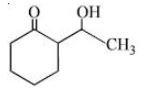
$\mathop {\xrightarrow{{{I_2}/NaOH}}}\limits_\Delta  \xrightarrow{{{H^ + }}}\xrightarrow{\Delta }A,$

$A$ is

The molar conductance of $\mathrm{NaCl}, \mathrm{HCl}$ and $\mathrm{CH}_{3} COONa$ at infinite dilution are $126.45,426.16$ and $91.0\, \mathrm{~S} \,\mathrm{~cm}^{2} \,\mathrm{~mol}^{-1}$ respectively. The molar conductance of $\mathrm{CH}_{3} \mathrm{COOH}$ at infinite dilution is. Choose the right option for your answer. (In $\mathrm{~S} \mathrm{~cm}^{2} \mathrm{~mol}^{-1}$)
For a first order reaction $(A)\rightarrow$ products the concentration of $A$ changes from $0.1\, M $ to $0.025\,M\,40\,\min$.

The rate of reaction when the concentration of $A$ is $0.01\, M$ is ............$\times 10^{-4}\,M/ \min$