MCQ
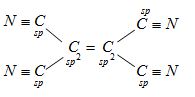
Carbon atoms in the compound ${(CN)_4}{C_2}$ are
  • A
    $sp$ hybridized
  • B
    $s{p^2}$ hybridized
  • $sp$ and $s{p^2}$ hybridized
  • D
    $sp$, $s{p^2}$ and $s{p^3}$ hybridized

Answer

Correct option: C.
$sp$ and $s{p^2}$ hybridized
(c)

Need a full question paper?

Generate a complete, print-ready paper with questions like this in minutes — across 16+ boards, with answer keys.

Start Generating Free

Similar questions

Which of the following statements is not correct?
$0.1\,gm$ of organic compound was analysed by Kjeldahl's method. In analysis produced $NH_3$ absorbed in $30\, ml\, N/5\, H_2SO_4$ . The remaining acid required $20\, ml\, N/10\, NaOH$ for neutralisation. Calculate percentage.......$\%$ of nitrogen in organic compound
Which one of the following arrangements of molecules is correct on the basis of their dipole moments ?
Calculate $\Delta H \,(kJ/mole)$ for the reaction :-
$2FeO_{(s)} + \frac{1}{2}\, O_{2(g)} \to Fe_2O_{3(g)}$

Given                                                                                                   $\Delta H$

$(i)\, Fe_2O_{3(s)}+3C_{(graphite)} \to 2Fe_{(s)} + 3CO_{(g)}$         $492\, kJ/mol$

$(ii)\, FeO_{(s)}+C_{(graphite)} \to Fe_{(s)} + CO_{(g)}$                     $156\, kJ/mol$

$(iii)\, C_{(graphite)} + O_{2(g)} \to CO_{2(g)}$                                   $-393 \,kJ/mol$

$(iv)\, CO_{(g)} + \frac{1}{2}\, O_{2(g)} \to CO_{2(g)}$                            $-283\, kJ/mol$

The $ pH $ is less than $7$ , of the solution of
The reaction of one mol of bromine with ethyne yields :
The concentration of hydrogen ion $[{H^ + }]$ in $0.01 \,M$  $HCl$ is
A piston filled with $0.04\, mol$ of an ideal gas expands reversibly from $50.0\, mL$ to $375\, mL$ at a constant temperature of $37.0\,^oC.$ As it does so, it absorbs $208\, J$ of heat. The values of $q$ and $w$ for the process will be

$(R = 8.314 \,J/mol\,K)\,(\ln 7.5 =2.01)$
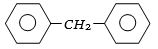
The molecular formula of diphenyl methane, , is ${C_{13}}{H_{12}}$ How many structural isomers are possible when one of the hydrogens is replaced by a chlorine atom
On going down a main sub-group in the periodic table (example $Li$ to $Cs$ in $IA$ or $Be$ to $Ra$ in $IIA$), the expected trend of changes in atomic radius is a