MCQ
Carbon tetrachloride has no net dipole moment because of
- AIts planar structure
- ✓Its regular tetrahedral structure
- CSimilar sizes of carbon and chlorine atoms
- DSimilar electron affinities of carbon and chlorine
Generate a complete, print-ready paper with questions like this in minutes — across 16+ boards, with answer keys.
$\begin{array}{*{20}{l}}
{(u){H_2}\underset{\raise0.3em\hbox{$\smash{\scriptscriptstyle-}$}}{C} CHC{H_3}{\mkern 1mu} {\mkern 1mu} {\mkern 1mu} {\mkern 1mu} (v){\mkern 1mu} C{H_2}\underset{\raise0.3em\hbox{$\smash{\scriptscriptstyle-}$}}{C} CHCl{\mkern 1mu} {\mkern 1mu} {\mkern 1mu} {\mkern 1mu} (w){\mkern 1mu} C{H_3}\underset{\raise0.3em\hbox{$\smash{\scriptscriptstyle-}$}}{C} H_2^ + {\mkern 1mu} {\mkern 1mu} {\mkern 1mu} (x){\mkern 1mu} H - C \equiv C - H} \\
{(y){\mkern 1mu} C{H_3}\underset{\raise0.3em\hbox{$\smash{\scriptscriptstyle-}$}}{C} N{\mkern 1mu} {\mkern 1mu} {\mkern 1mu} {\mkern 1mu} (z){\mkern 1mu} {{(C{H_3})}_2}C\underset{\raise0.3em\hbox{$\smash{\scriptscriptstyle-}$}}{N} N{H_2}}
\end{array}$
$\xrightarrow[{{H_2}O}]{{B{r_2}}}$
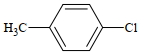
$[A]$ $4$-methylchlorobenzene $[B]$ $4$-chlorotoluene $[C]$ $1$-chloro-$4$-methylbenzene $[D]$ $1$-methyl-$4$-chlorobenzene