MCQ
$+\, CH_3SNa$ $\xrightarrow{{{C_2}{H_5}OH}}$ ?

The product formed is

  • $\begin{array}{*{20}{c}}
      {C{H_3}SC{H_2} - CH - C{{(C{H_3})}_3}} \\ 
      | \\ 
      {OH} 
    \end{array}$
  • B
    $\begin{array}{*{20}{c}}
      {{{(C{H_3})}_3}C - CH - C{H_2}OH} \\ 
      {|\,\,} \\ 
      {\,\,\,\,\,\,\,SC{H_3}} 
    \end{array}$
  • C
    $\begin{array}{*{20}{c}}
      {C{H_3}SC{H_2} - CH - CH{{(C{H_3})}_2}} \\ 
      | \\ 
      {OH} 
    \end{array}$
  • D
    $\begin{array}{*{20}{c}}
      {{{(C{H_3})}_3}C - C{H_2}CH - SC{H_3}} \\ 
      {\,\,\,\,\,\,\,\,\,\,\,\,|} \\ 
      {\,\,\,\,\,\,\,\,\,\,\,\,\,\,\,\,OH} 
    \end{array}$
Answer

Correct option: A.
$\begin{array}{*{20}{c}}
  {C{H_3}SC{H_2} - CH - C{{(C{H_3})}_3}} \\ 
  | \\ 
  {OH} 
\end{array}$
a

Need a full question paper?

Generate a complete, print-ready paper with questions like this in minutes — across 16+ boards, with answer keys.

Start Generating Free

Similar questions

In Which of the following increasing order of splitting energy correct ?
Each of the following ion contains vanadium the $+ V$ oxidation state except
The order of a reaction which has the rate expression $\frac{{dc}}{{dt}} = K{[E]^{3/2}}{[D]^{3/2}}$ is
In the given reaction $A$ is

$A\xrightarrow{{{\text{Reduction}}}}B\xrightarrow{{HN{O_2}}}{C_2}{H_5}OH$

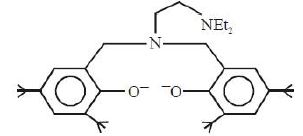
The following ligand is
The stabilization of coordination compounds due  to chelation is called the chelate effect. Which of the following is the most stable complex species ?
When MnO2​ is fused with KOH in the presence of air, a coloured compound is formed, the product and its colour is:
Which of the following reaction is not feasible
$\text{E}^{\ominus}_{\text{Cell}}$ for some half cell reactions are given below. On the basis of these mark the correct answer.

  1. $\text{H}^+(\text{aq})+\text{e}^-\xrightarrow{\ \ \ \ \ \ \ \ \ \ \ \ \ }\frac{1}{2}\text{H}_2(\text{g});\ \ \ \ \ \text{E}^\ominus_{\text{Cell}}=0.00\text{V}$

  2. $2\text{H}_2\text{O}_{(\text{l})}\xrightarrow{\ \ \ \ \ \ \ \ \ \ \ \ \ \ }\text{O}_{2(\text{g})}+4\text{H}^{+}_{(\text{aq})}+4\text{e}^-;\ \ \ \ \ \text{E}^0_{\text{Cell}}=1.23\text{V}$

  3. $2\text{SO}^{2-}_{4(\text{aq})}\xrightarrow{\ \ \ \ \ \ \ \ \ \ \ \ \ }\text{S}_2\text{O}^{2-}_{8(\text{aq})}+2\text{e}^-;\ \ \ \ \ \text{E}^0_{\text{cell}}=1.96\text{V}$

    The alkaline hydrolysis of ethyl acetate is represented by the equation$C{H_3}COO{C_2}{H_5} + NaOH \to C{H_3}COONa + {C_2}{H_5}OH$ Experimentally it is found that for this reaction$\frac{{dx}}{{dt}} = k[C{H_3}COO{C_2}{H_5}]\,[NaOH]$ Then the reaction is