MCQ
Choose the correct statement regarding $SeOCl_2$ molecule
  • A
    It does not contain plane of symmetry
  • B
    $'Cl - \widehat{Se} - Cl'$ bond angle is greater than $'Cl - \widehat{Se} -O'$ bond  angle
  • C
    Lone pair has greater than $33.3\% \,s-$ character
  • Central atom used one $d-$ orbital in bonding
Answer

Correct option: D.
Central atom used one $d-$ orbital in bonding
d
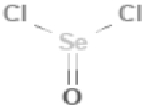
The structure of $SeOCl _2$ is as follows:

Thus is does have plane of symmetry.

Need a full question paper?

Generate a complete, print-ready paper with questions like this in minutes — across 16+ boards, with answer keys.

Start Generating Free

Similar questions

An equilibrium shift towards reactants at higher temperatures. Find the correct graph
In the equilibrium $AB$ $\rightleftharpoons$ $A + B$; if the equilibrium concentration of $A$ is doubled, the equilibrium concentration of $B$ would become:
Raising the temperature of an equilibrium system
Fructose reduces Tollen's reagent due to
Which of the following statements are not correct?

$A.$ The electron gain enthalpy of $F$ is more negative than that of $Cl$

$B.$ Ionization enthalpy decreases in a group of periodic table

$C.$ The electronegativity of an atom depends upon the atoms bonded to it.

$D.$ $Al _2 O _3$ and $NO$ are examples of amphoteric oxides.

Choose the most appropriate answer from the options given below:

The standard electrode potential for the following reaction is $+1.33\,V.$  What is the potential at $pH = 2.0$ ............ $\mathrm{V}$

$Cr_2O_7^{2-}$ ( $aq$  $1\,M$ ) $+ 14H^+(aq) + 6e^-$ $\rightarrow 2Cr^{+3} (aq,\,1\,M) + 7H_2O (l)$

The correct order of decreasing stability of the following carbocation is

$\mathop {C{H_3} - \mathop C\limits^ \oplus  H - C{H_3}}\limits_I $ 

$\mathop {C{H_3} - \mathop C\limits^ \oplus  H - OC{H_3}}\limits_{II} $

$\mathop {C{H_3} - \mathop C\limits^ \oplus  H - C{H_2} - OC{H_3}}\limits_{III} $

Evaluate the following statements related to group $14$ elements for their correctness.

$(A)$Covalent radius decreases down the group from $\mathrm{C}$ to $\mathrm{Pb}$ in a regular manner.

$(B)$ Electronegativity decreases from $\mathrm{C}$ to $\mathrm{Pb}$ down the group gradually.

$(C)$ Maximum covalence of $\mathrm{C}$ is $4$ whereas other elements can expand their covalence due to presence of $d$ orbitals.

$(D)$ Heavier elements do not form $\mathrm{p} \pi-p \pi$ bonds.

$(E)$ Carbon can exhibit negative oxidation states.

Choose the correct answer from the options given below:

The catalyst used in the hydrogenation of oils is
Which of the following shape can not be obtained from trigonal bipyramidal geometry