MCQ
Coloration of $B{r_2}/CC{l_4}$ will be discharged by
- ✓Cinnamic acid
- BBenzoic acid
- C$o-$ phthalic acid
- DAcetophenone
${{C}_{6}}{{H}_{5}}CH=CHCOOH+B{{r}_{2}}$ $\xrightarrow{CC{{l}_{4}}}$ $\underset{\text{dibromo}\,\,\,\text{cinnamic acid}}{\mathop{\begin{matrix}
\,\,\,\,Br\,\,\,\,\,\,\,\,\,\,\,\,Br\,\,\,\,\,\,\,\, \\
|\,\,\,\,\,\,\,\,\,\,\,\,\,\,\,\,\,|\,\,\,\,\,\,\, \\
{{C}_{6}}{{H}_{5}}CH-CHCOOH \\
\end{matrix}}}\,$
Generate a complete, print-ready paper with questions like this in minutes — across 16+ boards, with answer keys.
$\underset{Hexanal}{\mathop{C{{H}_{3\text{ }}}C{{H}_{2}}C{{H}_{2}}C{{H}_{2}}C{{H}_{2}}CH=O}}\,$
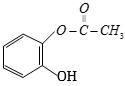
In the above reaction $'A'$ is ....
Statement - $I$: High concentration of strong nucleophilic reagent with secondary alkyl halides which do not have bulky substituents will follow $\mathrm{S}_{\mathrm{N}} 2$ mechanism.
Statement - $II$: A secondary alkyl halide when treated with a large excess of ethanol follows $\mathrm{S}_{\mathrm{N}} 1$ mechanism.
In the the light of the above statements, choose the most appropriate from the questions given below: