Question
Compare and contrast solar and lunar eclipses in detail.

Answer

FeatureSolar EclipseLunar Eclipse
CauseMoon blocks the Sun's lightEarth blocks the Sun's light
AlignmentSun - Moon - EarthSun - Earth - Moon
VisibilitySmall area on EarthLarge area on Earth
OccurrenceDaytimeNighttime
SafetyRequires eye protectionSafe to view with the naked eye

Need a full question paper?

Generate a complete, print-ready paper with questions like this in minutes — across 16+ boards, with answer keys.
Start Generating Free

Similar questions

How can we distinguish between physical and chemical changes? Provide at least three examples.
Describe the different layers of plants in the forest.
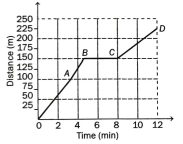
Boojho goes to the football ground to play football. The distance-time graph of his journey from his home to the ground is given as figure.
Image
(i) What does the graph between points B and C indicate about the motion of Boojho?
(ii) is the motion between 0 to 4 min uniform or non-uniform?
(iii) What is his speed between 8 to 12 min of his journey?
The speed of bicycle of Kavya is $4 m / s$ and it took her 15 min to reach her school riding on her bicycle. Calculate the distance (in km ) between her house and school. [3.6 km]
What are the necessary conditions for photosynthesis and how were they tested?
Wild animals like tiger, wolf, lion and leopard do not eat plants. Does this mean that they can survive without plants? Can you provide a suitable explanation?
List the differences between clayey soil and sandy soil.
$Y$ and $Z$ are two types of organism which are found in the forests. $Y$ eats up dead animals while $Z$ breakdown the body of the dead animals into simpler substances.
  1. What is the general name of organism $Y$?
  2. Write one example of $Y$ type organism.
  3. What is general name of organism $Z$?
  4. Write one example of $Z$ type organism.
There are two animals $X$ and $Y.$ The animal $X$ has yellow brown colour while animal $Y$ has yellow brown colour with black stripes.
  1. Name the animals $X$ and $Y.$
  2. What is the other name for these animals?
  3. Where do these animals live?
  4. Wether these animals are carnivore or herbivore?
Study the following statements about ozone.
I. It is essential for breathing of living organisms.
II. It is used to disinfect water.
III. It absorbs ultraviolet rays.
IV. Its proportion in air is about 3%.
Which of these statements are correct?
(a) I, II and III
(b) II and III
(c) I and IV
(d) All of the above