MCQ
Complete combustion of $C{H_4}$ gives
- ✓$C{O_2} + {H_2}O$
- B$C{O_2} + {H_2}$
- C$COC{l_2}$
- D$CO + C{O_2} + {H_2}O$
Generate a complete, print-ready paper with questions like this in minutes — across 16+ boards, with answer keys.
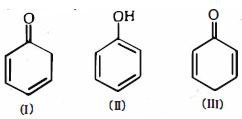
$(I)\,\,K_H$ increases with increase in temperature generally.
$(II)\,\,K_H$ decreases with increase in temperature generally.
$(III)\,\, K_H$ is the characteristic constant of gas solvent system.
$M(s) \to M(g)\,\,\,\,\,\,\,\,\,\,\,\,\,\, ........(1)$
$M(s) \to M^{2+} (g) + 2e^-\,\,\,\,\,\,\,\,.......(2)$
$M(g) \to M^+(g) + e^-\,\,\,\,\,\,\,\,\,\,\,.........(3)$
$M^+ (g) \to M^{2+} (g) + e^-\,\,\,\,\,\,\,\,\,.........(4)$
$M(g) \to M^{2+} (g) +2e^-\,\,\,\,\,\,\,\,\,\,\,..........(5)$
The second ionization energy of $M$ could be calculated from the energy values assoclated with
[Given : $R_{\mathrm{H}}\left(\right.$ Rydberg constant) $=2.18 \times 10^{-18} \mathrm{~J}$.
$h($ Plank's constant $)=6.6 \times 10^{-34}$ J.s. $]$