MCQ
Complex $[Co(NH_3)5Br]SO_4$ and $[Co(NH_3)_5SO_4]Br$ can be identified by
  • A
    $BaCl_2$
  • B
    $AgNO_3$
  • C
    $PbCl_2$
  • All of these

Answer

Correct option: D.
All of these
d
Counter ions $So_4^{-2}$ and $Br^-$ can be detected by all due to formation of $BaSO_4, AgBr, PbSO_4$

Need a full question paper?

Generate a complete, print-ready paper with questions like this in minutes — across 16+ boards, with answer keys.
Start Generating Free

Similar questions

Which of the following does not show positive deviation from Raoult’s law
Vapour pressure of pure benzene is $119\, torr$ and that of toluene is $37.0\, torr$ at the same temperature. Mole fraction of toluene in vapour phase which is in equilibrium with a solution of benzene and toluene having a mole fraction of toluene $0.50$, will be
When succinic acid is heated, product formed is
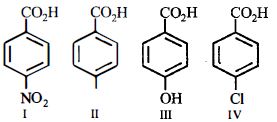
The increasing order of the acidity of the following carboxylic acids is
The differential rate law for the reaction ${H_2} + {I_2} \to 2HI$ is
Given below are two statements : one is labelled as Assertion $A$ and the other is labelled as Reason $R$ :

Assertion $A$ : Aryl halides cannot be prepared by replacement of hydroxyl group of phenol by halogen atom.

Reason $R$ : Phenols react with halogen acids violently. In the light of the above statements, choose the most appropriate from the options given below:

Properties common to the elements manganese, iron, cobalt, nickel and copper include the ready formation by them all of

$(I)$ coloured ions in aqueous solution

$(II)$ oxides of nitrogen are formed on reaction with concentrated $HNO_3$

$(III)$ chlorides of formula $MCl_2$ and $MCl_3$

$0.01\,molar$ solutions of glucose, phenol and potassium chloride were prepared in water. The boiling points of
The reactions of $Cl _2$ gas with cold-dilute and hot-concentrated $NaOH$ in water give sodium salts to two (different) oxoacids of chlorine, $P$ and $Q$, respectively. The $Cl _2$ gas reacts with $SO _2$ gas, in presence of charcoal, to give a product $R$. $R$ reacts with white phosphours to give a compound $S$. On hydrolysis, $S$ gives an oxoacid of phosphours $T$

$1.$ $P$ and $Q$, respectively, are the sodium salts of

$(A)$ hypochlorus and chloric acids

$(B)$ hypochlorus and chlorus acids

$(C)$ chloric and perchloric acids

$(D)$ chloric and hypochlorus acids

$2.$ $R , S$ and $T$, respectively, are

$(A)$ $SO _2 Cl _2, PCl _5$ and $H _3 PO _4$

$(B)$ $SO _2 Cl _2, PCl _3$ and $H _3 PO _3$

$(C)$ $SOCl _2, PCl _3$ and $H _3 PO _2$

$(D)$ $SOCl _2, PCl _5$ and $H _3 PO _4$

Give the answer question $1$ and $2.$

Among the species given below, the total number of diamagnetic species is. . . . .$\mathrm{H}$ atom, $\mathrm{NO}_2$ monomer, $\mathrm{O}_2^{-}$(superoxide), dimeric sulphur in vapour phase, $\mathrm{MnsO}_4$, $\left(\mathrm{NH}_4\right)_2\left[\mathrm{FeCl}_4\right],\left(\mathrm{NH}_4\right)_2\left[\mathrm{NiCl}_4\right], \mathrm{K}_2 \mathrm{MnO}_4, \mathrm{~K}_2 \mathrm{CrO}_4$