MCQ
Compound having highest oxidation state of central atom act as acid lowest one act as basic and intermediete $O.S.$ act as amphoteric. Which one of the following is amphoteric
- ✓$HOCl$
- B$HClO_2$
- C$HClO_4$
- DNone
$(b)$ $1 s ^{2} 2 s ^{2} 2 p ^{4} \rightarrow O$
$(c)$ $1 s ^{2} 2 s ^{2} 2 p ^{3} \rightarrow N$
$(d)$ $1 s ^{2} 2 s ^{2} 2 p ^{1} \rightarrow B$
The ionization enthalpy order is $B < Be < O < N$
Be has more IE compared to $B$ due to extra stability and $N$ has more $IE$ compared to oxygen due to extra stability
Hence, $N \rightarrow 1402 kJ / mol$
$O \rightarrow 1314 kJ / mol$
$B \rightarrow 801 kJ / mol$
$Be \rightarrow 899 kJ / mol$
Generate a complete, print-ready paper with questions like this in minutes — across 16+ boards, with answer keys.
$M(s) \to M(g)\,\,\,\,\,\,\,\,\,\,\,\,\,\, ........(1)$
$M(s) \to M^{2+} (g) + 2e^-\,\,\,\,\,\,\,\,.......(2)$
$M(g) \to M^+(g) + e^-\,\,\,\,\,\,\,\,\,\,\,.........(3)$
$M^+ (g) \to M^{2+} (g) + e^-\,\,\,\,\,\,\,\,\,.........(4)$
$M(g) \to M^{2+} (g) +2e^-\,\,\,\,\,\,\,\,\,\,\,..........(5)$
The second ionization energy of $M$ could be calculated from the energy values assoclated with
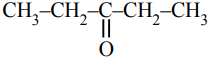
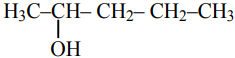

$(A)$ $n=4,1=1$ $(B)$ $\mathrm{n}=4,1=2$ $(C)$ $\mathrm{n}=3,1=1$ $(D)$ $\mathrm{n}=3,1=2$ $(E)$ $n=4,1=0$
Choose the correct answer from the options given below: