Question
Compound microscope and Astronomical refracting telescope.

Answer

Compound microscope:

  1. In a compound microscope, the focal length and cross section of the objective lens are respectively smaller than the focal length and cross section of the eyepiece.
  2. In this case, to observe the object, the distance between the object and the objective lens is adjusted.
  3. It forms a magnified image of a small object.
  4. It is used to observe blood corpuscles, plant and animal cells, etc.

Astronomical refracting telescope:

  1. In an astronomical refracting telescope, the focal length and cross section of the objective lens are respectively greater than the focal length and cross section of the eyepiece.
  2. In this case, to observe the object, the distance between the objective lens and eyepiece is adjusted.
  3. It forms a near image of a distant object.
  4. It is used to observe sateulites, planets, stars, etc.

Need a full question paper?

Generate a complete, print-ready paper with questions like this in minutes — across 16+ boards, with answer keys.
Start Generating Free

Similar questions

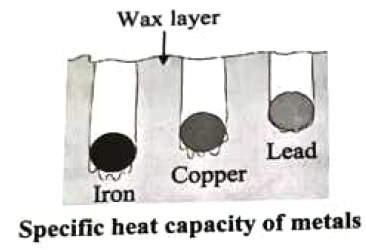
Observe the following figure and answer the questions:
Image

i. Which element has maximum specific heat capacity? Justify.
ii. Which element has minimum specific heat capacity? Justify.
iii. Define specific heat of object.
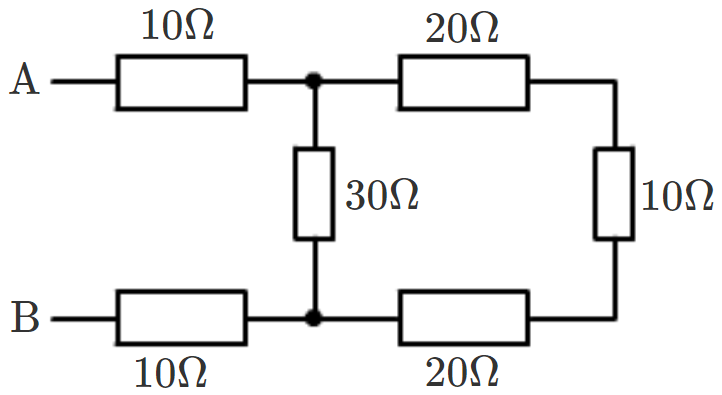
What is the resistance between A and B in the figure given below?
Statement 1: Electric current (flow of electrons) creates heat in a resistor.
Statement 2: Heat in the resistor is created according to the law of energy conservation.
Explain Statement 1 with the help of Statement 2. (Practice Activity Sheet – 2)
Write the name and symbol of the element from the description:
(a) The most electronegative atom.
(b) The atom having smallest atomic mass.
(c) The noble gas with the smallest atomic radius.
Draw a neat labelled diagram.A solar panel made from 36 solar cells.
Column A Column B
(Convex lens) (a) Image virtual, erect and enlarged
(1) Object at $2F_1$ (b) Image real, inverted and of the same size
(2) Object between $F_1$ and $ 2F_1$ (c) Image real, inverted and highly diminished
(3) Object between $O$ and $F_1$ (d) Image real, inverted and highly enlarged
(4) Object at infinity (e) Image real, inverted and enlarged
What are the three types of methods used for birth control (or regulating child birth)? Give one example of each type.
A concave lens of 20cm focal length forms an image 15cm from the lens. Compute the object distance.
Heat energy is being produced in a resistance in a circuit at the rate of $100 \ W$. The current of $3 \ A$ is flowing in the circuit. What must be the value of the resistance?
If a TV of rating 100 W operates for 6 hours per day, find the number of units consumed in a leap year.