MCQ
Condition for destructive interference is__________ where $n=0,1,2,3, \ldots$
- Aphase difference $=2 n \pi$
- Bphase difference $=(2 n-1) \pi$
- Cphase difference $=(2 n+1) \pi$
- Dphase difference $=(2 n+1) \frac{\pi}{2}$
Generate a complete, print-ready paper with questions like this in minutes — across 16+ boards, with answer keys.
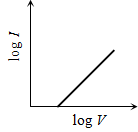
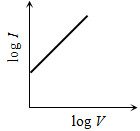
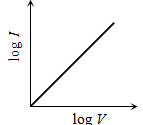
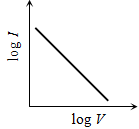
When a current I is passed through a wire of constant resistance, it produces a potential difference V across its ends. The graph drawn between log I and log V will be
|
(a)
|
(b)
|
(c)
|
(d)
|
A point charge is kept at the centre of a metallic insulated spherical shell. Then
|
(a) Electric field out side the sphere is zero |
(b) Electric field inside the sphere is zero |
|
(c) Net induced charge on the sphere is zero |
(d) Electric potential inside the sphere is zero |
Angle of dip is 90o at
|
(a) Poles |
(b) Equator |
(c) Both (a) and (b) |
(d) None of these |
In Bainbridge mass spectrograph a potential difference of 1000 V is applied between two plates distant 1 cm apart and magnetic field in B = 1T. The velocity of undeflected positive ions in m/s from the velocity selector is
|
(a) |
(b) |
(c) |
(d) |
In nuclear fission, the fission reactions proceeds with a projectile. Which of the following suits the best
|
(a) Slow proton |
(b) Fast neutron |
(c) Slow neutron |
(d) None of these |
Which of the following is not a correct statement
|
(a) Resistivity of electrolytes decreases on increasing temperature |
|
(b) Resistance of mercury falls on decreasing its temperature |
|
(c) When joined in series a 40 W bulb glows more than a 60 W bulb |
|
(d) Resistance of 40 W bulb is less than the resistance of 60 W bulb |