- ASource of emf.
- BElectric field produced by charges accumulated on the surface of wire.
- CThe charges just behind a given segment of wire which push them just the right way by repulsion.
- DThe charges ahead.
Generate a complete, print-ready paper with questions like this in minutes — across 16+ boards, with answer keys.
The image formed by a convex mirror of focal length 30 cm is a quarter of the size of the object. The distance of the object from the mirror is
|
(a) 30 cm |
(b) 90 cm |
(c) 120 cm |
(d) 60 cm |
The temperature coefficient of resistance of a semiconductor
|
(a) Is always positive |
(b) Is always negative |
|
(c) Is zero |
(d) May be positive or negative or zero |
The distance of two points on the axis of a magnet from its centre is 10 cm and 20 cm respectively. The ratio of magnetic intensity at these points is 12.5 : 1. The length of the magnet will be
| (a) 5 cm | (b) 25 cm | (c) 10 cm | (d) 20 cm |
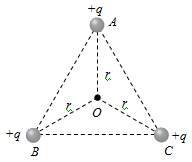
ABC is an equilateral triangle. Charges + q are placed at each corner. The electric intensity at O will be

|
(a) |
(b) |
(c) Zero |
(d) |
When a ray of light passes from a denser to a rarer medium:
The potential difference applied to an X-ray tube is increased. As a result, in the emitted radiation
| (a) The intensity increases |
| (b) The minimum wavelength increases |
| (c) The intensity decreases |
| (d) The minimum wavelength decreases |
A bar magnet when placed at an angle of 30o to the direction of magnetic field induction of 5 × 10⁻² T, experiences a moment of couple 25 × 10–6 N-m. If the length of the magnet is 5 cm its pole strength is
|
(a) 2 × 10⁻² A-m |
(b) 5 × 10⁻² A-m |
(c) 2 A-m |
(d) 5 A-m |
A convex lens
|
(a) Converges light rays |
(b) Diverges light rays |
|
(c) Form real images always |
(d) Always forms virtual images |