MCQ
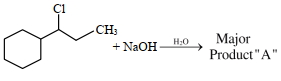
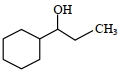
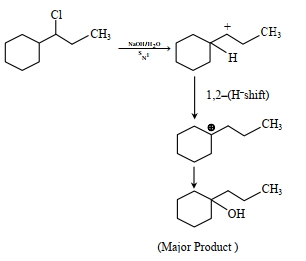
Consider the above chemical reaction. Product " $\mathrm{A}$ " is:
- A
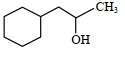
- ✓
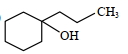
- C
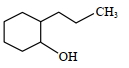
- D
Generate a complete, print-ready paper with questions like this in minutes — across 16+ boards, with answer keys.
$A.$ $E _{\text {cell }}$ is an intensive parameter.
$B.$ A negative $E^{\Theta}$ means that the redox couple is a stronger reducing agent than the $H ^{+} / H _2$ couple.
$C.$ The amount of electricity required for oxidation or reduction depends on the stoichiometry of the electrode reaction.
$D.$ The amount of chemical reaction which occurs at any electrode during electrolysis by a current is proportional to the quantity of electricity passed through the electrolyte.
$(A)$Covalent radius decreases down the group from $\mathrm{C}$ to $\mathrm{Pb}$ in a regular manner.
$(B)$ Electronegativity decreases from $\mathrm{C}$ to $\mathrm{Pb}$ down the group gradually.
$(C)$ Maximum covalence of $\mathrm{C}$ is $4$ whereas other elements can expand their covalence due to presence of $d$ orbitals.
$(D)$ Heavier elements do not form $\mathrm{p} \pi-p \pi$ bonds.
$(E)$ Carbon can exhibit negative oxidation states.
Choose the correct answer from the options given below: