MCQ
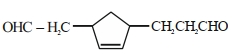
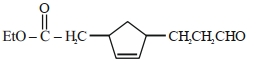
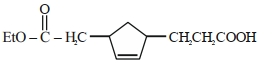
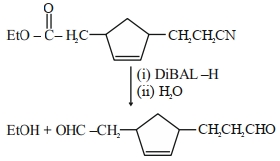
Consider the above reaction and predict the major product.

  • B

  • C

  • D

Answer

Correct option: A.

a

Need a full question paper?

Generate a complete, print-ready paper with questions like this in minutes — across 16+ boards, with answer keys.

Start Generating Free

Similar questions

$4.0 \,gm$ of $NaOH$ are contained in one decilitre of solution. Its molarity would be ......... $M$
For the reaction between $A$ and $B$ , the initial rate of reaction $(r_0)$ was measured for different initial concentration of $A$ and $B$ as given below Order of the reaction with respect to $A$ and $B$ respectively, is $\sqrt 2  = 1.4 ,\,\sqrt 3  \times 10^{-4}$ 
$A/mol\,L^{-1}$ $0.2$ $0.2$ $0.4$
$B/mol\,L^{-1}$ $0.3$ $0.1$ $0.05$
$r_0/mol^{-1}s^{-1}$ $5.0\times 10^{-5}$ $5.0\times 10^{-5}$ $1.4\times 10^{-4}$
The values of observed and calculated mol. wt of silver nitrate are $90$ and $170$ respectively. The degree of dissociation of silver nitrate is ......... $\%$.
Geometrical and optical isomerism exihibted by
A solution of $36\,g$ of glucose in $1000\,gm$ of water is cooled to $-\,0.5\,^oC$ . ...... $gm$ of ice would have separated from the solution $K_f = 1.86\,deg/molal$
If $1\,M$ and $2.5\,litre$  $NaOH$ solution is mixed with another $ 0.5\,M$ and $3\,litre$ $ NaOH$  solution, then molarity of the resultant solution will be ........ $M$.
Which of the following will not form a yellow precipitate on heating with an alkaline solution of iodine
The reaction of zinc with dilute and concentrated nitric acid, respectively, produces :
Upon mixing $50.0\,mL$ of $0.1\,M$ lead nitrate solution with $50\,mL$ of $0.05\,M$ chromic sulphate, solution, precipitation of lead sulphate solution, takes place. How many moles of, lead sulphate are, formed and what is the molar concentration, of chromic sulphate left in the solution ?
Kolbe's electrolysis of sodium acetate at anode gives