MCQ
Correct statement regarding molecules $SF_4,\, CF_4$ and $XeF_4$ are
  • A
    $2,\, 0$ and $1$ lone pairs of central atom respectively
  • B
    $1, \,0$ and $1$ lone pairs of central atom respectively
  • C
    $0, \,0$ and $2$ lone pairs of central atom respectively
  • $1, \,0$ and $2$ lone pairs of central atom respectively

Answer

Correct option: D.
$1, \,0$ and $2$ lone pairs of central atom respectively
d
$SF_4$ : $sp^3d$ hybridization

$CF_4$ : $sp^3$ hybridization

$XeF_4$ : $sp^3d^2$ hybridization

Need a full question paper?

Generate a complete, print-ready paper with questions like this in minutes — across 16+ boards, with answer keys.

Start Generating Free

Similar questions

$0.01\,\,M\,HA\,(aq.)$ is  $2\%$  ionized $; [OH^-]$  of solution is
   Isobutene   $ + HBr\,\,\xrightarrow[{{\text{Peroxide}}}]{}$ product is
Assertion : The radius of the first orbit of hydrogen atom is $0.529\,\mathop A\limits^o$
Reason : Radius of each circular orbit $(r_n) - 0.529\,\mathop A\limits^o  \,(n^2/Z),$ where $n = 1, 2, 3$ and $Z =$ atomic number.
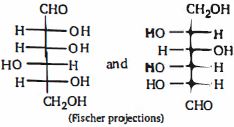
What is the relationship between the molecules in the following pairs ?
From the following thermochemical equations, find out the heat of ionisation $Z$ for a weak acid $HA$

$HA \to A^-+ H^+$ , $\Delta H = Z$
$H^+ + OH^-\to H_2O$, $\Delta H = X$
$HA + OH^-\to A^-+ H_2O$, $\Delta H = Y$

The 'spin only' magnetic moment value of $\mathrm{MO}_4{ }^{2-}$ is . . . . . BM. (Where $\mathrm{M}$ is a metal having least metallic radii. among $\mathrm{Sc}, \mathrm{Ti}, \mathrm{V}, \mathrm{Cr}, \mathrm{Mn}$ and $\mathrm{Zn}$ ).

(Given atomic number: $\mathrm{Sc}=21, \mathrm{Ti}=22, \mathrm{~V}=23$, $\mathrm{Cr}=24, \mathrm{Mn}=25$ and $\mathrm{Zn}=30)$

In the given reaction, the oxide of sodium is ….$\left[ {\begin{array}{*{20}{c}}{4Na + {O_2} \to 2N{a_2}O}\\{N{a_2}O + {H_2}O \to 2NaOH}\end{array}} \right]$
Which alkyne will give $3$ -ethylhexane on catalytic hydrogenation ?
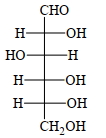
The structure of $D-(+)-$glucose is

$Image$

The structure of $L -(-)$-glucose is

Assertion : $2-$ Bromobutane on reaction with sodium ethoxide in ethanol gives $1-$ butene as a major product.

Reason : $1-$ Butene is more stable than $2-$ butene According to Saytzeff's rule, $2-$ butene should be the product which is more branched or substituted compound and hence, more stable than butene $-1$