MCQ
Correct statement regarding to $H-$ spectrum is
  • A
    For limiting line of lyman series $n_1 = 1$ and $n_2 = 10$
  • Wavelength for second line of balmer serie $ = \frac{{16}}{{32}}$
  • C
    Maximum frequency for paschen series $(v) = RC$
  • D
    For first line of bracket series $n_1 = 5$ and $n_2 = 6$
Answer

Correct option: B.
Wavelength for second line of balmer serie $ = \frac{{16}}{{32}}$
b
For limiting line of Lyman series $n_{1}=1$ and $n_{2}=\infty$

$\frac{1}{\lambda}=\mathrm{R}_{\mathrm{H}} \cdot \mathrm{Z}^{2}\left(\frac{1}{\mathrm{n}_{1}^{2}}-\frac{1}{\mathrm{n}_{2}^{2}}\right)$

For second line of Balmer series, $\mathrm{n}_{1}=2$ and $\mathrm{n}_{2}=4$

$\frac{1}{\lambda}=\mathrm{R}\left(\frac{1}{4}-\frac{1}{16}\right) \quad \mathrm{v}=\frac{\mathrm{C}}{\lambda}$

For minimum frequency of Paschen series $\mathrm{n}_{1}=3, \mathrm{n}_{2}=\infty$

Need a full question paper?

Generate a complete, print-ready paper with questions like this in minutes — across 16+ boards, with answer keys.

Start Generating Free

Similar questions

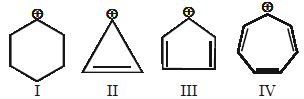
The stability of the following carbocation decreases in the order
With cold and dilute sodium hydroxide fluorine reacts to give
When the hybridisation state of carbon atom changes from $s{p^3}$ to $s{p^2}$ to $sp,$ the angle between the hybridised orbitals
Hydrogen peroxide acts both as an oxidising and as a reducing agent depending upon the nature of the reacting species . In which of the following cases $H_2O_2$ acts as a reducing agent in acid medium?
If $p{K_b}$ for fluoride ion at ${25\,^o}C$ is $10.83$, the ionisation constant of hydrofluoric acid in water at this temperature is
For the following reaction, the equilibrium constant $K _{ c }$ at $298 K$ is $1.6 \times 10^{17}$.

$Fe ^{2+}( aq )+ S ^{2-}( aq ) \rightleftharpoons FeS ( s )$

When equal volumes of $0.06 M Fe ^{2+}( aq )$ and $0.2 M S ^{2-}( aq )$ solutions are mixed, the equilibrium concentration of $Fe ^{2+}$ (aq) is found to be $Y \times 10^{-17} M$. The value of $Y$ is. . . . .

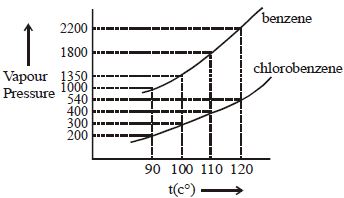
Assuming the formation of an ideal solution, determine the boiling point of a mixture containing $1560\,g$ benzene (molar mass $= 78$) and $1125\,g$ chlorobenzene (molar mass $= 112.5$ ) using the following against an external pressure of $1000\,torr$ .......... $^oC$.
$1.4\, moles$ of phosphorus trichloride are present in a sample. How many atoms are there in the sample?
$\begin{array}{*{20}{c}}
  {\begin{array}{*{20}{c}}
  {CH = O\,\,\,\,\,\,\,\,\,\,} \\ 
  {|\,\,\,\,\,\,\,\,\,\,\,\,\,\,\,\,\,\,\,\,\,\,\,\,\,} 
\end{array}} \\ 
  {{{(CH - OH)}_4}} \\ 
  {\,\,\,|\,\,\,\,\,\,\,\,\,\,\,\,\,\,\,\,\,\,\,\,\,\,\,\,\,\,} \\ 
  {C{H_2} - OH} 
\end{array}$ $\xrightarrow{{B{r_2}/{H_2}O}}P$ ; $P$ is
Which of the following has maximum reactivity towards nucleophilic attack