MCQ
$CrO_ 3$ dissolves in aqueous $NaOH$ to give
- A$Cr_2O_7^{ - 2}$
- ✓$CrO_4^{ - 2}$
- C$Cr(OH)_3$
- D$Cr(OH)_2$
Generate a complete, print-ready paper with questions like this in minutes — across 16+ boards, with answer keys.
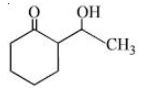
$A\,\xrightarrow{{H{g^{2 + }}\,/\,{H^ + }}}B\,\xrightarrow{{NaB{H_4}}}C\,\xrightarrow[{conc.\,\,HCl}]{{ZnC{l_2}}}$ Turbidity within $5$ minutes.
Consider the following reactions $‘A’$ is
$k=A\,e-^{E/RT}$
In this equation, $E$ represents
$2 H _2( g )+2 NO ( g ) \rightarrow N _2( g )+2 H _2 O ( g )$
which following the mechanism given below:
$2 NO ( g ) \underset{ k _{-1}}{\stackrel{ k _1}{\rightleftharpoons}} N _2 O _2( g )$
$N _2 O _2( g )+ H _2( g ) \stackrel{ k _2}{\rightleftharpoons} N _2 O ( g )+ H _2 O ( g )$
$N _2 O ( g )+ H _2( g ) \stackrel{ k _3}{\rightleftharpoons} N _2( g )+ H _2 O ( g )$
(fast equilibrium)
(slow reaction)
(fast reaction)
The order of the reaction is
$\left[\right.$ Given $\left.: \log _{10} 2=0.301, \ln 10=2.303\right]$
$A$ is