MCQ
Cycloalkanes are isomeric with :
  • A
    Alkanes
  • Alkenes
  • C
    Alkynes
  • D
    Arenes

Answer

Correct option: B.
Alkenes

Need a full question paper?

Generate a complete, print-ready paper with questions like this in minutes — across 16+ boards, with answer keys.
Start Generating Free

Similar questions

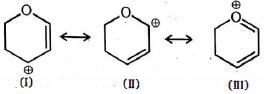
The most stable canonical structure among the given structure is
Solid $KClO_3$ is taken in a container maintained at constant pressure of $1\,atm$. Upon heating following equilibrium is obtained
$2KCl{O_3}\left( s \right){\text{ }} \rightleftharpoons \,\,2KCl\left( s \right){\text{ }} + {\text{ }}3{O_2}\left( g \right)$

If $\Delta H^o = 25\,kcal/mol$ and $\Delta S^o = 50\,cal/K,$ at what temperature equilibrium will be established in the container. (Ignore variation of $\Delta H^o$ and $\Delta S^o$ with temperature.).......$K$

How many structural isomers are possible for a compound with molecular formula ${C_3}{H_7}Cl$
An electron instially present in an excited state of $H$ atom is further excited to another energy level by an incident photon. It releases $10$ photons while coming back to ground state out of which $7$ have higher energy than incident photon. The electron was instially present in
How many number of aluminium ions are present in $0.051g$ of aluminium oxide?
Dead burnt plaster is:
The Empirical formula of a compound is $C{H_2}O$ and its molecular weight is $120$. The molecular formula of the compound is
"The total pressure exerted by the mixture of non $-$ reactive gases is equal to the sum of the partial pressures of individual gases". Above statement represents the :
Hydrogen behaves as a metal:
Identify the correct statements about p-block elements and their compounds.

$(A)$ Non metals have higher electronegativity than metals.

$(B)$ Non metals have lower ionisation enthalpy than metals.

$(C)$ Compounds formed between highly reactive nonmetals and highly reactive metals are generally ionic.

$(D)$ The non-metal oxides are generally basic in nature.

$(E)$ The metal oxides are generally acidic or neutral in nature.