MCQ
${d \over {dx}}(\log \tan x) = $
  • A
    $2\sec 2x$
  • $2\,{\rm{cosec }}2x$
  • C
    $\sec 2x$
  • D
    ${\rm{cosec}}\,2x$

Answer

Correct option: B.
$2\,{\rm{cosec }}2x$
b
(b) $\frac{d}{{dx}}(\log \tan x) = \frac{1}{{\tan x}}{\sec ^2}x = \frac{{\cos x}}{{{{\cos }^2}x\sin x}}$

$ = \frac{2}{2}\frac{1}{{\cos x\sin x}} = 2\,{\rm{cosec}}\,2x$.

Need a full question paper?

Generate a complete, print-ready paper with questions like this in minutes — across 16+ boards, with answer keys.

Start Generating Free

Similar questions

Let $\times $ be a binary operation on set $Q - {1}$ defind by $a \times b = a + b - ab : a, b \in Q - {1}.$ Then $\times $ is:
Let $\mathrm{y}=\mathrm{y}(\mathrm{x})$ be the solution of the differential equation

$\left((x+2) e^{\left(\frac{y+1}{x+2}\right)}+(y+1)\right) d x=(x+2) d y, y(1)=1$

If the domain of $y=y(x)$ is an open interval $(\alpha, \beta)$, then $|\alpha+\beta|$ is equal to $......$
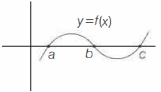
The figure shown below is the graph of the derivative of some function $y=f(x)$.Then,
If the co-ordinates of the points $P,\,Q,R,\,S$ be $(1, 2, 3), (4, 5, 7), (-4, 3, -6)$ and $(2, 0, 2)$ respectively, then
Let $f : R \rightarrow R$ be defined as $f ( x )= x ^{3}+ x -5$.

If $g ( x )$ is a function such that $f ( g ( x ))= x$, $\forall x \in R$, then $g ^{\prime}(63)$ is equal to

Let $f:[0,1] \rightarrow R$ be an injective continuous function that satisifes the condition $-1 < f(0) < f(1) < 1$

Then, the number of functions $g:[-1,1] \rightarrow[0,1]$ such that $(g \circ f)(x)=x$ for all $x \in[0,1]$ is

If $\left[\begin{array}{cc}3 c+6 & a-d \\ a+d & 2-3 b\end{array}\right]=\left[\begin{array}{cc}12 & 2 \\ -8 & -4\end{array}\right]$ then find $a b-c d$ :
The smallest value of the polynomial $x^3 - 18x^2 + 96x$ in $[0, 9]$ is:
If $A$ is a square matrix of order $n$ and $A = kB$, where $k$ is a scalar, then $|A|=$
The distance of the point $({x_1},{y_1},{z_1})$ from the line $\frac{{x - {x_2}}}{l} = \frac{{y - {y_2}}}{m} = \frac{{z - {z_2}}}{n}$, where $l,m, n$ are the direction cosines of the line, is given by: