Question
de-Broglie hypothesis treated electrons as

Answer

de-Broglie hypothesis treated electrons as waves.

Need a full question paper?

Generate a complete, print-ready paper with questions like this in minutes — across 16+ boards, with answer keys.
Start Generating Free

Similar questions

Line spectra are due to
A charge $q$ is placed at the center of one of the surface of a cube. The flux linked with the cube is :-
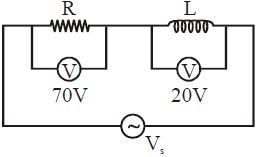
The adjoining figure shows an $AC$ circuit with resistance $R$, inductance $L$ and  source voltage $V_s$. Then
Which of the following phenomena can be demonstrated by light, but not with sound waves in an air column?
In the reaction sequence:

Cyclohexane $\xrightarrow{{hv/C{l_2}}}(X)\xrightarrow{{alc.KOH/\Delta }}(Y)\mathop {\xrightarrow{{(i)\,{O_3}}}}\limits_{(ii)\,{H_2}O/Zn} (Z)$

$(Z)$ will be :

The area of the parallelogram whose sides are represented by the vectors $\hat j + 3\hat k$ and $\hat i + 2\hat j - \hat k$ is
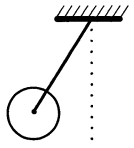
A metal rod of length ' $L$ ' and mass ' $m$ ' is pivoted at one end. A thin disk of mass ' $M$ ' and radius $'R'$ $( < L)$ is attached at its center to the free end of the rod. Consider two ways the disc is attached: (case $A$) The disc is not free to rotate about its center and (case $B$) the disc is free to rotate about its center. The rod-disc system performs $SHM$ in vertical plane after being released from the same displaced position. Which of the following statement$(s)$ is (are) true? $Image$

$(A)$ Restoring torque in case $A =$ Restoring torque in case $B$

$(B)$ Restoring torque in case $A < $ Restoring torque in case $B$

$(C)$ Angular frequency for case $A > $ Angular frequency for case $B$.

$(D)$ Angular frequency for case $A < $ Angular frequency for case $B$.
In a photoelectric experiment for $4000\, Å$ incident radiation, the potential difference to stop the ejection is $2 V$. If the incident light is changed to $3000\, Å$, then the potential required to stop the ejection of electrons will be
Two rods of different materials having coefficient of linear expansion $\alpha_1$and $\alpha_2$ and  Young's modulii $Y_1$ and $Y_2$ respectively are fixed between two rigid massive walls. The rods are heated such that they undergo the same increase in temperature. There is no bending of rods. If  $\alpha_1:\alpha_2= 2 : 3$, the thermal stress developed in two rods are equal provided $Y_1 : Y_2$ is equal to
For an isotropic medium $B$, $\mu$,$ H $ and $M$  are related as (where $B,\,\,{\mu _0},\,\,H$ and M have their usual meaning in the context of magnetic material