Question
Define Accounting Standards. What are their main objectives?

Answer

Accounting Standards are a set of guidelines, i.e., Generally Accepted Accounting Principles, that are followed for preparation and presentation of Financial Statements. They are accounting rules and procedures relating to measurement, recognition, treatment, presentation and disclosure of accounting transactions in the financial statements issued by the Council of the Institute of Chartered Accountants of India. Objectives of Accounting Standards are:
  1. Minimise the diverse accounting policies and practices with the aim to eliminate them to the extent possible.
  2. Promote better understanding of financial statements.
  3. Understand significant Accounting Policies adopted and applied.
  4. Facilitating meaningful comparison of financial statements of two or more entities.
  5. Enhancing reliability of financial statements.

Need a full question paper?

Generate a complete, print-ready paper with questions like this in minutes — across 16+ boards, with answer keys.
Start Generating Free

Similar questions

In taking out a Trial Balance, an Accountant finds an excess debit of ₹ 1,098. Being desirous of closing his books, he places the difference to Suspense A/c. Later on he detects the following errors:-
  1. Goods purchased from Surinder for ₹ 350 has been credited to his account as ₹ 530.
  2. Goods sold to Dinesh for ₹ 800 have been debited to his account as ₹ 880.
  3. A cheque of ₹ 1,250 received from a debtor had been correctly entered in the cash book but posted to his Personal A/c as ₹ 1,200.
  4. ₹ 780, paid for freight on machinery purchased was debited to Freight Account as ₹ 708.
  5. Goods to the value of ₹ 130 returned by a customer Navin Kumar had been posted to the debit of his account.
  6. ₹ 1,440 paid for repairs to Motor Car were debited to Motor Car A/c as ₹ 1,400.
  7. Total of purchase return book ₹ 500 was posted to the debit of Purchase A/c.
Give necessary rectifying entries and prepare suspense account.
On 1st April, 2015, furniture costing ₹ 55,000 was purchased. It is estimated that its life is 10 years at the end of which it will be sold for ₹ 5,000. Additions are made on 1st April 2016 and 1st October, 2018 to the value of ₹ 9,500 and ₹ 8,400 (Residual values ₹ 500 and ₹ 400 respectively). Show the Furniture Account for the first four years, if Depreciation is written off according to the Straight Line Method.
On 1st April, 2015, a Company bought Plant and Machinery costing ₹ 68,000. It is estimated that its working life is 10 years, at the end of which it will fetch ₹ 8,000. Additions are made on 1st April, 2016 to the value of ₹ 40,000 (Residual value ₹ 4,000). More additions are made on Oct. 1, 2017 to the value of ₹ 9,800 (Break up value ₹ 800). The working life of both the additional Plant and machinery is 20 years.
Show the Plant and Machinery account for the first four years, if depreciation is written off according to Straight Line Method. The accounts are closed on 31st March every year.
Binny Textiles Ltd. which depreciates its machinery at 20% p.a. on diminishing balance method, purchased a machine for ₹ 6,00,000 on 1st October, 2010. It closes its books on 31st March every year. On 1st January, 2012, it purchased another machine for ₹ 1,50,000. On 1st December, 2012, one-third of the machinery purchased on 1st October, 2010 was sold for ₹ 80,000.
You are required to prepare Machinery A/c and Provision for Depreciation A/c for the relevant years.
Explain briefly the purpose and advantages of maintaining of a Bills Receivable Book.
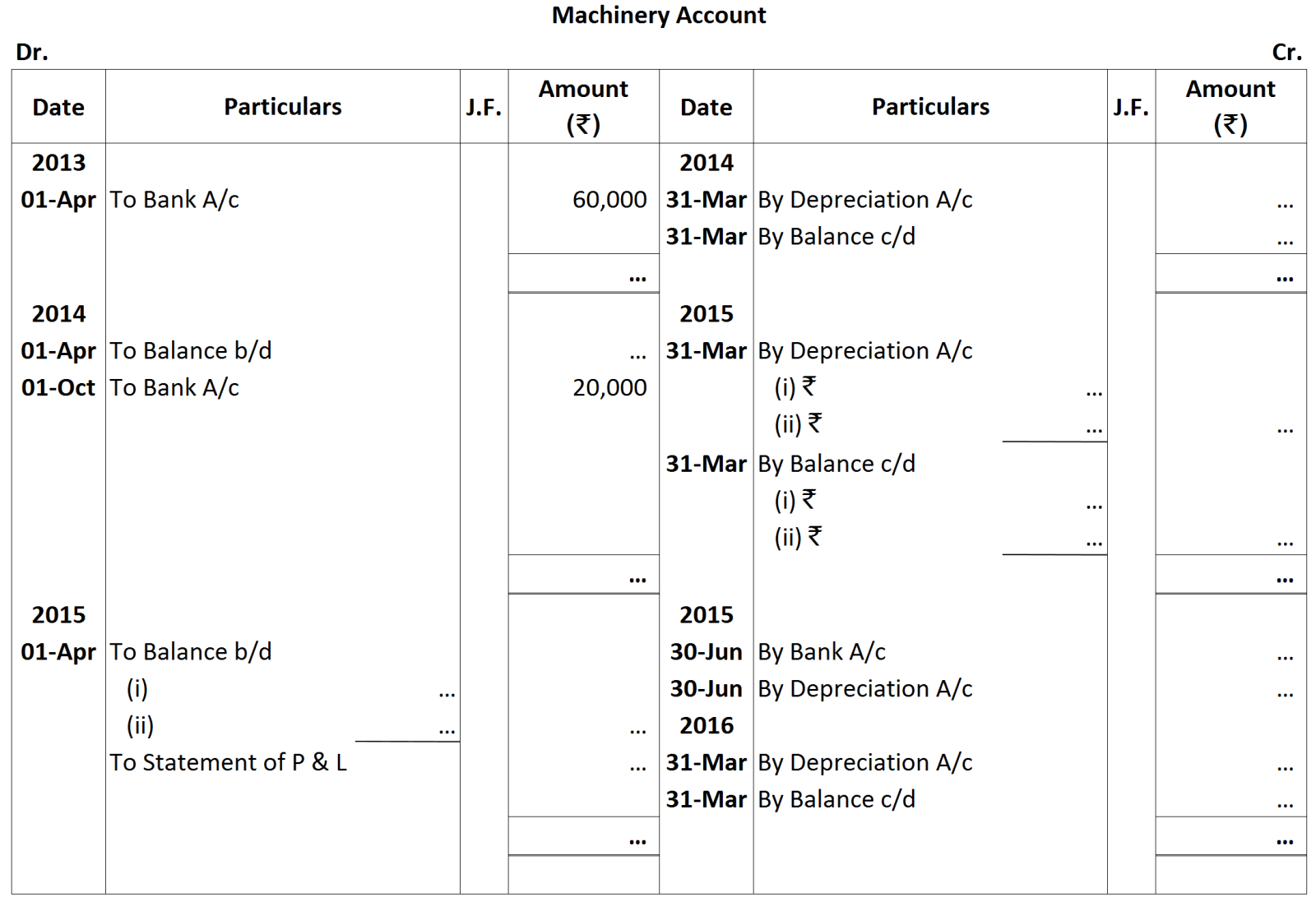
Fill up the missing information in the Machinery Account given below. You are informed that on $30^{\text {th }}$ June $2015$ , the Company sold the first machine purchased in 2013 for $₹ 38,500$. Depreciation is provided at $20 \%$ p.a. on the original cost each year. Account are closed on $31^{\text {st }}$ March every year.
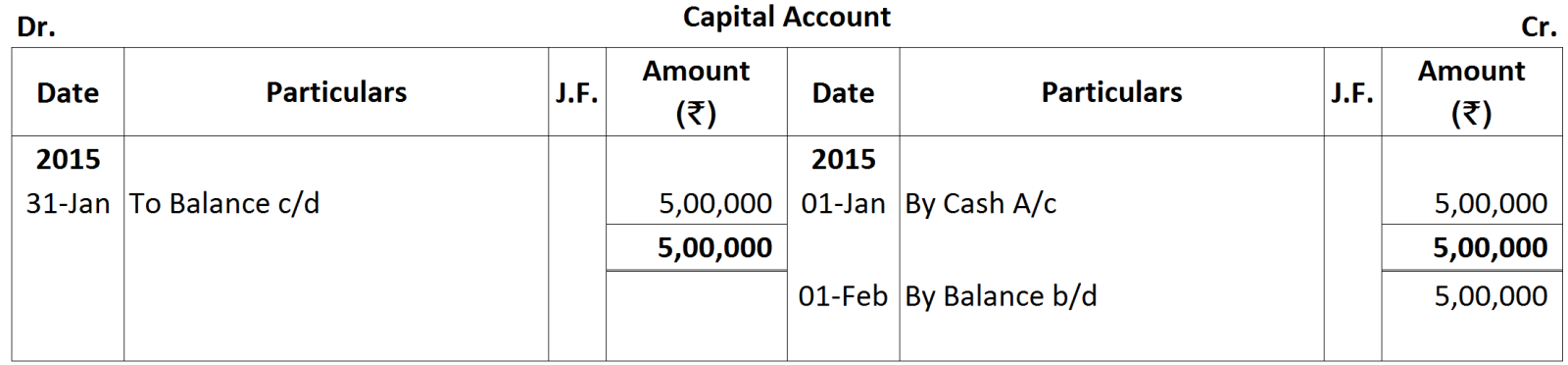
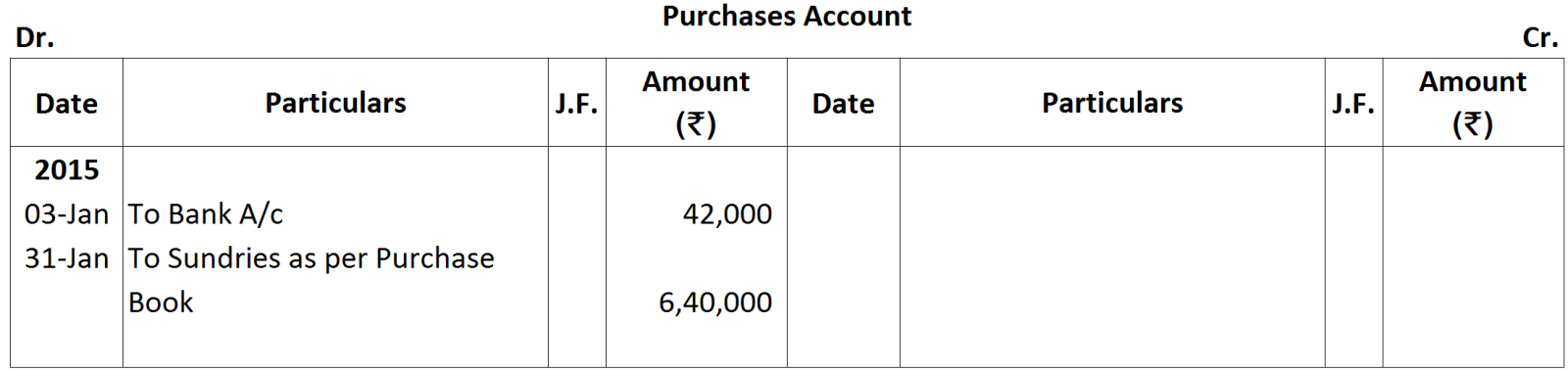
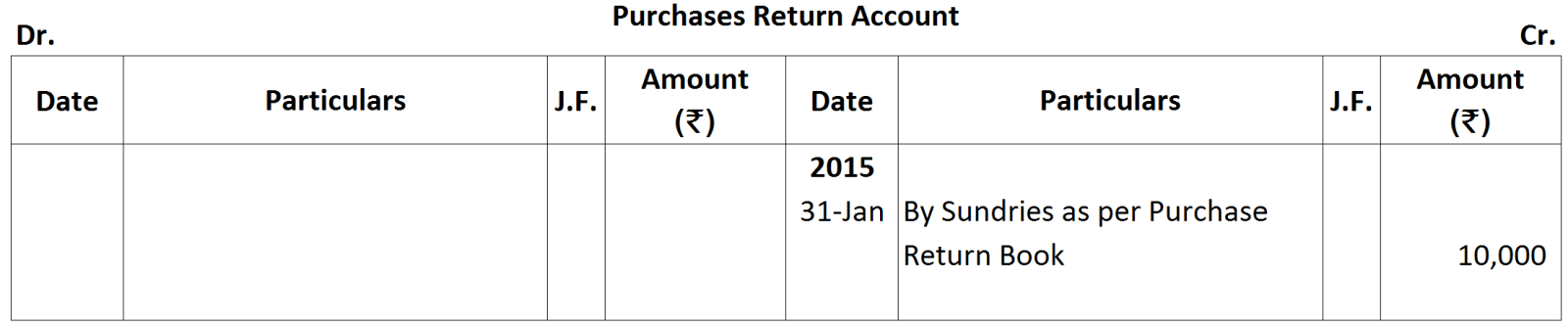
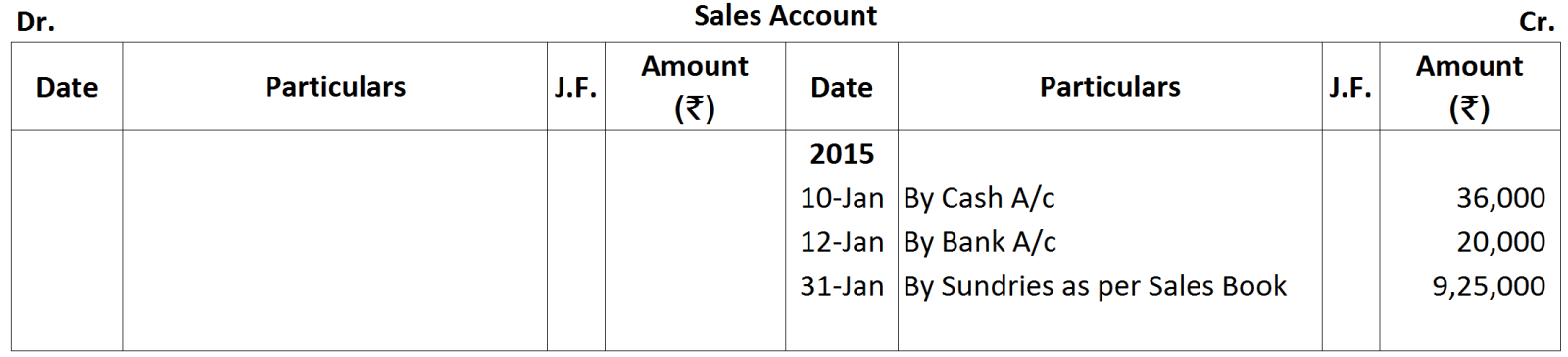
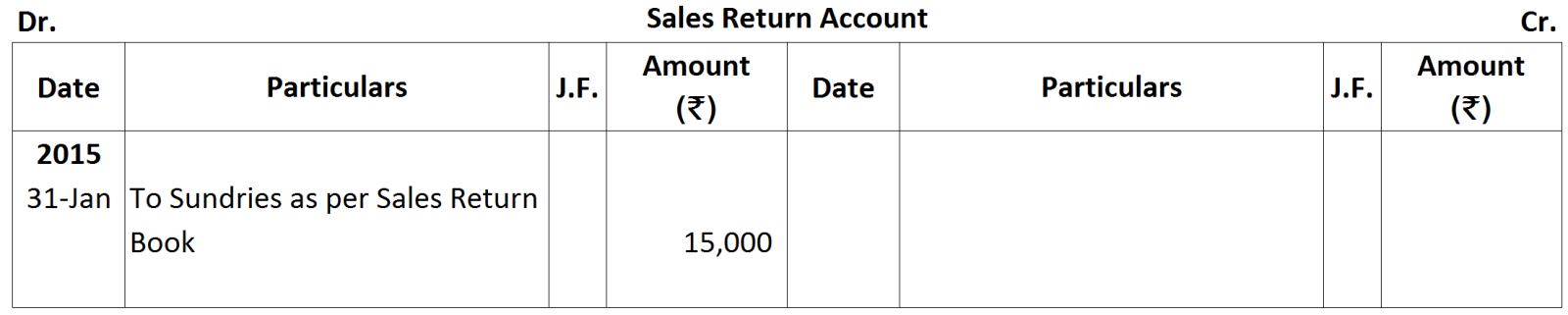
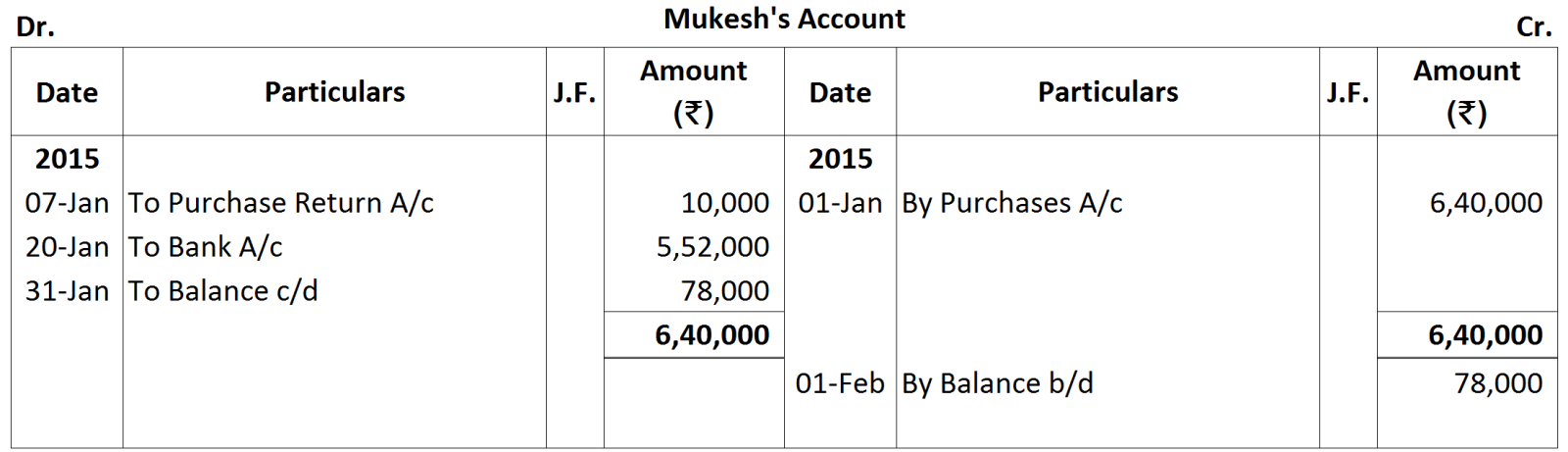
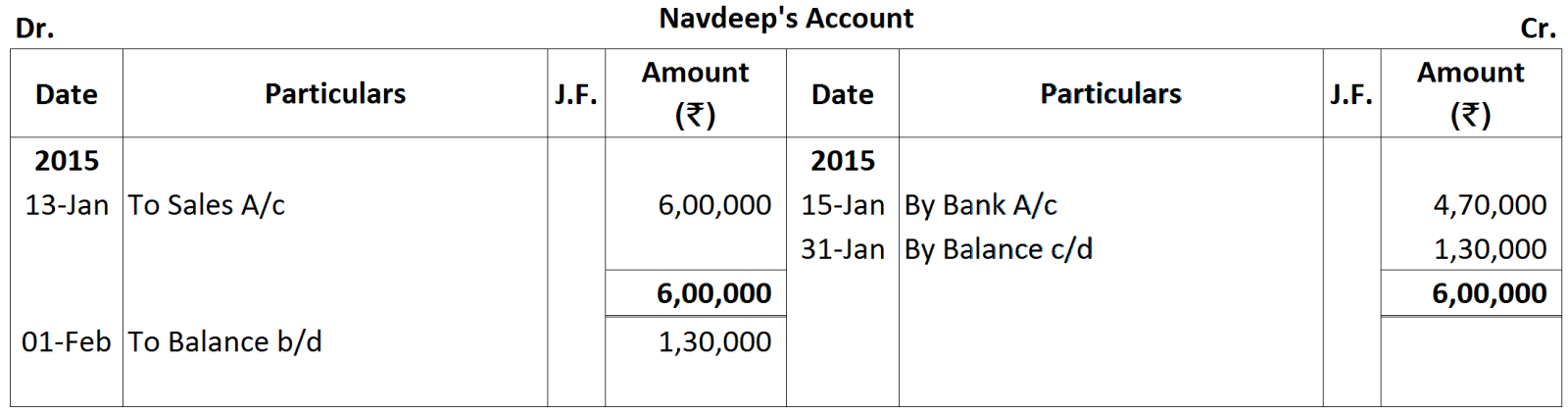
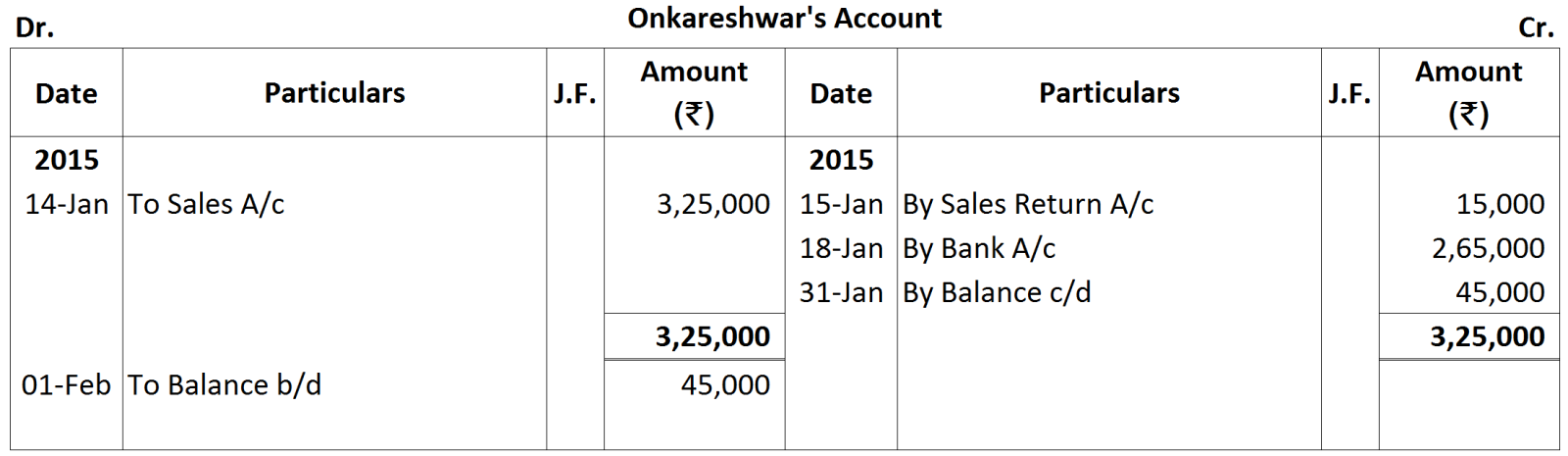
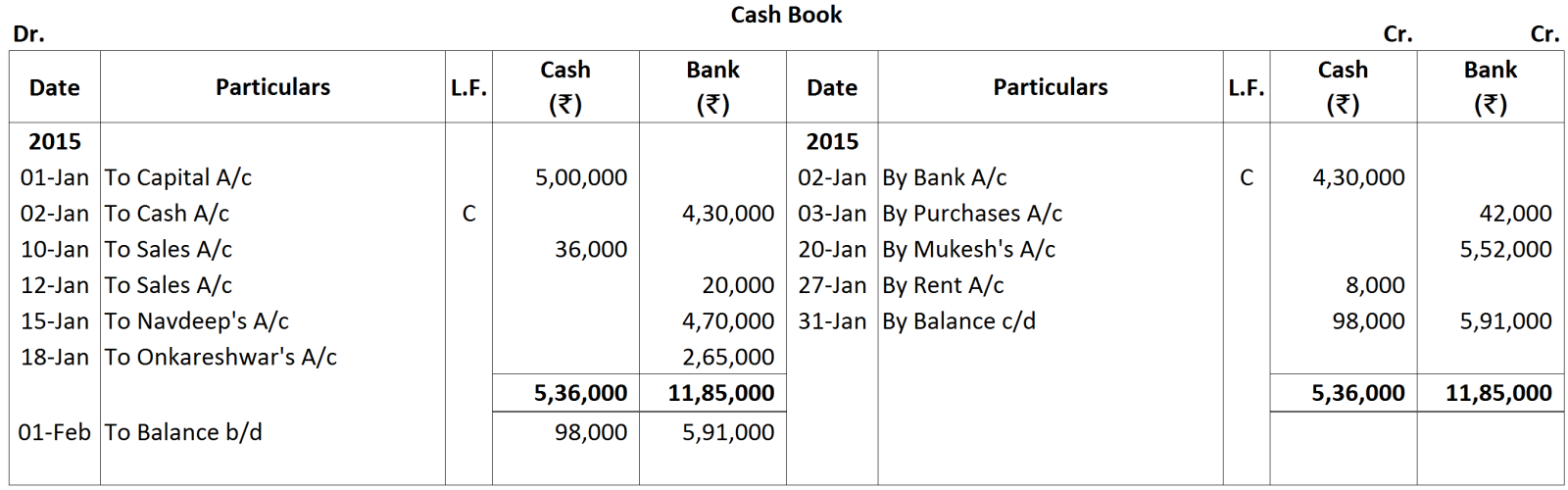
Given below is a Cash Book and Ledger extracts relating to the books of M/s Ram Chander & Sons as at 31st January 2015. You are required to prepare a Trial Balance.


Rectify the following errors:-
  1. A sale of goods to Raja Ram for ₹ 2,500 was passed through the Purchases Book.
  2. Salary of ₹ 800 paid to Hari Babu was wrongly debited to his personal account.
  3. Furniture purchased on credit from Mohan Singh for ₹ 1,000 was entered in the Purchases Book.
  4. ₹ 5,000 spent on the extension of buildings was debited to Buildings Repairs Account.
  5. Goods returned by Mani Ram ₹ 1,200 were entered in the Returns Outwards Book.
Enter the following particulars in the Cash Book with Cash and Bank columns:
2016  
April 1 Balance of cash in hand ₹ 2,000 and at Bank ₹ 12,000.
April 3 Received cash from Madhav ₹ 1,800.
April 5 Cash Sales ₹ 1,000
April 6 Purchases by cheque ₹ 745.
April 9 Paid into Bank ₹ 1,850.
April 10 Paid cash for freight ₹ 54.
April 12 Drew from Bank for office use ₹ 600.
April 13 Issued a cheque in favour of M/s Arun & Sons for ₹ 985.
April 16 Paid into Bank ₹ 715.
April 17 Drew Cash for his son's birthday party ₹ 175.
April 19 Received a cheque from Navin for ₹ 380 and deposited it into bank on the same day.
April 20 Cash Sales ₹ 200.
April 25 Drew from Bank for office use ₹ 200.
April 26 Purchased furniture for ₹ 1,000 and payment made by cheque.
April 27 Navin's cheque dishonoured, Bank charges ₹ 5.
April 29 Purchased business premises, payment made by cheque ₹ 12,000.
April 30 Received cheque for ₹ 675 from Harish.
On 1st January, 2019, A drew a bill on B for ₹ 10,000 payable after 3 months. B accepted the bill and returned it to A. After 10 days, A endorsed the bill to his creditor C. On the due date, the bill was dishonoured and C paid ₹ 50 as noting charges.
Record the transactions in the books of A, B and C.