Question
Define analogous organ. Give one example of analogous organ.

Answer

The organs, which have similar functions but are different in their structural details and origin are called analogous organs. The analogous structures are the result of convergent evolution. Fins of fishes and flippers of whales are analogous organs.

Need a full question paper?

Generate a complete, print-ready paper with questions like this in minutes — across 16+ boards, with answer keys.

Start Generating Free

Similar questions


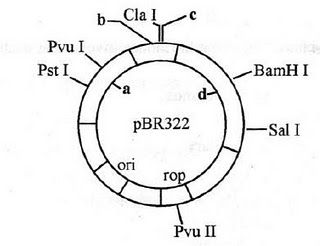
  1. Identify the selectable markers in the diagram of E. coli vector shown above.
  2. How is the coding sequence of a-galactosidase considered a better marker than the ones identified by you in the diagram? Explain.
  1. Name the respective forms in which the malarial parasite gains entry into
  1. Human body
  2. Body of female Anopheles
  1. Name the hosts where the sexual and the asexual reproductions of malarial parasite occur respectively.
  2. Name the toxin responsible for the appearance of symptoms of malaria in humans. Why do these symptoms occur periodically?
What is endometrium?
Apart from plants and animals, microbes form a permanent biotic component in an ecosystem. While plants have been referred to as autotrophs and animals as heterotrophs, what are microbes referred to as? How do the microbes fulfil their energy requirements?
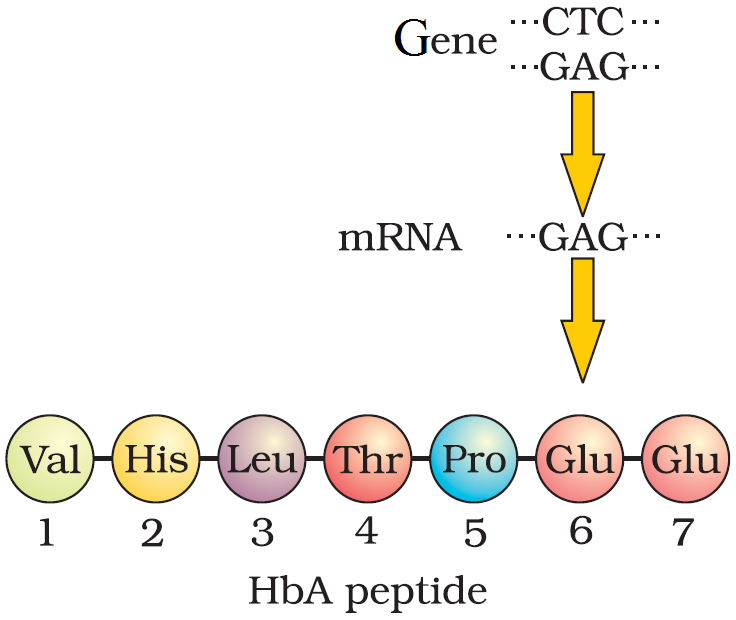
Given below is the representation of amino acid composition of the relevant translated portion of b-chain of haemoglobin, related to the shape of human red blood cells.

Who are likely to suffer more from the defect related to the gene represented the males, the females or both males and females equally? And why?

What is mutation? Explain with the help of an example, how a point mutation does affect the genetic code. Name another type of mutation.
By which technique are the gene defects identified in a child or fetus treated? Explain with example.
Which part in the male reproductive system stores sperms?
Explain three outbreeding devices.

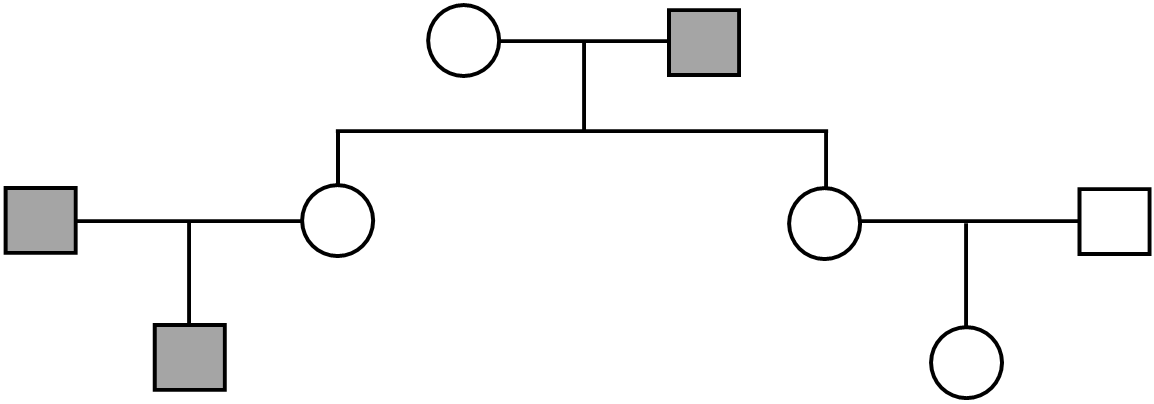
This is the pedigree of a family tracing the movement of the gene for haemophilia. Explain the pattern of inheritance of the disease in the family.