Question
Define bound electrons.

Answer

As nucleus is positively charged it strongly attracts the negative charged electrons. The electron orbit close to the nucleus are tightly bound by strong attractive force of nucleus. These electrons are known as bound electrons.

Need a full question paper?

Generate a complete, print-ready paper with questions like this in minutes — across 16+ boards, with answer keys.

Start Generating Free

Similar questions

How does the intensity of scattered light depend on the wavelength of incident light? State conditions when this dependence holds.
Name the material used for heating element of a room heater.
Specific heat capacity of substance A is $3.8 Jg ^{-1} K^{-1}$ whereas the specific heat capacity of substance B is $0.4 Jg ^{-1} K^{-1}$. Which of the two is a good conductor of heat? How is one led to this conclusion?
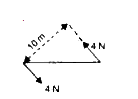
(i) What do you understand by the term couple of forces?
(ii) Calculate the moment of a couple shown in fig.
After a robbery, if a window has been broken, there will be tiny particles of glass. Some of these will be found at the scene of the crime and some may be caught in the thief’s clothing. If the police can prove that these particles are identical, they have a strong case.
A method of doing this is to suspend the particles of glass in a special liquid. Light of a single colour is thrown through the liquid and the particles viewed through a microscope. The temperature of the liquid is then slowly altered. This alters the speed of light through the liquid (i.e., it alters the refractive index). At one particular temperature, the particles of glass disappear. It this happens at the same temperature for both sets of glass particles, they probably came from the same broken pane of glass.
Complete and copy the diagram to show how light bends when it travels from the liquid to the glass and back to the liquid, If the light slows down in the glass.
Define the following with respect to converging lens
(a) Principal axis
(b) Focal length
(c) Optical centre
State the principle of a lever ?
(a) State one harmful effect of the radioactivity.
(b) Name the radioactive radiations which have the least penetrating power.
(c) Give one use of radio isotopes.
(d) What is meant by background radiation?
Define $1$ Dyne.
State the effect of presence of impurity on the melting point of ice. Give one use of it.