Question
Define soluble, insoluble substances and solubility.

Answer

The substances which dissolves in water are called soluble substances. For example: Salt, sugar, milk, etc. The substances which do not dissolve in water are called insoluble substances. For example: Chalk powder, sand, stone, etc. The property of substance due to which it dissolves in water is called solubility.

Need a full question paper?

Generate a complete, print-ready paper with questions like this in minutes — across 16+ boards, with answer keys.
Start Generating Free

Similar questions

Activity.
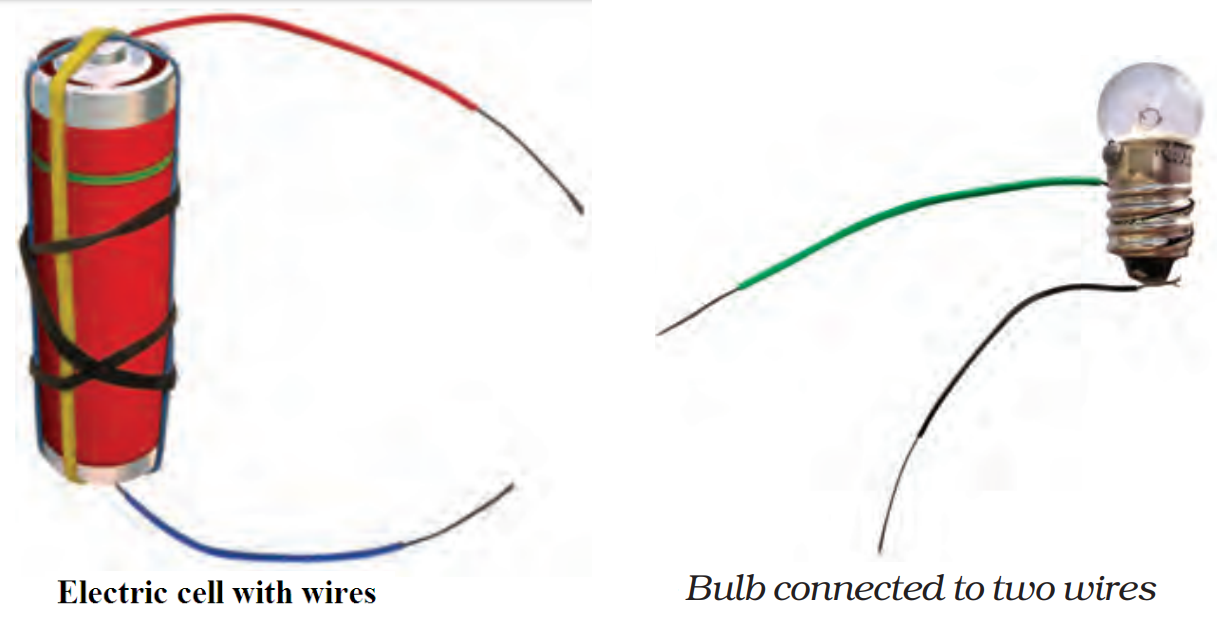
Take four lengths of electric wire with differently coloured plastic coverings. Remove a little of the plastic covering from each length of wire at the ends. This would expose the metal wires at the ends of each length. Fix the exposed parts of two wires to the cell and the other two of the bulb as shown in Fig. $(A)$ and Fig. $(B).$

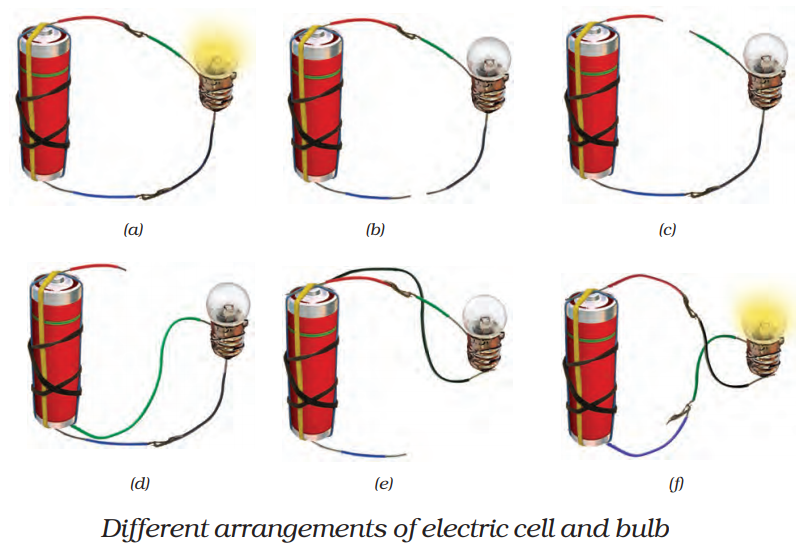
You can stick the wires to the bulb with the tape used by electricians. Use rubber bands or tape to fix the wires to the cell.Now, connect the wires fixed to the bulb with those attached to the cell in six different ways as have been shown in Fig. $C$ $[(a)$ to $(f)].$
For each arrangement, find out whether the bulb glows or not. Write “Yes’ or ‘No’ for each arrangement in your notebook.
Now, carefully look at the arrangements in which the bulb glows. Compare these with those in which the bulb does not glow.

Can you find the reason for the difference?
What are the adaptive features of a lion that helps it in hunting?
What is the need for classification?
Name the steps and methods you will use to separate the following:
  1. Coconut oil, salt and water.
  2. Chalk powder, water and stones.
  3. Iron filings, sand and salt.
List two of your favourite food items and mention their ingredients.
Which of the following changes cannot be reversed?
  1. Blowing of a balloon.
  2. Folding a paper to make a toy aeroplane.
  3. Rolling a ball of dough to make roti.
  4. Baking cake in an oven.
  5. Drying a wet cloth.
  6. Making biogas from cow dung.
  7. Burning of a candle.
Read the items of food listed below. Classify them into carbohydrate rich, protein rich and fat rich foods.
Moong dal, fish, mustard oil, sweet potato, milk, rice, egg, beans, butter, buttermilk (chhachh), cottage cheese (paneer), peas, maize, white bread
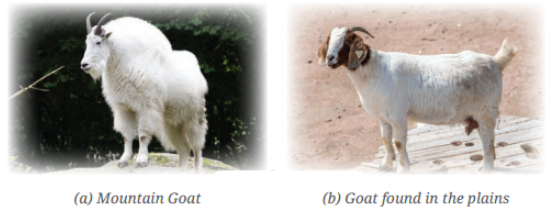
Look at the image of a mountain goat and a goat found in the plains. Point out the similarities and differences between them. What are the reasons for these differences?
Image
Identify the different types of motion in the following word diagram given as Fig.
Explain the structure of a leaf with the help of a labelled diagram.