Question
Define the following terms with a suitable example in each:
  1. Antibiotics
  2. Artificial sweeteners
  3. Analgesics

Answer

  1. An antibiotic refers to a substance produced wholly or partly by chemical synthesis, which in low concentrations inhibits the growth or destroys microorganisms by intervening in their metabolic processes Penicillin.
  2. Chemicals which are sweet in taste and with low calories, eg. Saccharin.
  3. Analgesics reduce or abolish pain without causing impairment of consciousness, mental confusion, incoordination or paralysis or some other disturbances of nervous system Aspirin.

Need a full question paper?

Generate a complete, print-ready paper with questions like this in minutes — across 16+ boards, with answer keys.
Start Generating Free

Similar questions

Write one difference in each of the following:
  1. Multimolecular colloid and Associated colloid.
  2. Coagulation and Peptization.
  3. Homogeneous catalysis and Heterogeneous catalysis.
  1. What is the radius of sodium atom if it crystallises in bcc structure with the cell edge of $400$ pm?
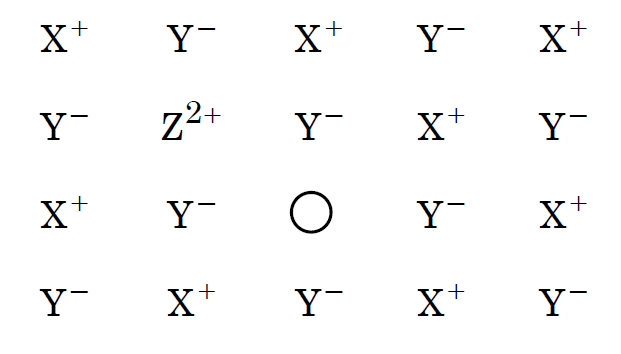
  2. Examine the given defective crystal:
  1. Write the term used for this type of defect.
  2. What is the result when $XY$ crystal is doped with divalent $(Z^{2+})$ impurity$?$
Assign reasons for the following:
  1. Phosphorus doped silicon is a semiconductor.
  2. Schottky defect lowers the density of a solid.
  3. Some of the very old glass objects appear slightly milky instead of being transparent.
The Fischer projection of D-Glucose is given alongside. What happens when L-Glucose is treated with Tollens’ reagent?
  1. Using valence bond theory predict the geometry and magnetic behaviour of $[Cr(NH_3)_6]^{3+}ion[Cr=24].$
  2. Write IUPAC name of:
$[Pt(NH_3)_2Cl_2].$
Silver crystallises in an fcc lattice. The edge length of its unit cell is $4.077 \times 10^{–8}\ cm$ and its density is $10.5\ g\ cm^{–3}.$ Calculate on this basis the atomic mass of silver. $(N_A = 6.02 \times 10^{23}\ mol^{–1}).$
The decomposition of $NH _3$ on platinum surface is zero order reaction. What are the rates of production of $N _2$ and $H_2$ if $k=2.5 \times 10^{-4} mol^{-1} Ls ^{-1}$ ?
  1. $E^0$ value for the $Mn^{3+}/Mn^{2+}$ couple is positive $(+ 1.5V)$ whereas that of $Cr^{3+}/Cr^{2+}$ is negative $(-0.4 V)$. Why?
  2. Transition metals form coloured compounds. Why?
  3. Complete the following equation:
$\text{2MnO}^{-}_{4}+\text{16H}^{+}+\text{5C}_{2}\text{O}^{2-}_{4}\xrightarrow{\text{ }\ \ \ \ \ \ \ \ \ \ \ \ }$
Benzene and toluene form ideal solution over the entire range of composition. The vapour pressure of pure benzene and naphthalene at $300 K$ are $50.71$ mm Hg and 32.06 mm Hg respectively. Calculate the mole fraction of benzene in vapour phase if $80 g$ of benzene is mixed with $100 g$ of naphthalene.
What can be inferred from the magnetic moment values of the following complex species?
Example Magnatic Moment (BM)
$K_4[Mn(CN)_6]$ $2.2$
$[Fe(H_2O)_6]^{2+}$ $5.3$
$K_2[MnCl_4]$ $5.9$