Question
Describe certain bacterial diseases of human beings.

Answer

Few diseases caused by bacteria are:
  1. Tuberculosis(T.B.): $T.B.$ is an infectious disease which is communicated from one person to another directly or indirectly. It is caused by the bacterium called Mycobacterium tuberculosis. $T.B.$ can affect all parts of the body such as lungs, lymph glands, bones, intestine etc.
  2. Cholera: Cholera is an acutely infectious, fatal disease and is more common during overcrowded fairs, festivals and after floods. Cholera is caused by the bacterium Vibrio Cholerae. It is transmitted by flies, contaminated water and food.
  3. Typhoid: Typhoid is most common communicable disease in India. Typhoid fever is common in humans of the age 1to $15$ years age group. Typhoid is caused by a rod-shaped and motile bacterium, called Salmonella typhiwhich is commonly found in the intestine of human beings. Human infection is direct.
  4. Diarrhoea: Diarrhoea is an abnormally frequent discharge of semisolid or fluid faeces. The diarrhoea spreads through infection by contaminated food, water, drinks, hands, clothes, etc. The causative agents of diarrhoea are mainly bacteria such as Escherichia coli, Clostridium botulinum, Shigella dysentiriae, Campylobacter jejuri and Salmonella.

Need a full question paper?

Generate a complete, print-ready paper with questions like this in minutes — across 16+ boards, with answer keys.

Start Generating Free

Similar questions


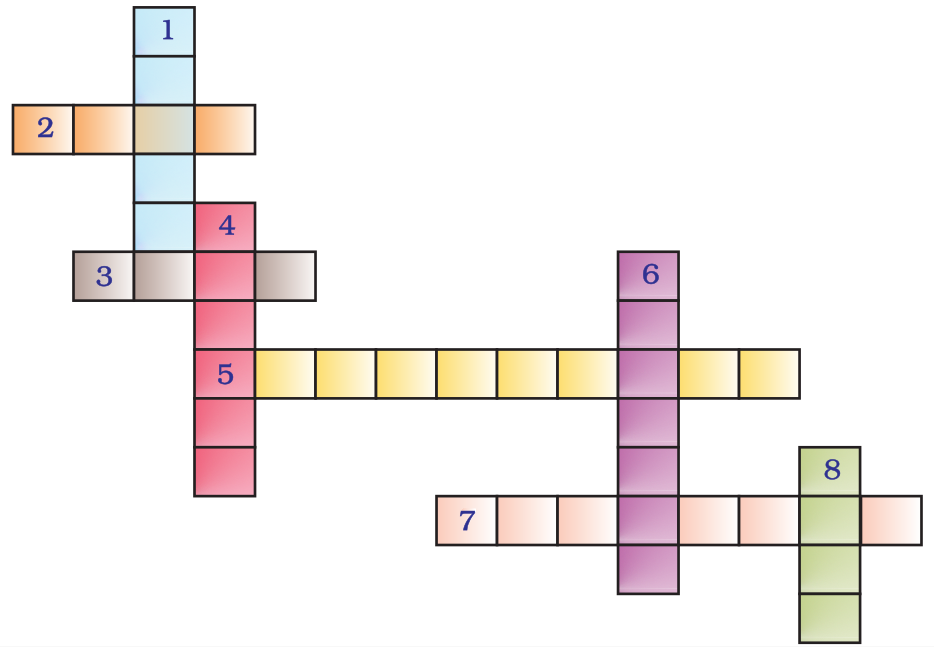
Complete the following crossword puzzle (Figure) by using the name of the chemical elements. Use the data given in the table following.
Across
Down
$2.$
The element used by Rutherford during his $\alpha$–scattering experiment.
$1.$
A white lustrous metal used for making ornaments and which tends to get tarnished black in the presence of moist air.
$3.$
An element which forms rust on exposure to moist air.
$4.$
Both brass and bronze are alloys of the element.
$5.$
A very reactive non–metal stored under water.
$6.$
The metal which exists in the liquid state at room temperature.
$7.$
Zinc metal when treated with dilute hydrochloric acid produces a gas of this element which when tested with burning splinter produces a pop sound.
$8.$
An element with symbol Pb.
What are meristematic tissues? Explain with the help of suitable diagram. Give their classification on the basis of their position in the plant body.
The mass of a planet is $6 \times 10^{24}\ kg$ and its diameter is $12.8 \times 10^3\ km.$ If the value of gravitational constant be $6.7 \times 10^{-11}\ Nm^2/\ kg^2,$ calculate the value of acceleration due to gravity on the surface of the planet. What planet could this be$?$
Grass looks green, papaya appears yellow. Which cell organelle is responsible for this?
Show by using the graphical method that:
$\text{s}=\text{ut}+\frac{1}{2}\text{at}^2$
where the symbols have their usual meanings.
Write the main functions of atleast ten cell components.
Pragya tested the solubility of three different substances at different temperatures and collected the data as given below (results are given in the following table, as grams of substance dissolved in $100$ grams of water to form a saturated solution).
Substance Dissolved Temperature in K
283 293 313 333 353
Solubility
Potassium nitrate $21$ $32$ $62$ $106$ $167$
Sodium chloride $36$ $36$ $36$ $37$ $37$
Potassium chloride $35$ $35$ $40$ $46$ $54$
Ammonium chloride $24$ $37$ $41$ $55$
$66$
  1. What mass of potassium nitrate would be needed to produce a saturated solution of potassium nitrate in $50$ grams of water at $313\ K$?
  2. Pragya makes a saturated solution of potassium chloride in water at $353K$ and leaves the solution to cool at room temperature. What would she observe as the solution cools? Explain.
  3. Find the solubility of each salt at $293\ K$. Which salt has the highest solubility at this temperature?
  4. What is the effect of change of temperature on the solubility of a salt?
How will the equations of motion for an object moving with a uniform velocity change?
What is simple tissue? Classify and explain its Different types with suitable diagram.
An object is dropped from rest at a height of $150m$ and simultaneously another object is dropped from rest at a height $100m$. What is the difference in their heights after $2s$ if both the objects drop with same accelerations$?$ How does the difference in heights vary with time$?$