The primary function of the female reproductive system is to produce the female egg cells which are essential for reproduction These are called as the ova or oocytes. It is important to know that, the entire system is designed for transporting the ova to the exact fertilization site. Further, the fertilization process of an egg after interaction with sperm usually happens in the fallopian tubes.
The later phase of the fertilized egg is associated with getting rooted into the uterus walls. This is counted as the beginning of the early stages of pregnancy. In case fertilization or implantation doesn’t occur, then the system is aimed to menstruate. Moreover, the female reproductive system is responsible for producing female sex hormones which maintain the reproductive cycle.
 Parts of Female Reproductive System
The female reproductive system comprises of parts which are both internal and external to the body.
- External Reproductive Parts:
The external parts of the female reproductive system include:
- Labia majora: It protects and encloses the other outside reproductive organ. The labia majora can be tagged as outsized and fleshy and is analogous to the male scrotum. It contains sweat as well as oil-secreting glands. The labia majora gets covered with hair right after puberty.
- Labia minora: These are translated as ‘small lips’, and can be quite small close to 2 inches wide. Labia minora rest just in the interior of labia majora. It surrounds the primary opening of the vagina and urethra.
- Bartholin’s glands: The location of these glands rest beside the vaginal opening and is responsible to manage a fluid discharge.
- Clitoris: Both the labia minora encounter at the clitoris, which is a small and delicate protrusion that is analogous to the penis in the male reproductive system. This part of the female reproductive system is covered by a skin fold, termed as prepuce. Similar to the male penis, the clitoris is sensitive to stimulus and can turn erect.
- Internal Reproductive Parts:
The internal parts of the female reproductive system include:
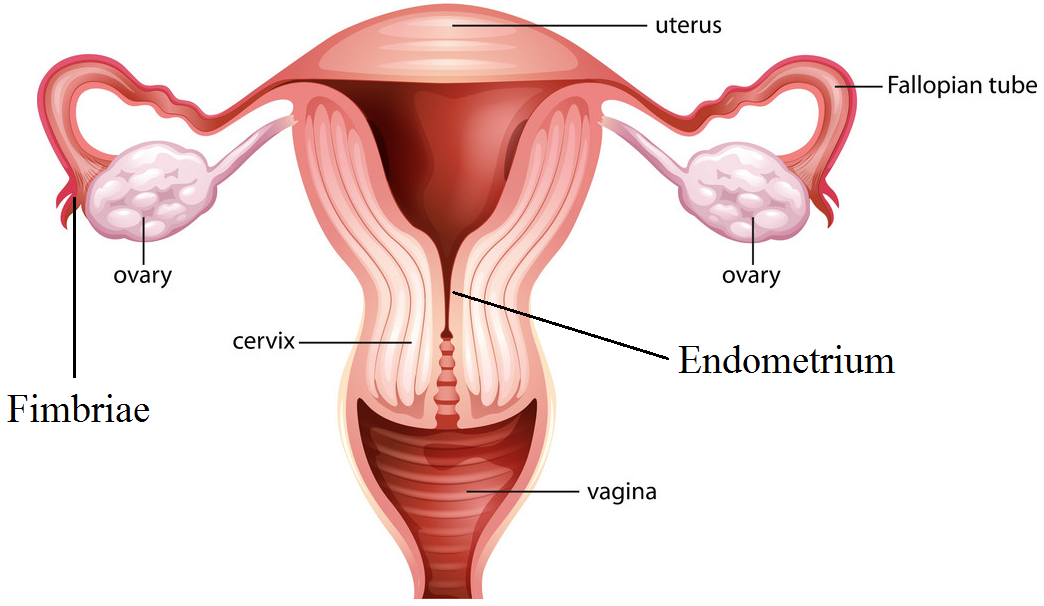
- Vagina: It is a canal which joins the cervix to the external portion of the body. You can even call it as the birth canal.
- Womb or Uterus: It is a pear-shaped, hollow organ which is ‘home’ for a developing fetus. Further, the uterus separates into two parts; namely, the cervix, and the corpus. The corpus easily enlarges for holding a developing baby.
- Ovaries: These are oval-shaped glands which are small and are located on both side of the uterus. Ovaries produce harmones and eggs.
- Fallopian tubes: They are narrow tubes which attach to the upper portion of the uterus. Fallopian tubes act as tunnels for the egg cells. Therefore, they transport the egg cells from the ovaries the to uterus.