Question
Describe structure and functions of Golgi apparatus.

Answer

Structure of Golgi apparatus: Golgi apparatus first described by Camillo Golgi. There are three distinct components are visible in the Golgi complex. They are:
  • Flattened sacs or cisternae.
  • Clusters of tubules and vesicles.
  • Large vesicles or vacuoles.
Golgi apparatus has a convex forming face and a concave maturing face. The forming face receives vesicles from ER and maturing face produces secretory vesicles and lysosomes.
Golgi apparatus absent in bacteria, blue green algae, mature sperms and RBC of mammals and other animals.
Function:
  1. The main function of Golgi apparatus is secretory. It helps in the secretion of mucus, enzymes and hormones.
  2. It helps in the storage of secretory products.
  3. Golgi apparatus is also involved in the synthesis of cell wall, plasma membrane and lysosomes.

Need a full question paper?

Generate a complete, print-ready paper with questions like this in minutes — across 16+ boards, with answer keys.
Start Generating Free

Similar questions


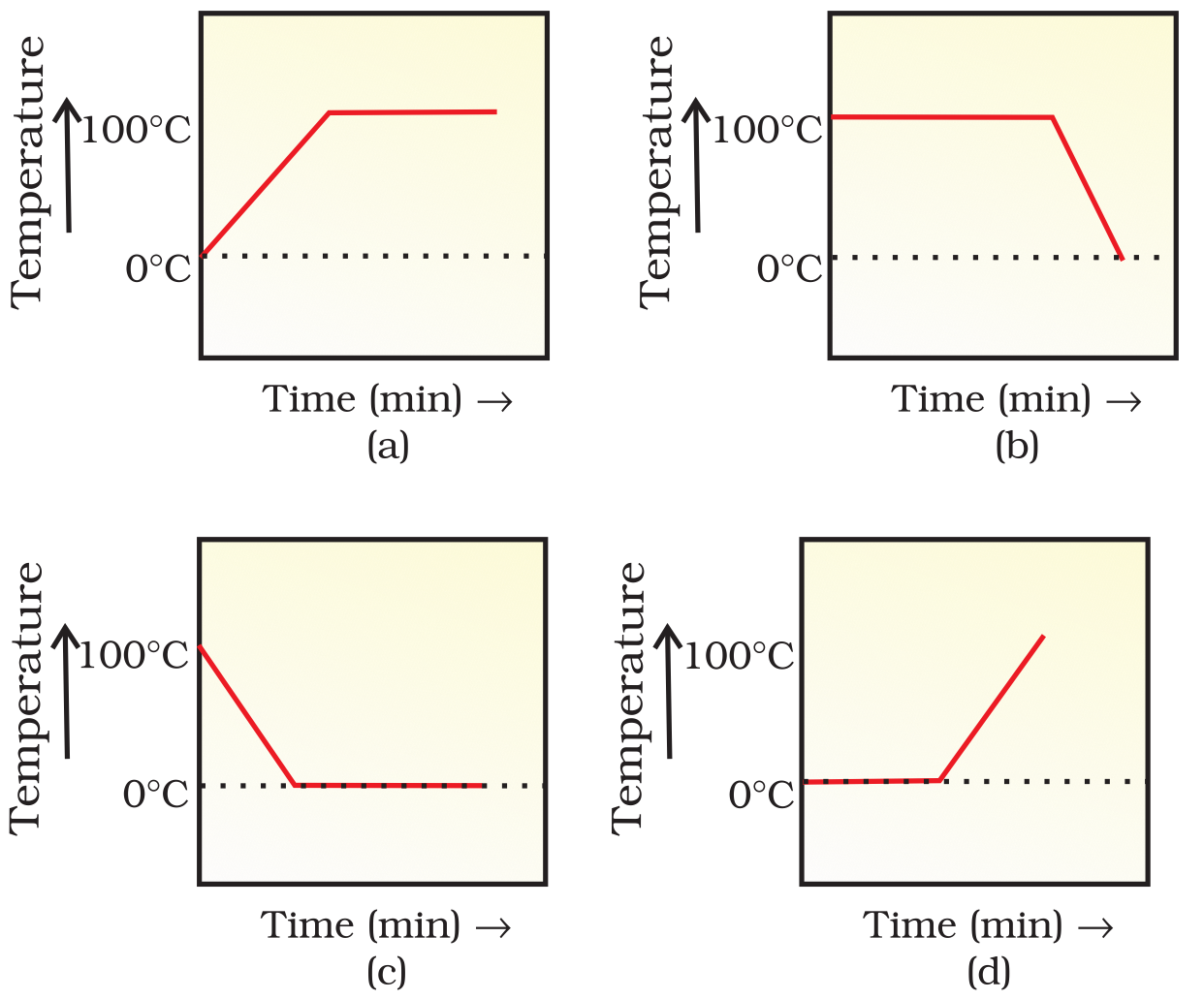
A student heats a beaker containing ice and water. He measures the temperature of the content of the beaker as a function of time. Which of the following would correctly represent the result? Justify your choice.
Write the formulae for the following and calculate the molecular mass for each one of them.
$a.$ Caustic potash
$b.$ Baking powder
$c.$ Lime stone
$d.$ Caustic soda
$e.$ Ethanol
$f.$ Common salt
Explain the transformation of energy in the following cases:
  1. A ball thrown upwards.
  2. A stone dropped from the roof of a building.
How can you obtain pure water from a salt-water mixture (or salt-solution)? Draw a meat and labelled diagram of the apparatus you would use to obtain pure water from a salt-water mixture (or salt-solution).
What should be do to get maximum benefit from a crop field?
Explain the terms 'compression' and 'rarefactions' of a wave. What type of waves consist of compressions and rarefactions?
The electronic configuration of an element Z is 2, 8, 8.
  1. What is the atomic number of the element?
  2. State whether element Z is a metal or a non-metal.
  3. What type of ion (if any) will be formed by an atom of element Z? Why?
  4. What is special about the outermost electron shell or the atom of this element?
  5. Give the name and symbol of element Z.
  6. Name the group of elements to which Z belongs.
What is artificial insemination? Give its uses.
Discuss the conservation of momentum in each of the following cases:
  1. A rocket taking off from ground.
  2. Flying of a jet aeroplane.
Discuss why pesticides are used in very accurate concentration and in very appropriate manner?