Question
Describe structure and functions of plasma membrane.

Answer

Plasma membrane: Every cell is bounded by a thin, elastic, delicate, living membrane called plasma membrane or cell membrane. It is the outermost covering of the cell which separates the cell content from its external environment.
Plasma membrane is continuous lipid bilayer with protein molecules occurring both on inside and outside of the bilayer. We can see plasma membrane with the help of electron microscope. Structurally, plasma membrane is very flexible. The flexibility of plasma membrane helps the cell to engulf in food and other substances from its external environment.
Functions:
  1. Plasma membrane is a selective permeable membrane. Therefore, it allows or permits the entry and exit of some materials in and out of the cell.
  2. It protects the cell from injury.
  3. The flexibility of plasma membrane helps the cell to engulf in food and other substances from its external environment. This process is known as endocytosis.
  4. It bounds the semi-fluid content of the cell.

Need a full question paper?

Generate a complete, print-ready paper with questions like this in minutes — across 16+ boards, with answer keys.

Start Generating Free

Similar questions

Explain general characteristics of phylum Platyhelminthes and Nematoda. Give two examples of each.

In what way is the Rutherford’s atomic model different from that of Thomson’s atomic model?
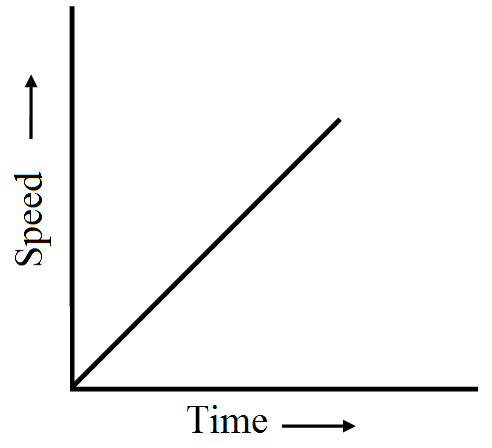
What type of motion is represented by each one of the following graphs?


A car is travelling along the road at 8ms-1. It accelerates at 1ms-2 for a distance of 18m. How fast is it then travelling?
A liquid compound X of molecular mass 18u can be obtained from a number of natural sources. All the animals and plants need liquid X for their survival. When an electric current is passed through 200 grams of pure liquid X under suitable conditions, then 178 grams of gas Y and 22 grams of gas Z are produced. Gas Y is produced at the positive electrode whereas gas Z is obtained at the negative electrode. Moreover, gas Y supports combustion whereas gas Z burns itself causing explosions.
  1. Name (i) liquid X (ii) gas Y, and (iii) gas Z
  2. What is the ratio to the mass of element Z to the mass of element Y in the liquid X?
  3. Which law of chemical combination is illustrated by this example?
  4. Name two sources of liquid X.
  5. Gate an important use of Y in our life.

Ravi suffered from tuberculosis, while Rehman suffered from typhoid. Which disease caused more damage and why?

There are four substances W, X, Y and Z. The substance W is a dark violet solid having diatomic molecules. A solution of W in alcohol is used as a common antiseptic C. The substance X is a white solid which is usually recovered from sea water on a large scale. The substance Y is a white solid which is insoluble in water and used in the form of small balls for the safe storage of woollen clothes. The substance Z is a yet another white solid which is used in making commonly used dry cells.
  1. Name (i) W (ii) X (iii) Y and (iv) Z.
  2. Out of W, X, Y and Z, which substance/ substances can undergo sublimation?
  3. Which substances organic in nature?
  4. What is the name of substance C?
  5. Which substance belongs to the halogen family?
You are provided with a mixture of naphthalene and ammonium chloride by your teacher. Suggest an activity to separate them with well labelled diagram.
What is lymph? Describe its function.
The following data was obtained for a body of mass 1kg dropped from a height of 5 metres:
 
Distance above ground
Velocity
i.
5m
0m/s
ii.
3.2m
6m/s
iii.
0m
10m/s
Show by calculations that the above data verifies the law of conservation of energy (Neglect air resistance). (g = 10m/s2).