Question
Describe Structure of typical angiospermic seed.

Answer

→ (i) The cotyledons: The cotyledons of the embryo are simple structures, generally thick and swollen due to storage of food reserves (as in legumes).
→ Mature seeds may be non-albuminous or ex- albuminous.
→ Non albuminous seeds: Non albuminous seeds have no residual endosperm as they are completely consumed during embryo development (e.g., pea, groundnut).
→ Albuminous seeds Albuminous seeds retain a part of endosperm as they are not completely used up during embryo development (e.g., wheat, maize, barley, castor).
→ Perisperm Occasionally, in some seeds such as black pepper and beet, remnants of nucellus are also persistent. This residual, persistent nucellus is the Perisperm.
→ (ii) Integuments: Integuments of ovules harden as tough protective seed coats.
→ (iii) Micropyle The micropyle remains as a small pore in the seed coat. This facilitates the entry of oxygen and water into the seed during germination.
Need a full question paper?

Generate a complete, print-ready paper with questions like this in minutes — across 16+ boards, with answer keys.

Start Generating Free

Similar questions

Microbes are used for industrial production on a large scale. Explain with examples.
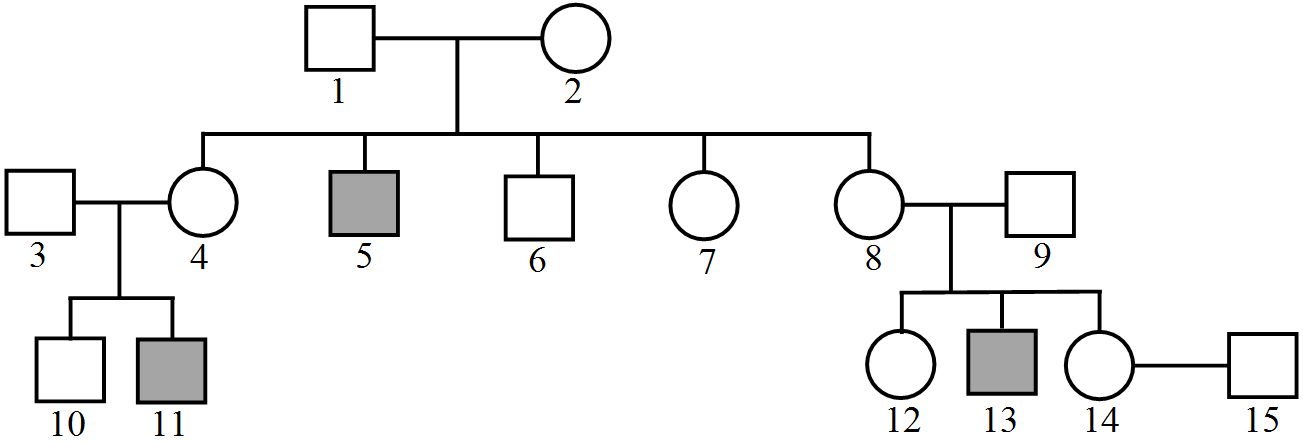
Haemophilia is a sex linked recessive disorder of humans. The pedigree chart given below shows the inheritance of haemophilia in one family. Study the pattern of inheritance and answer the questions given.

  1. Give all the possible genotype of the members 4, 5 and 6 in the pedigree chart.
  2. A blood test shows that the individual 14 is a carrier of haemophilia. The member numbered 15 has recently married the member numbered 14. What is the probability that their first child will be a haemophilic male?
Differentiate the following and give examples of each: Innate and acquired immunity
  1. What are transgenic animals?
  2. Name the transgenic animal having the largest number amongst all the existing transgenic animals.
  3. Mention any three purposes for which these animals are produced.
Answer the following questions:
Mention any four strategies adopted by flowering plants to prevent self-pollination.
What are 'cloning sites' in a cloning vector? Explain their role. Name any two sites in pBR 322.
Do you think that reproductive health in our country has improved in the past 50 years? If yes, mention some such areas of improvement.
Write any four similarities in spermatogenesis and oogenesis.
Differentiate between intraspecific and inter specific competition.
In a monohybrid cross of plants with red and white flowered plants, Mendel got only red flowered plants. On self-pollinating these F1 plants got both red and white flowered plants in 3 : 1 ratio. Explain the basis of using RR and rr symbols to represent the genotype of plants of parental generation.