Question
Describe the components of an ecosystem.

Answer

The components of an ecosystem can be divided into two categories: biotic and abiotic.
  1. Biotic components:
  1. Producers- Green plants which can synthesize their own food.
  2. Consumers- They do not synthesize their food. They may be,
  • Primary consumer/ herbivores - consuming plants as food.
  • Secondary and tertiary consumers or carnivores- They feed on either herbivores or carnivores.
  1. Decomposers- These organisms breakdown the dead bodies or waste products of plants and animals into simpler inorganic compounds.
  1. Abiotic components:
  1. Climatic components.
  • Light
  • Temperature
  • Wind
  • Atmospheric gases
  • Rain
  • Atmospheric humidity
  1. Soil factors
  • Organic materials
  • Minerals
  • Soil, water
  • Soil air
  1. Topographic factors
  • Altitude
  • Direction and steepness slope

Need a full question paper?

Generate a complete, print-ready paper with questions like this in minutes — across 16+ boards, with answer keys.
Start Generating Free

Similar questions

Name three species of fungi that cause ringworm. Mention the symptoms of this disease?
Answer the following questions:
Why is follicular phase in the menstrual cycle also referred as proliferative phase? Explain.
Explain mechanism of sugar transport through phloem.
Atherosclerosis.
Discuss in detail the contributions of Morgan and Sturvant in the area of genetics.
Distinguish between : Natural ecosystem and artificial ecosystem.
Describe the various methods of birth control to avoid pregnancy.
Explain the components of a transcription unit with the help of a diagram?
Expiration is called a passive process.
Read the following and answer any four questions from (i) to (v) given below:
Gene therapy is the technique of genetic engineering to replace a faulty gene by a normal healthy functional gene. It is a way of treating genetic disease by introducing a piece of DNA into the cells of an affected individual. Liposomes can be used for gene therapy as they target the cells affected by a genetic disease.
  1. A patient suffers from adenosine deaminase (ADA) deficiency, an autosomal recessive immune deficiency in which bone marrow lymphoblasts cannot replicate to generate immuno-competent lymphocytes. The treatment option that would cure the patient is:
  1. Germ-line gene therapy to replace one ADA gene copy.
  2. Germ-line gene therapy to replace both ADA gene copies.
  3. Somatic cell gene therapy to replace both ADA gene copies in circulating lymphocytes.
  4. Somatic cell gene therapy to replace one ADA gene copy in bone marrow lymphoblasts.
  1. Which type of gene therapy is least effective in transferring DNA to the nucleus?
  1. Adenoviruses.
  2. DNA attached to a ligand.
  3. Liposomes.
  4. Retroviruses.
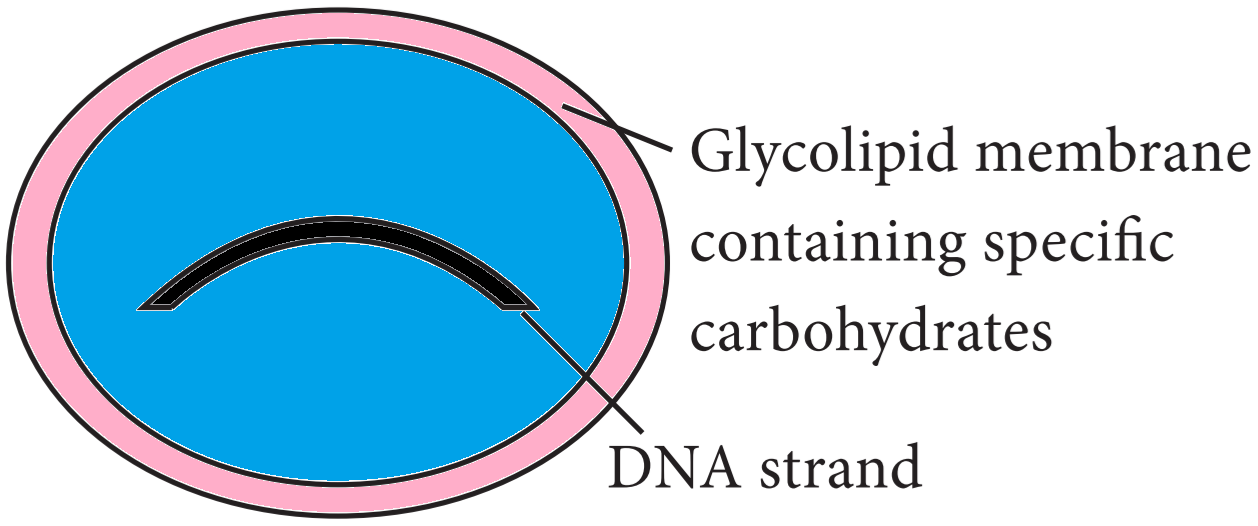
  1. Liposomes can be used for gene therapy as they target the cells affected by a genetic disease. The diagram shows the structure of a liposome.


What feature of a cell surface membrane allows the liposome to target cells affected by a genetic disease?
  1. Carrier molecules.
  2. Phosphate groups.
  3. Protein channels.
  4. Receptor molecules.
  1. Which of the following disorders would gene therapy be least effective?
  1. Cystic fibrosis.
  2. Huntington's disease.
  3. Sickle cell anaemia.
  4. Type II diabetes.
  1. Following are some reasons explaining why gene therapy is not yet fully an effective treatment for genetic diseases.
  1. Lack of knowledge of DNA sequences.
  2. Lack of efficient and safe gene delivery system.
  3. Cost of the technology.
  4. Some diseases involve multiple genes.
  5. Problems with appropriate gene regulation.
Select the correct option.
  1. I, III and V only
  2. II, IV and V only
  3. Ill, IV and V only
  4. I, III and IV only