MCQ
Determine the element if its ground state has $13$ electrons in its "$M-$ shell".
  • A
    Copper
  • Manganese
  • C
    Nickel
  • D
    Iron

Answer

Correct option: B.
Manganese
The $M$ shell is the third energy level; the first $(K)$ shell can contain only $2$ electrons. The second $(L)$ shell can contain up to $8$ electrons, for a total of $10$. The third $(M)$ shell can contain up to $18$ electrons, but when it gets to $10,$ the fourth or $N$ shell starts to fill up, since its first two electrons have lower energy than the next energy level in the M shell, so we have $18$ electrons in the $K, L,$ and $M$ shells and the next two go into the $N$ shell $($for element $20,$ or calcium$)$. So calcium has $10$ electrons in the $M$ shell and two in the $N$ shell; then the next electrons go into the $M$ shell $($the $3d$ orbitals) so when we get to a total of $25$ electrons, we have $10$ in the $K$ and $L$ shells, two in the $N$ shell, and $13$ in the $M$ shell. If it is a neutral atom, the element has atomic number $25,$ that is, manganese.

Need a full question paper?

Generate a complete, print-ready paper with questions like this in minutes — across 16+ boards, with answer keys.
Start Generating Free

Similar questions

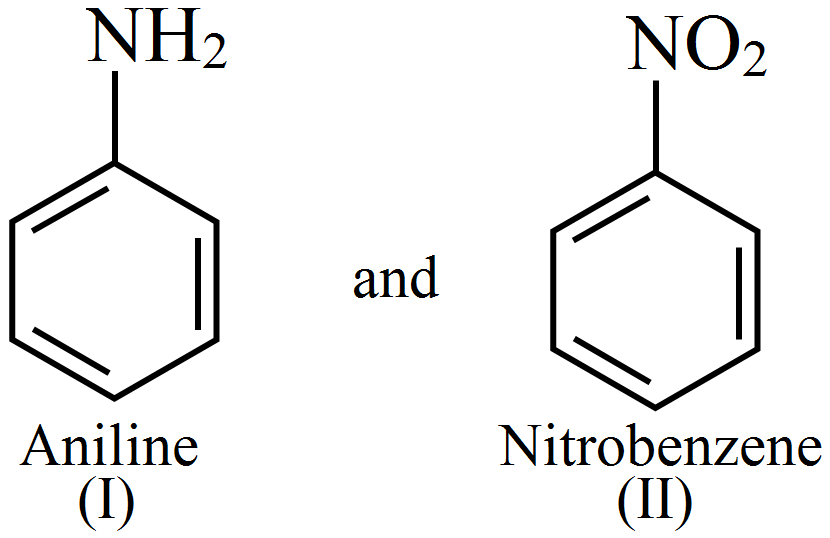
Consider the following compounds,

Which of the following statements is$/$ are true regarding $I$ and $II$?
The statements

$(i) $ in filling a group of orbitals of equal energy, it is energetically preferable to assign electrons to empty orbitals rather than pair them into a particular orbital.

$(ii)$  When two electrons are placed in two different orbitals, energy is lower if the spins are parallel.are valid for

Hybridisation states of $C$ in $CH_3^+$ and $CH_4$ are
The work done to contract a gas in a cylinder, is $ 462\, joules$. $128 \,joule$  energy is evolved in the process. What will be the internal energy change in the process.....$joules$
Among the following the correct statement($s$) for electrons in an atom is(are)

$(A)$ Uncertainty principle rules out the existence of definite paths for electrons.

$(B)$ The energy of an electron in $2 s$ orbital of an atom is lower than the energy of an electron that is infinitely far away from the nucleus.

$(C)$ According to Bohr's model, the most negative energy value for an electron is given by $n=1$, which corresponds to the most stable orbit.

$(D)$ According to Bohr's model, the magnitude of velocity of electrons increases with increase in values of $n$.

$CH \equiv CH + CO + {H_2}O\,\xrightarrow{{Ni{{(CO)}_4}}}$ Product,

For this reaction which statement is false

The frequency of a certain line of lyman series of atomic spectrum of $H$ atom satisfy the following condition 
$(i)$ It is the sum of frequency of another lyman line and balmer line.
$(ii)$ It is the sum of frequency of a certain line, lyman line and a paschen line
$(iii)$ It is the sum of frequency of a lyman and a paschen line but no bracket line
To what transition does this frequency correspond?
In Antartica, Ozone depletion is due to formation of the following compound :
Which of the following is/ are correct method to produce electricity from garbage?
$C_6H_5-C \equiv C-CH_3 \xrightarrow[{{H_2}S{O_4}}]{{HgS{O_4},\,{H_2}O}} A$ 

Major Product $(A)$ will be