Question
Differentiate between dimensional and non-dimensional variables.

Answer

The quantities which have dimensions but do not possess a constant value are called dimensional variables e.g., velocity, force etc. On the other hand, the quantities which have neither dimensions nor they have a constant value are called non-dimensional variables e.g., relative density, strain, etc.

Need a full question paper?

Generate a complete, print-ready paper with questions like this in minutes — across 16+ boards, with answer keys.
Start Generating Free

Similar questions

A pump engine pulls 100 kg of water to a height of 10 m in 10 seconds, while the efficiency of the engine is $6 0$ percent. What will be the actual power of the engine ( $g =10 m / s ^2$ )?
A simple pendulum moves from one $\left(\frac{1}{2}\right)$ end to other in a second, what will be its frequency?
Find the work done in increasing the radius of a soap bubble from 4cm to 6cm. The value of surface tension for the soap solution is 30 dyne cm-1.
The mean speed of the molecules of a hydrogen sample equals the mean speed of the molecules of a helium sample. Calculate the ratio of the temperature of the hydrogen sample to the temperature of the helium sample.
The antiseptics used for cuts and wounds in the human flesh have low surface tensions. Why?
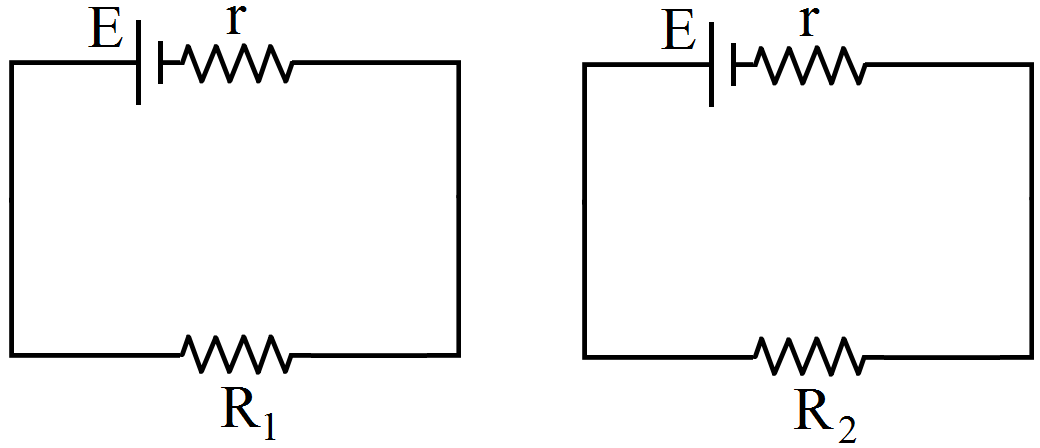
Two unequal resistances R1 and R2 are connected across two identical batteries of emf $\varepsilon$ and internal resistance r. Can the thermal energies developed in R1 and Rbe equal in a given time. If yes, what will be the condition?

A cricket ball is thrown at a speed of $28 m s ^{-1}$ in a direction 30 above the horizontal. Calculate (a) the maximum height, (b) the time taken by the ball to return to the same level, and (c) the distance from the thrower to the point where the ball returns to the same level.
The wavelength of $\text{K}_\alpha$ X-ray of tungsten is 21.3pm. It takes 11.3keV to knock out an electron from the L shell of a tungsten atom. What should be the minimum accelerating voltage across an X-ray tube having tungsten target which allows production of $\text{K}_\alpha$ X-ray?
If two waves of the same frequency but of different amplitudes travelling in opposite directions through a medium superpose upon each other, will they form stationary wave? Is energy transferred? Are there any nodes?
A point charge produces an electric field of magnitude 5.0NC-1 at a distance of 40cm from it. What is the magnitude of the charge?