Question
Differentiate between electrolytes and non-electrolyte.

Answer

S.No.
Electrolytes
Non-electrolyte
$1.$
Ions are present
Ions are not present
$2.$
Allow electricity to pass through them
Do not allow electricity to pass through them
$3.$
Example: acidified copper sulphate solution
Example: pure water, honey

Need a full question paper?

Generate a complete, print-ready paper with questions like this in minutes — across 16+ boards, with answer keys.
Start Generating Free

Similar questions

Explain how, friction enables us to walk without slipping.
Explain the statement, 'a star is $8$ light years away from the Earth'.
When an electric current is passed through a cut potato for a considerable time, a coloured spot is formed around one of the electrodes:
$A.$ What is the colour of the spot?
$B.$ Around which electrode $($positive or negative electrode$)$ the coloured spot is formed?
$C.$ Which effect of electric current is involved in this case?
Which of the following is the speed of sound in water and which in steel?
$a. 5000\ m/s.$
$b. 1500\ m/s.$
$c. 340\ m/s.$
State whether plastic is biodegradable or non-biodegradable? Give reasons for your answer.
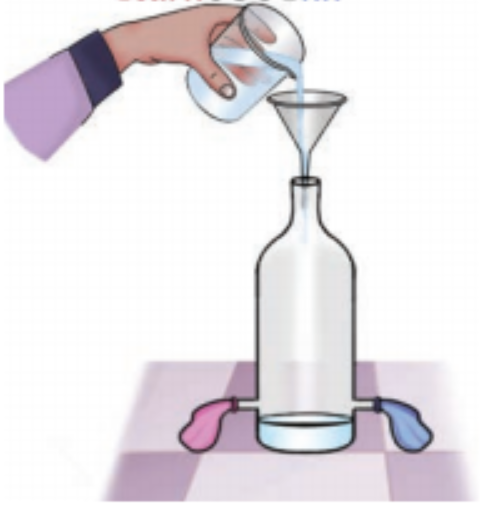
What will happen to the two identical balloons A and B as shown in Figure when water is filled into the bottle up to a certain height? Will both the balloons bulge? If yes, will they bulge equally? Explain your answer.
Image
State some of the characteristics of chemical changes brought about by the chemical effect of electric current.
What are the differences between a Wildlife Sanctuary and a National Park?
Read the paragraph and answer the questions following it. Water is essential for life. Without water there would be no life. We usually take water as granted for its purity, but we must ensure the quality of water. Pollution of water originates from human activities. Through different paths, pollution reaches to
ground water. Easily identified source or place of pollution is called as point source, e.g.– municipal and industrial discharge pipes, where pollutants enter the water source. Non–point sources of pollution are those where a source of pollution can not be easily identified, e.g.– agricultural run off, acid rain etc.
$i.$ How do you classify the various sources of water pollution?
$ii.$ What are the point sources of water pollution?
$iii.$ Name any two non-point sources of water pollution?
What are the constituents of coal gas? State one use of coal gas.