Question
Differentiate between rate of reaction and reaction rate constant.

Answer

S. No Rate of Reaction Reaction Rate Constant
(i) Rate of reaction is the change in concentration of a reactant or product in a unit interval of time. It is the rate of reaction when the molar concentration of each of the reactants is unity.
(ii) The rate of reaction at any instant of time depends upon the molar concentrations of the reactants at that time. The rate constant does not depend upon the concentrations of the reactants.
(iii) Its units are always mol litre$^{–1}$ time$^{–1}.$ Its units depend upon the order of reaction.

Need a full question paper?

Generate a complete, print-ready paper with questions like this in minutes — across 16+ boards, with answer keys.
Start Generating Free

Similar questions

What role does adsorption play in heterogeneous catalysis?
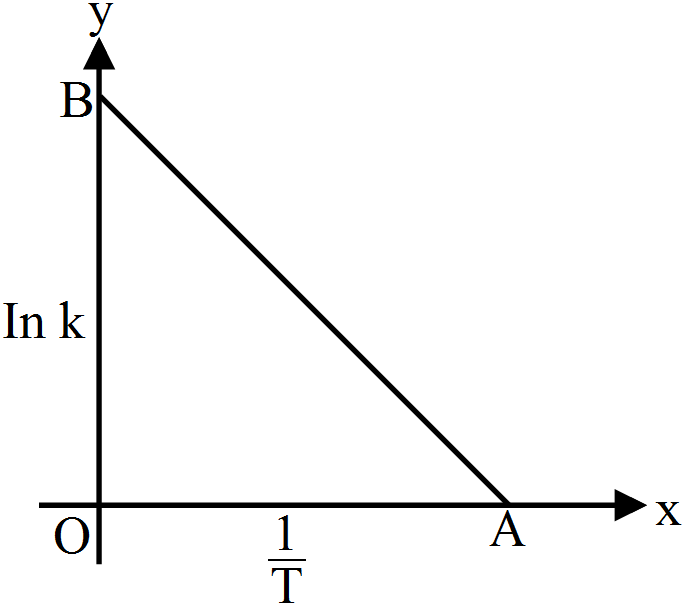
A graph between ln $k$ and $\frac{1}{\text{t}}$ for a reaction is given. Here k is rate constant and $T$ is temperature in Kelvin.If $OA = a$ and $OB = b,$ answer the following:
  1. What is the activation energy $(Ea)$ of the reaction?
  2. What is the frequency factor $(A)$ for the reaction?
Which is a stronger acid-phenol or cresol? Explain.
Explain Halogenation, Nitration, Sulphonation and Friedel crafts reaction of chlorobenzene.
Complte the following reaction :
$CH _3 COOH \frac{\text { (i) } X _2 R e d P }{\text { (iii) } H _2 O }$
Why are different colours observed in octahedral and tetrahedral complexes for the same metal and same ligands?
Answer the following questions:
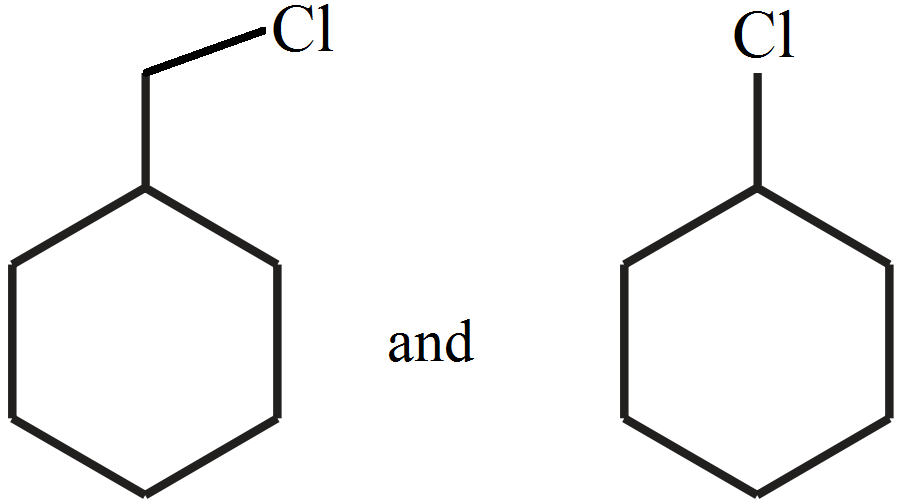
In the following pairs of halogen compounds, which would undergo $S_N1$ reaction faster? Explain.
Write the principles of the following methods:
  1. Vapour phase refining.
  2. Zone refining.
  3. Chromatography.
Complete the following reactions :
  1. $\text{C}_6\text{H}_5-\text{COO}^-\text{NH}^+_4\xrightarrow{\text{ }\text{ }\text{ }\text{ }\text{ }\text{ }\text{ }\text{ }\triangle\text{ }\text{ }\text{ }\text{ }\text{ }\text{ }\text{ }\text{ }\text{ }}\text{A}\xrightarrow{\text{ }\text{ }\text{ }\text{ }\text{Br}_2/\text{KOH}\text{ }\text{ }\text{ }\text{ }}\text{B}\xrightarrow{\text{ }\text{ }\text{ }\text{ }\text{CH}_3\text{COC}l_3/\text{pyridine}\text{ }\text{ }\text{ }\text{ }}\text{C}$
  2. $\text{C}_6\text{H}_5\text{N}^+_2\text{BF}^-_4\xrightarrow[\triangle]{\text{ }\text{ }\text{ }\text{ }\text{ }\text{ }\text{ }\text{ }\text{NaNO}_2/\text{Cu}\text{ }\text{ }\text{ }\text{ }\text{ }\text{ }\text{ }\text{ }\text{ }}\text{A}\xrightarrow{\text{ }\text{ }\text{ }\text{ }\text{Sn}/\text{HC}l\text{ }\text{ }\text{ }\text{ }}\text{B}\xrightarrow[\triangle]{\text{ }\text{ }\text{ }\text{ }\text{CHC}l_3+\text{alc. KOH}\text{ }\text{ }\text{ }\text{ }}\text{C}$
A crystalline solid has a cubic structure in which tungsten $(W)$ atoms are located at cube corners of the unit cell, oxygen atoms at the cube edges and sodium atom at the centre. What is the molecular formula of the compound?