Question
Differentiate between the following:
Radio waves and light waves.

Answer

Radio waves Light waves
1. Radio waves are not visible to hum an eye. 1. Light waves are visible to human eye.
2. These waves range from $10^5$ to $10^{-3}$​​​​​​​ meters. 2. These waves range from $10^{-6}$ to $10^{-7}​​​​​​​$ meters.
3. Frequency of radio waves is below $10^7 Hz.$ 3. Frequency of light waves lie in the range $10^{14}$ to $10^{13} Hz.$
4. Its sources are TV and radio transmitters. 4. Its sources are sunlight, white hot bodies.

Need a full question paper?

Generate a complete, print-ready paper with questions like this in minutes — across 16+ boards, with answer keys.
Start Generating Free

Similar questions

Explain the principle of working of the windmill for generating electricity.
Draw neat diagrams for the formation of images in case of convex lens and state its characteristics when the object is :
(a) At infinity (b) At 2 F (c) In between $F _1$ and $2 F_1$
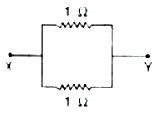
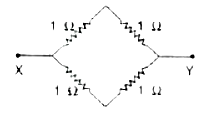
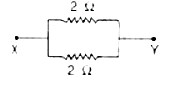
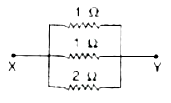
Which of the following combinations have the same equivalent resistance between X and Y?
Two bulbs are marked $100 W, 220 V$ and $60 W, 110 V$. Calculate the ratio of their resistances.
What is the relation between the mechanical advantage and the number of strands of string used to support the load, in a ‘block and tackle’ set-up?
An electric bulb is rated 250 W, 230 V. What information does this convey? Calculate the current through a 60 W lamp rated for 250 V. If the line voltage falls to 200 V, how is the power consumed by the bulb affected?
In an experiment of verification of Ohm’s law following observations are obtained.

potential difference V (in volt)

0.5 1.0 1.5 2.0 2.5
current I (in ampere) 0.2 0.4 0.6 0.8 1.0

Draw a characteristic V-I graph and use this graph to find:
  1. potential difference V when the current I is 0.5 A,
  2. current I when the potential difference V is 0.75 V,
  3. resistance in a circuit.
(i) What is potential energy. Discuss about two types of potential energy.
(ii) (a) State law of conservation of energy.
(b) Write two examples of interconversion of energy.
(iii) A body A of mass 20 kg is moving with a velocity of $1 ms^{-1}$. Another body B of mass 1 kg is moving with a velocity of $20 ms^{-1}$. Find the ratio of kinetic energy of $A$ and $B$.
Describe a set up for plotting the magnetic lines of force in: (i) A straight wire, (ii) A circular coil and (iii) A straight solenoid.