MCQ
Dipole moment is shown by
- A$1, 4-$dichlorobenzene
- B$cis$ $1, 2-$dichloroethene
- C$trans$$1, 2-$dichloro$-2-$pentene
- ✓$(b)$ and $(c)$
Generate a complete, print-ready paper with questions like this in minutes — across 16+ boards, with answer keys.
$\left( 2 \right)\,{N_2}\left( g \right) + {O_2}\left( g \right) \rightleftharpoons 2NO\left( g \right)\,,\,{K_2}$
$\left( 3 \right)\,{H_2}\left( g \right) + \frac{1}{2}{O_2}\left( g \right) \rightleftharpoons {H_2}O\left( g \right)\,,\,{K_3}$
The equation for the equilibrium constart of the reaction
$2N{H_3}\left( g \right) + \frac{5}{2}{O_2}\left( g \right) \rightleftharpoons 2NO\left( g \right) + 3{H_2}O\left( g \right)$
$(K_4)$ in terms of $K_1 , K_2$ , and $K_3$ is
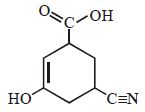
The order of basicity is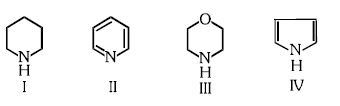
Reason : The higher oxidation states for the group $14$ elements are more stable for the heavier members of the group due to ‘inert pair effect’.