Question
Discuss briefly about seed viability.

Answer

Seed viability : Different seeds have diverse seed variability. The germination capacity of
mature seeds ends within a month, many have the viability for years and some for many years. The germenation capacity of mature seeds remains even after a long time has passed and this is known as seed viability. The seeds of leupire (lupinus arctinus) excavated from Arctic. Tundra were about 100000 years old. A recent record of 2000 years old viable seed is of date palm (phoenix dactylifera discovered during the excavation at king Herod’s palace near the dead sea, when sown, germinate flower. Therefore each seed has different viability.
Need a full question paper?

Generate a complete, print-ready paper with questions like this in minutes — across 16+ boards, with answer keys.

Start Generating Free

Similar questions

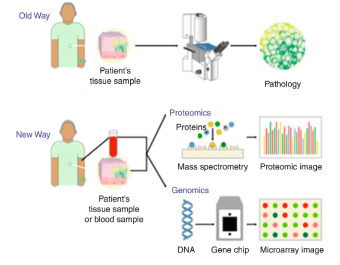
The image below describes the molecular diagnostic procedures.
Image
i. Write any two biochemical/molecular diagnostic procedures for early detection of viral infection.
ii. Explain the principle of any one of them.
In the given diagram, write the names of parts shown with lines.

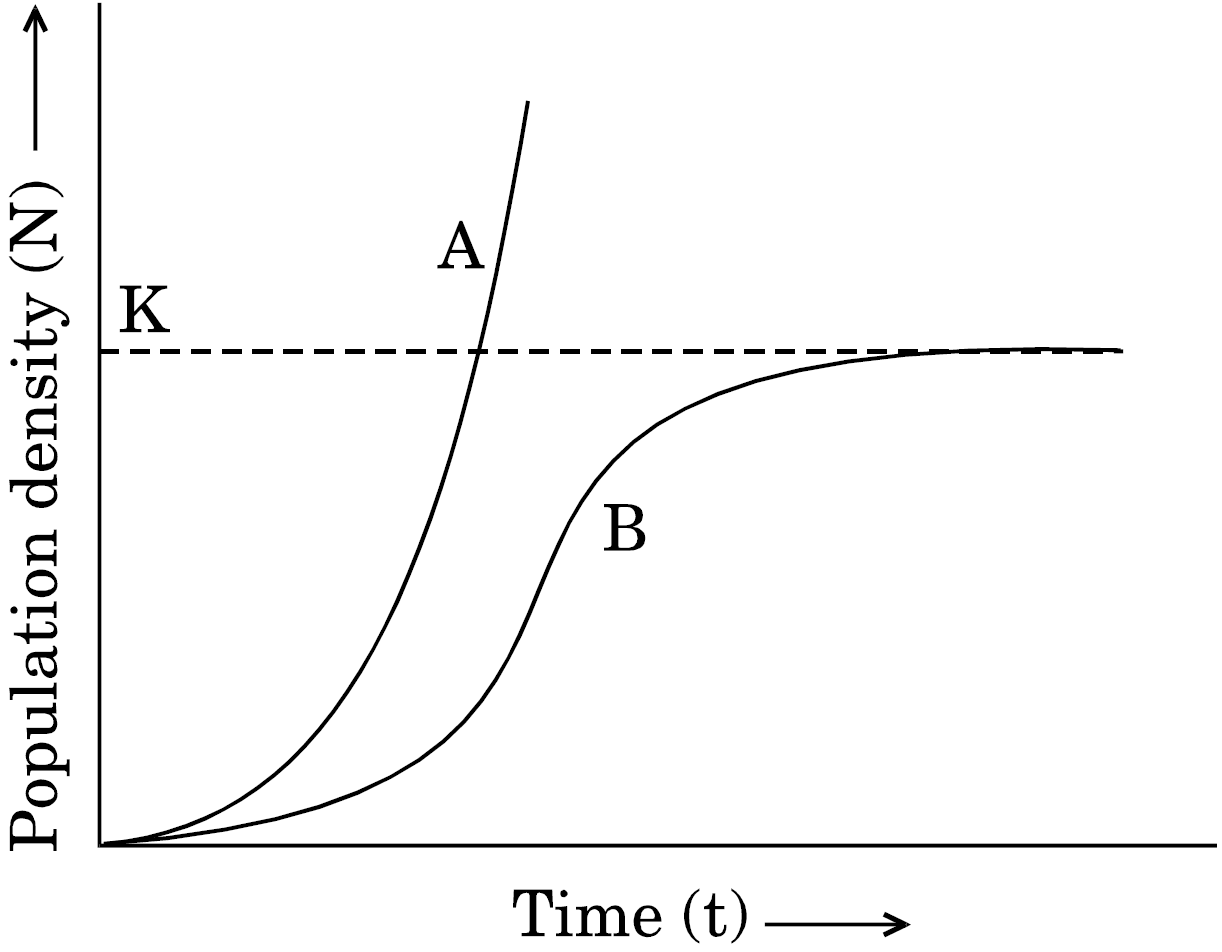
Study the population growth curve given below and answer the questions that follow:

  1. Identify ‘A’ and ‘B’ shown in the graph.
  2. When and why do such curves occur in a population?
Given below are pairs of diseases and causative organisms. Which out of these is not a matching pair and why?
Filariasis: Wucheraria
Ringworm: Ascaris
AIDS: Human Immuno Virus
Malaria: Plasmodium
Gene therapy is an attempt to correct a genetic defect by providing a normal gene into the individual. By this the normal function can be restored. An alternate method would be to provide the gene product (protein/ enzyme) known as enzyme replacement therapy, which would also restore the function. Which in your opinion is a better option? Give reason for your answer.
Name the pathogen of typhoid fever. Describe the transmission and symptoms of this disease.
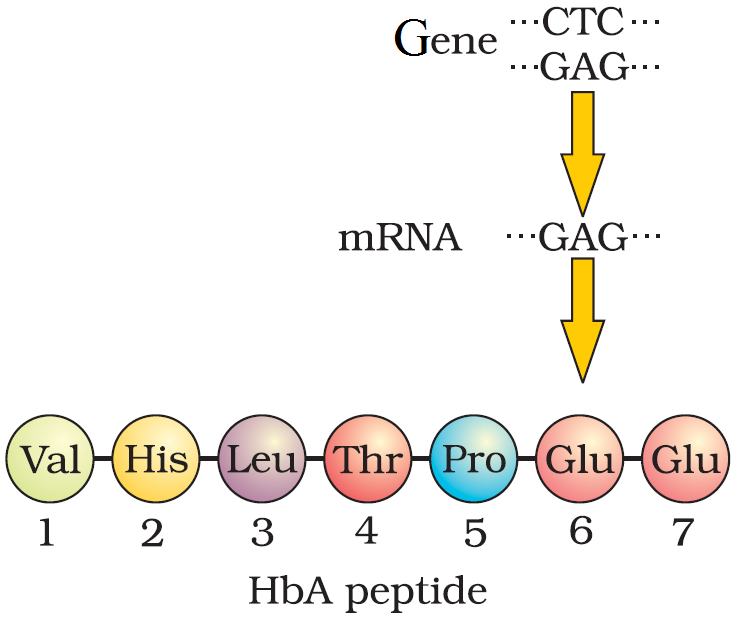
Given below is the representation of amino acid composition of the relevant translated portion of B-chain of haemoglobin, related to the shape of human red blood cells.

  1. Is this representation indicating a normal human or a sufferer from certain related genetic disease? Give reason in support of your answer.
  2. What difference would be noticed in the phenotype of the normal and the sufferer related to this gene?
  3. Who are likely to suffer more from the defect related to the gene representedthe males, the females or both males and females equally? And why?

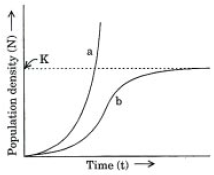
Study the population growth curves shown above.

  1. Identify curves ‘a’ and ‘b’.
  2. Mention the responsible for the curves ‘a’ and ‘b’ respectively.
  3. Give the necessary equation for the curve ‘b’.
Where is acrosome present in humans? Write its function.
"Post-industrialization, the population of melanised moth increased in England at the expense of white-winged moths." Provide explanations.