Question
Discuss briefly the principle of immunization.

Answer

Immunization: It is the development of resistance against a pathogen. It is carried out through vaccination. Principle of vaccination. Vaccination introduces a harmless antigen of a pathogen into the body. Our immune system develops some antibodies and memory lymphocytes against the pathogen. When the actual pathogen happens to enter the body, the immune system recognises its antigen through memory cells. The memory cells induce large scale synthesis of cytotoxic and antibody producing lymphocytes to eliminate the pathogen.

Need a full question paper?

Generate a complete, print-ready paper with questions like this in minutes — across 16+ boards, with answer keys.
Start Generating Free

Similar questions

  1.  
  1.  
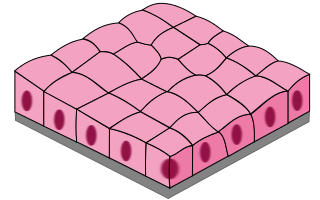
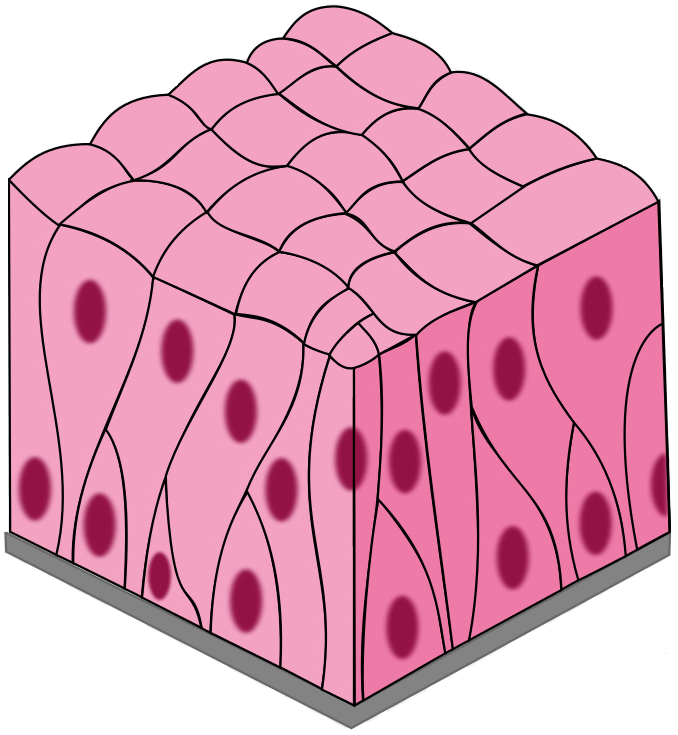
  1. Identify figures A and B.
  2. Which is called tesselated and payement epitheliurn?
  3. Which one lines the gastrointestinal tract and epiglottis?
  4. Which one allows diffusion of substances?
Illustrate only a plant cell as seen under electron microscope. How is it different from animal cell?
How many centres have been established in India for artificial insemination of cows and buffaloes?
What are crop pests? Suggest preventive measures to control pests.
Comment on the following statements:
  1. Evaporation produces cooling.
  2. Rate of evaporation of an aqueous solution decreases with increase in humidity.
  3. Sponge though compressible is a solid.
List any two differences between infectious and noninfectious diseases. Write any one example of each disease.
Calculate the mass of sodium sulphate required to prepare its $20\%$ (mass percent) solution in $100\ g$ of water?
Derive the formula: $\text{s}=\text{ut}+\frac{1}{2}\text{at}^2,$ where the symbols have usual meanings.
Explain the need of irrigation in India.
The substance $X$ normally exists in a physical state which can flow easily but does not fill its vessel completely. It also turns anhydrous copper sulphate blue. When substance $X$ is cooled excessively, it changes into a substance $Y$ which has a fixed shape as well as a fixed volume. If, however, the substance $X$ is heated strongly, it changes into a substance $Z$ which has neither a fixed shape nor a fixed volume.
  1. Name the substances $(i) X$ $(ii) Y$ and $(iii) Z.$
  2. What is the process of conversion of $X$ into $Y$ known as$?$
  3. At which temperature $X$ gets converted into $Y$?
  4. What is the process of conversion of $X$ into $Z$ known as$?$
  5. At which temperature $X$ gets converted into $Z?$