Question
Discuss briefly various methods of redemption of debentures.

Answer

  1. Lump Sum Method: This method as the name suggests is a one-time payment method. Here the company will repay the whole amount in one lump sum payment to the debenture holders. The amount and the date of the payment will be according to the terms of issue.
  2. Installment Method: This is also known as the drawing of lots method. Here the company will start redeeming debentures in lots or installments from one particular year as agreed by the terms of issue. Let us see the accounting entries for the same.
  3. Conversion Method: A company may opt to not pay the debenture holders at the time of redemption. Instead of that, it can convert the debentures into a new class of debentures or even equity shares. Such debentures are known as convertible debentures. Such new debentures or shares can be issued at par, premium or even discount.
  4. Purchasing Method: In this method, the company will buy its debentures from the open market and then immediately cancel them. This is known as the purchase from the open market. This way the company can defer the redemption till it is suitable to them. Also if they buy the debentures for a discount they can make additional benefits/ profits as well.

Need a full question paper?

Generate a complete, print-ready paper with questions like this in minutes — across 16+ boards, with answer keys.

Start Generating Free

Similar questions

Grand Hospitality Ltd., reported Net Profit after Tax of ₹ 6,40,000 for the year ended 31st March,2018. The relevant extract from Balance Sheet as at 31st March, 2018 is:
Particulars
31st March, 2018 ₹
31st March, 2017 ₹
Inventories
Trade Receivables
Prepaid Expenses
Trade Payables
Provision for Tax
1,15,000
1,50,000
20,000
1,10,000
20,000
1,25,000
1,10,000
6,000
80,000
15,000
Depreciation charged on Plant and Machinery ₹ 55,000, insurance claim received 50,000, gain (profit) on sale of investment ₹ 20,000 appeared in the Statement of Profit and Loss for the year ended 31 st March, 2018. Calculate Cash Flow from Operating Activities
From the following particulars obtained from the books of Mark Ltd., prepare a Comparative Statement of Profit and Loss:
ParticularsNote No.2017-18 (₹)2016-17 (₹)
Revenue from operations50,00,00040,00,000
Purchase of stock-in trade40,00,00030,00,000
Changes in inventory10,00,0008,00,000
Other expenses5,00,0004,00,000
Other incomes2,50,0002,00,000
Raj Ltd. issued 5,000; 8% Debentures of ₹ 100 each at a premium of 5% payable as follows:
₹ 10 on application ; ₹ 20 along with premium on allotment and balance on first and final call.
Pass necessary Journal entries.
Closing Trade Receivables ₹ 4,00,000; Cash Revenue from Operations being 25% of Credit Revenue from Operations. Excess of Closing Trade Receivables over Opening Trade Receivables ₹ 2,00,000. Total Revenue from Operations ₹ 15,00,000. Calculate Trade Receivables Turnover Ratio.
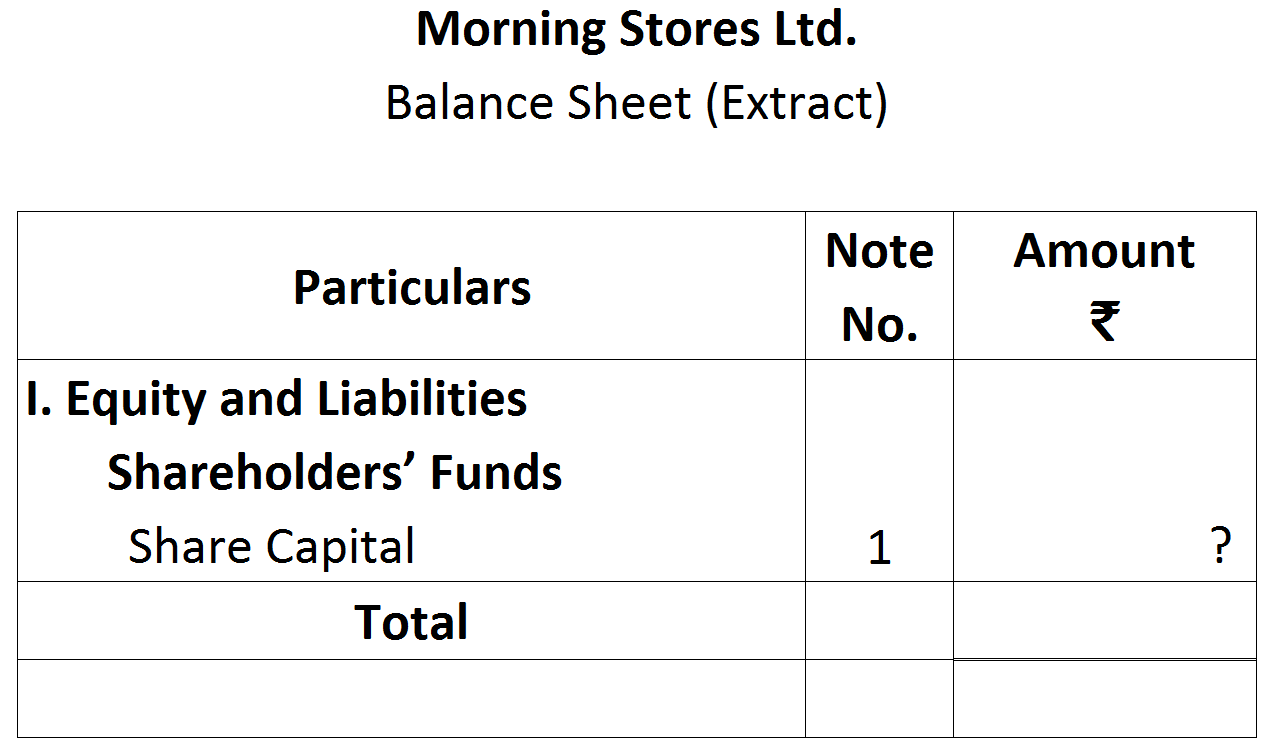
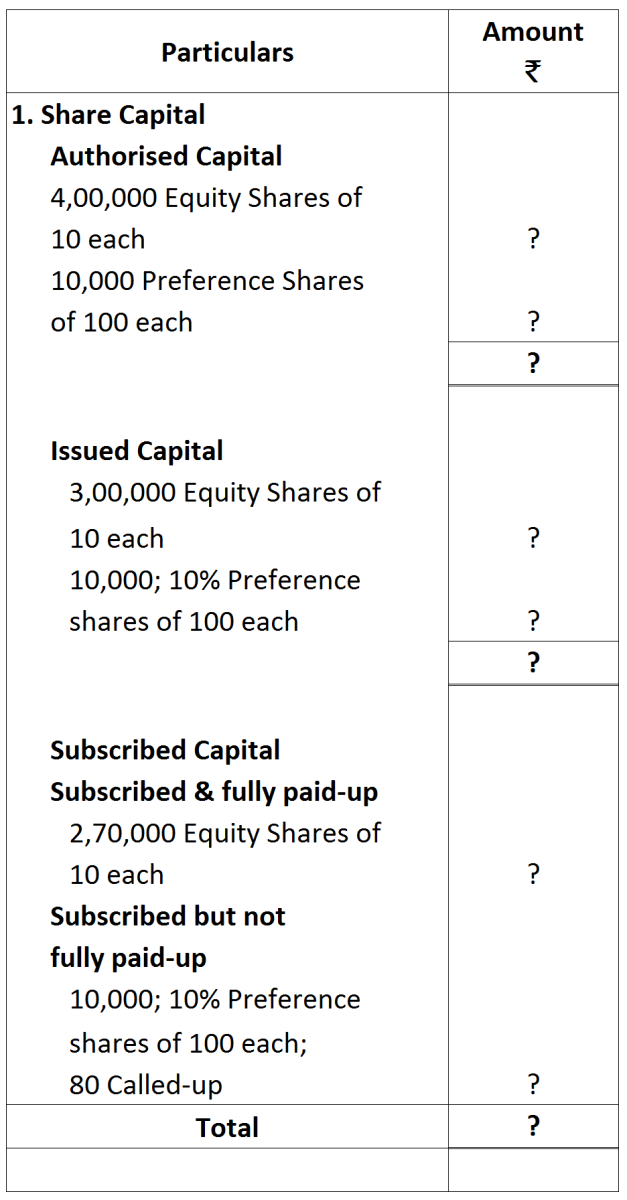
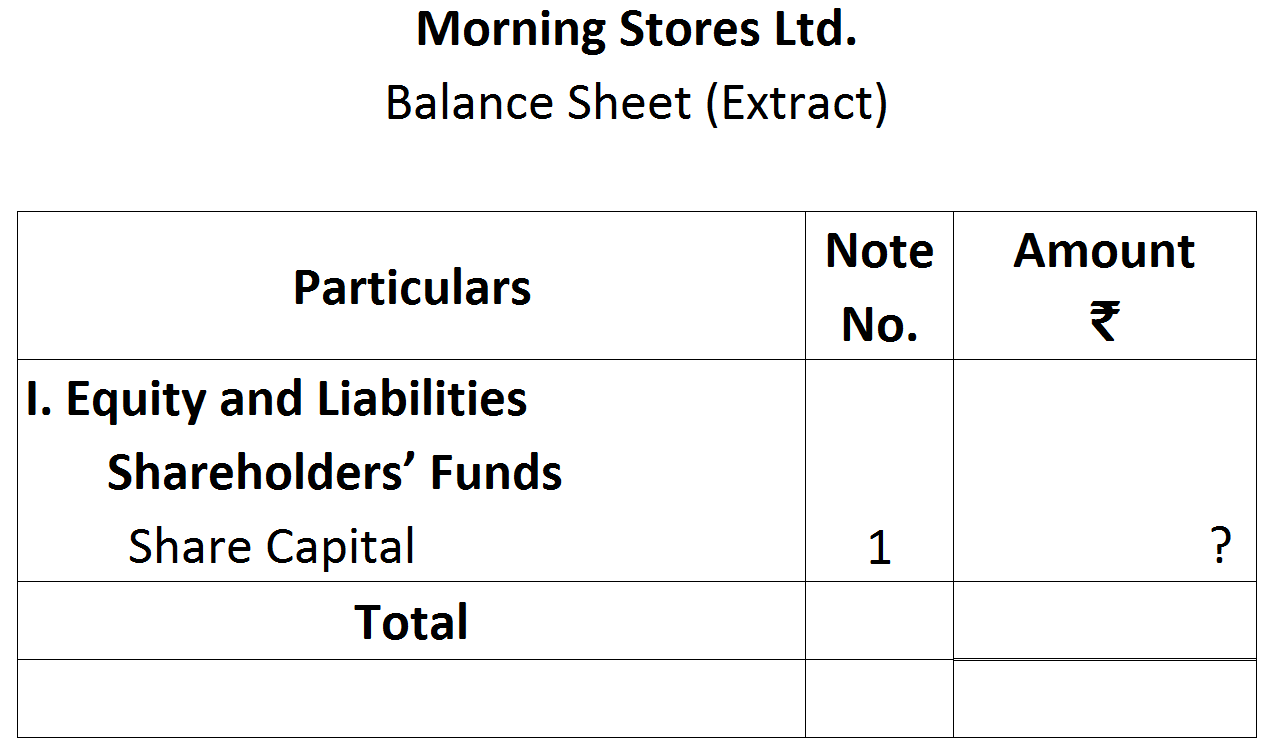
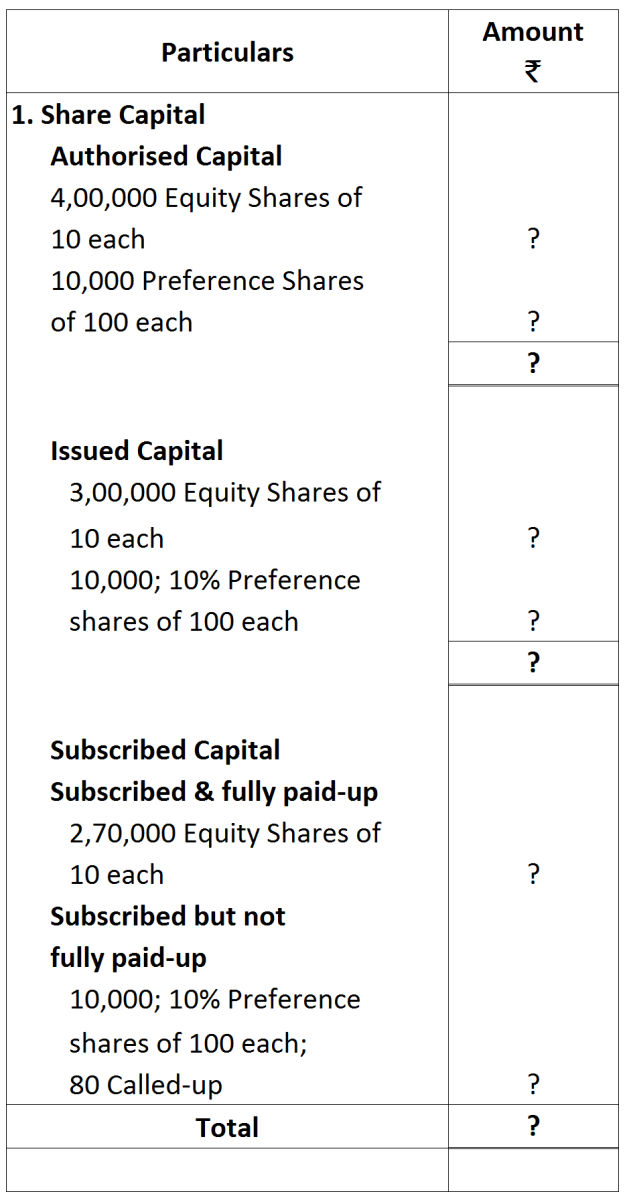
Complete the missing (?) figures in the following Extract of Balance Sheet:
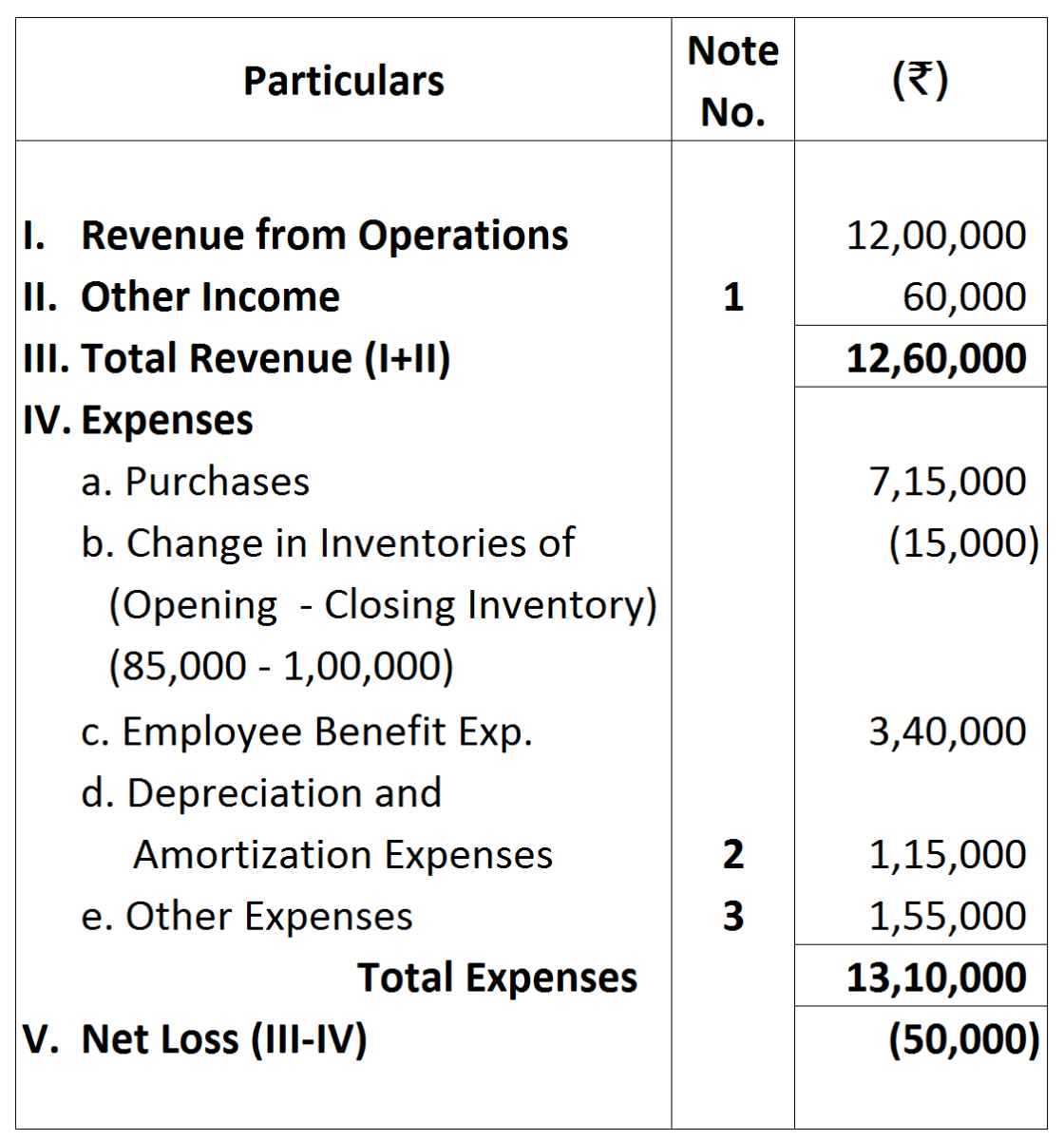
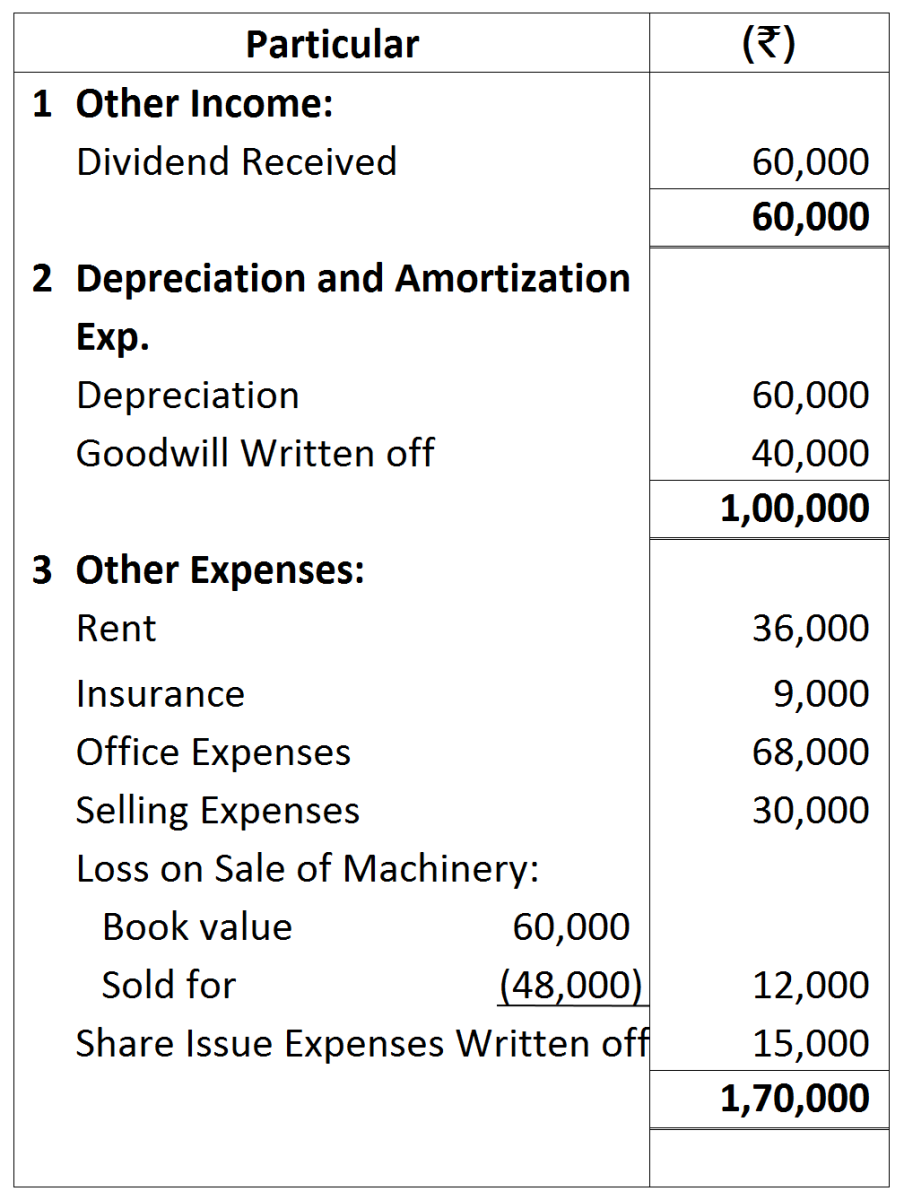
From the following Statement of Profit & Loss for the year ended on 31st March, 2018, calculate the amount of 'Cash generated from operating activities':
Notes:
Additional Information:
Outstanding Wages
40,000
Outstanding Salaries
30,000
Prepaid Insurance
3,000
From the following information, calculate value of Opening Inventory:
 
 
Car Closing Inventory.
=
68,000
Total Sales
=
4,80,000 (including Cash Sales ₹ 1,20,000)
Purchases.
=
3,60,000 (including Credit Purchases ₹ 2,39,200)
Goods are sold at a profit of 25% on cost.
Debt to Equity Ratio of a company is 0.5 : 1. Which of the following suggestions would increase, decrease or not change it:
  1. Issue of Equity Shares.
  2. Cash received from debtors.
  3. Redemption of debentures.
  4. Purchased goods on credit?
Complete the missing (?) figures in the following Extract of Balance Sheet:
State any two items that are included in the following major heads under which liabilities of a company are shown:
  1. Reserves and Surplus.
  2. Long-term Borrowings.
  3. Short-term Borrowings.
  4. Other Current Liabilities.