Question
Discuss the different barrier of innate immunity.

Answer

It is accomplished by providing different types of barriers:
  1. Physical barriers: These barriers do not allow pathogens and foreign agents to enter the body, e.g., skin, mucous membranes of digestive, respiratory and urinogenital tracts trapping microorganisms.
  2. Physiological barriers: Sweat, tears, acid in the stomach and saliva prevent microbial growth.
  3. Cellular barriers: WBCs (polymorphonuclear leukocytes and monocytes, natural killer lymphocytes) and macrophages phagocytose and destroy microbes.
  4. Cytokine barriers: Interferons produced by virus-infected cells protect non-infected cells from further viral infection.

Need a full question paper?

Generate a complete, print-ready paper with questions like this in minutes — across 16+ boards, with answer keys.
Start Generating Free

Similar questions

Answer the following questions:
State and explain the law of dominance as proposed by Mendel.
Draw a neat labelled sketch of Graafian follicle.
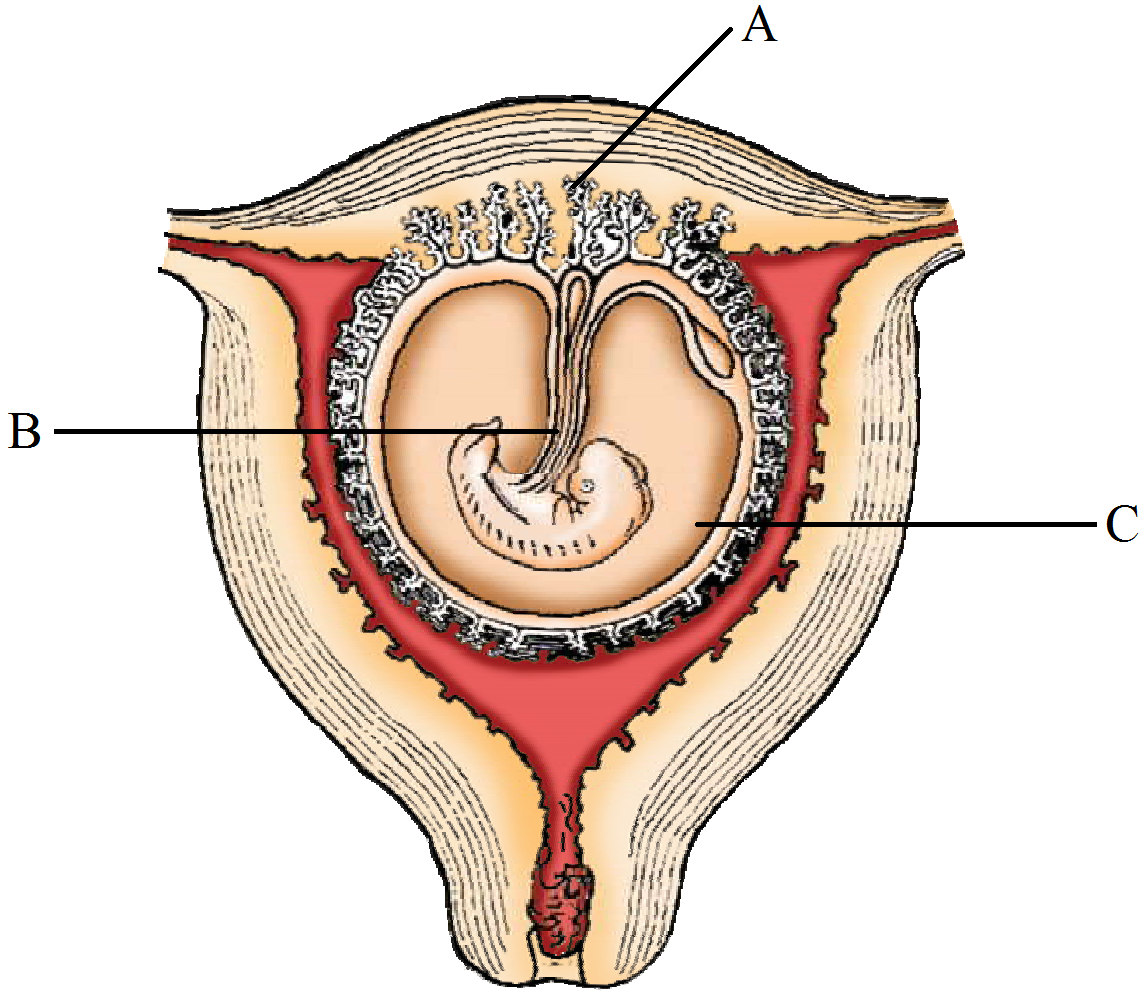
  1. Identify the parts labelled A, B and C in the diagram given.

  1. Draw a labelled diagram of a human blastocyst.
  2. What is parturition and is it induced at the end of pregnancy in a human female?
Write an article on vaccination and immunization.
Why is aerobic degradation more important than anaerobic degradation for the treatment of large volumes of waste waters rich in organic matter. Discuss.
What do you understand by connecting link? Explain with examples.
What will be the P/ R ratio of a climax community and a pioneer community. What explanation could you offer for the changes seen in P/ R ratio of a pioneer community and the climax community.
Answer the following questions:
Explain the events that occur in a graafian follicle at the time of ovulation and thereafter.
Read the following and answer any four questions from (i) to (v) given below:

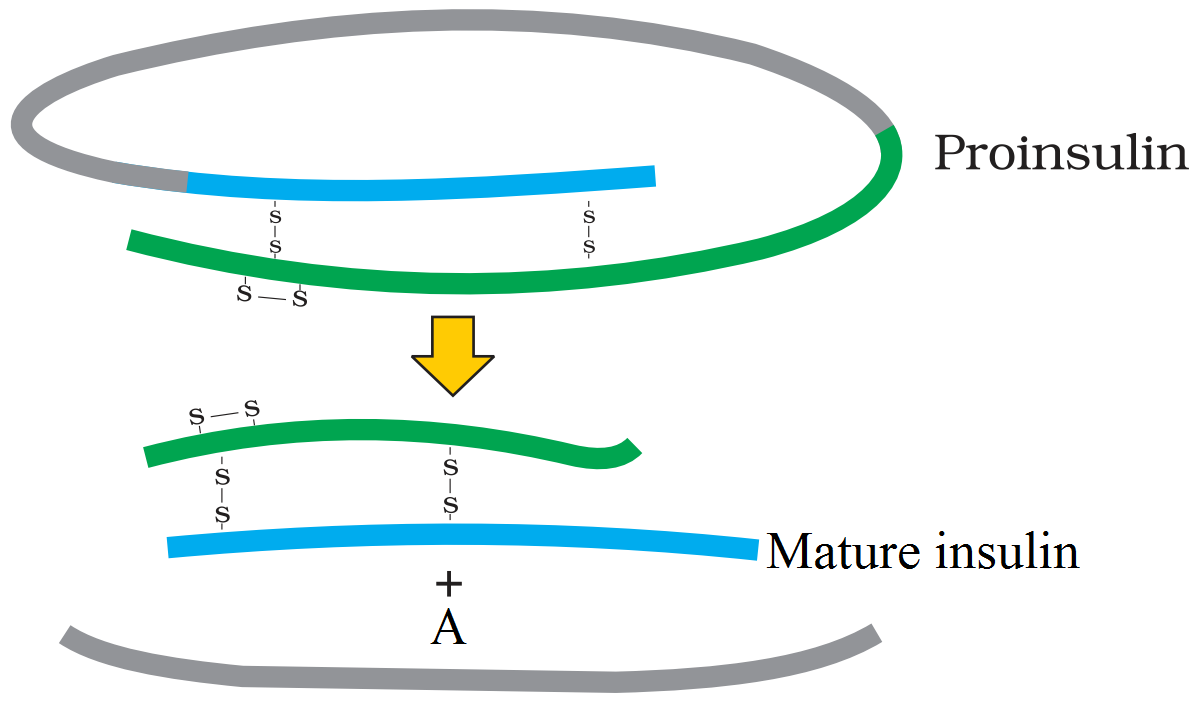
Insulin used to cure diabetes was earlier extracted from pancreas of slaughtered cattle and pigs. Insulin extracted from an animal source, though caused some patients to develop allergy or other types of reactions to the foreign protein. Human insulin consists of two short polypeptide chains : chain A and chain B, that are linked together by disulphide bridges. In mammals including humans, insulin is synthesised as a pro-hormone which contains an extra stretch called the C-peptide. This C peptide is not present in mature insulin and is removed during maturation into insulin.

  1. Identify A in the given figure.

  1. Polypeptide chain A.
  2. Polypeptide chain B.
  3. Polypeptide chain C.
  4. None of these.
  1. The following is a list of some stages involved in producing human insulin from genetically engineered bacteria.
  1. The bacteria are cultured in a fermenter for large scale production.
  2. Recombinant insulin is extracted from the bacterial cells that expresses insulin gene.
  3. The same restriction enzyme is used again to cut the bacterial plasmid for insertion of the human insulin gene.
  4. Bacteria take up the plasmid carrying the insulin gene.
  5. A restriction enzyme is used to cut human DNA to extract the insulin gene.

Select the correct order of these stages.

  1.  1, 5, 3, 4, 2
  2. 2, 4, 3, 5, 1
  3. 4, 5, 3, 2, 1
  4. 5, 3, 4, 1, 2
  1. To insert the insulin gene into bacterial DNA, both the bacterial plasmid and the human chromosome containing the insulin gene are treated with the same restriction enzyme. Using the same restriction enzyme ensures that
  1. DNA ligase is able to join the segments of human and bacterial DNA.
  2. The exact length of nucleotides matching the insulin gene is removed from the plasmid.
  3. Both the bacterial and human DNA will contain sticky ends.
  4. Sticky ends in the cut plasmid and insulin gene are complementary.
  1. Why is the fermentor important for the production of human insulin by transgenic bacteria?
  1. It provides optimal conditions for the transgenic to multiply rapidly.
  2. It facilitates the extraction and purification of insulin from the transgenic bacteria.
  3. It maximise the rate of fermentation of the transgenic bacteria.
  4. It provides the low-oxygen conditions that are important for insulin production.
  1. A bacteriologist carries out his first attempt at engineering E.coli with the gene for human insulin. During the process, he realises that his stock of DNA ligase has depleted but decides to continue anyway. What is a likely consequence of his decision?
  1. Bacteria with the rDNA will not be able to form colonies in a fermenter.
  2. The resulting plasmids are not able to enter the E.coli bacteria even after applying heat shock.
  3. The resulting E.coli bacteria do not contain the human insulin gene.
  4. The bacterial plasmids do not have sticky ends and are unable to accommodate the human gene.
Answer the following questions:
Describe the stages of oogenesis in human females.