Question
Discuss the different types of update operations in relation to the integrity constraints which must be satisfied in a relational database model.

Answer

There are two categories of operations on relational model. Updates and retrieval The three basic types of updates are as given below:
  1. Insert: This operation is performed to add a new tuple in a relation. For example, an attempt to add another record of an account with data values corresponding to Code, Name and its Type to Accounts relation shall be made by performing Insert operation. The insert operation is capable of violating any of the four constraints discussed above.
  2. Delete: This operation is carried out to remove a tuple from a relation. A particular data record from a table can be removed by performing such a operation. The delete operation can violate only referential integrity, if tuple being removed is referenced by foreign key from other tuples in the database.
  3. Modify: The operation aims at causing a change in the values of some attributes in existing tuples. This is useful in modifying existing values of an accounting record in a data table. Usually, this operation does not cause problems provided the modification is directed on neither primary key nor foreign key.

Need a full question paper?

Generate a complete, print-ready paper with questions like this in minutes — across 16+ boards, with answer keys.
Start Generating Free

Similar questions

Shruti maintains her books of account from Incomplete Records. Her books provide the following information:
She withdrew ₹ 500 per month for personal expenses. She sold her Investments of ₹ 16,000 at 5% premium and introduced the amount into business.
You are required to prepare a Statement of Profit or Loss for the year ending 31st March, 2016.
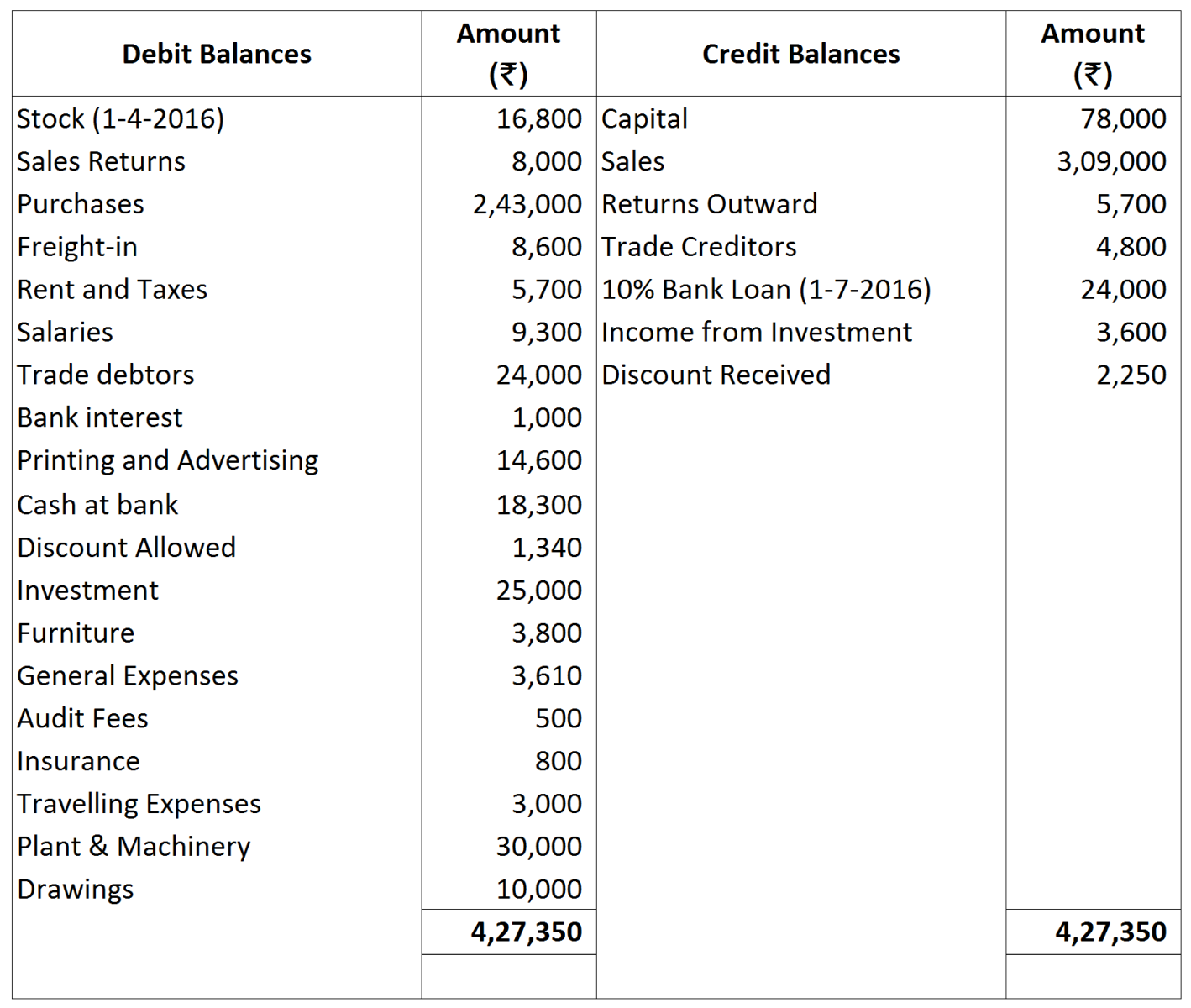
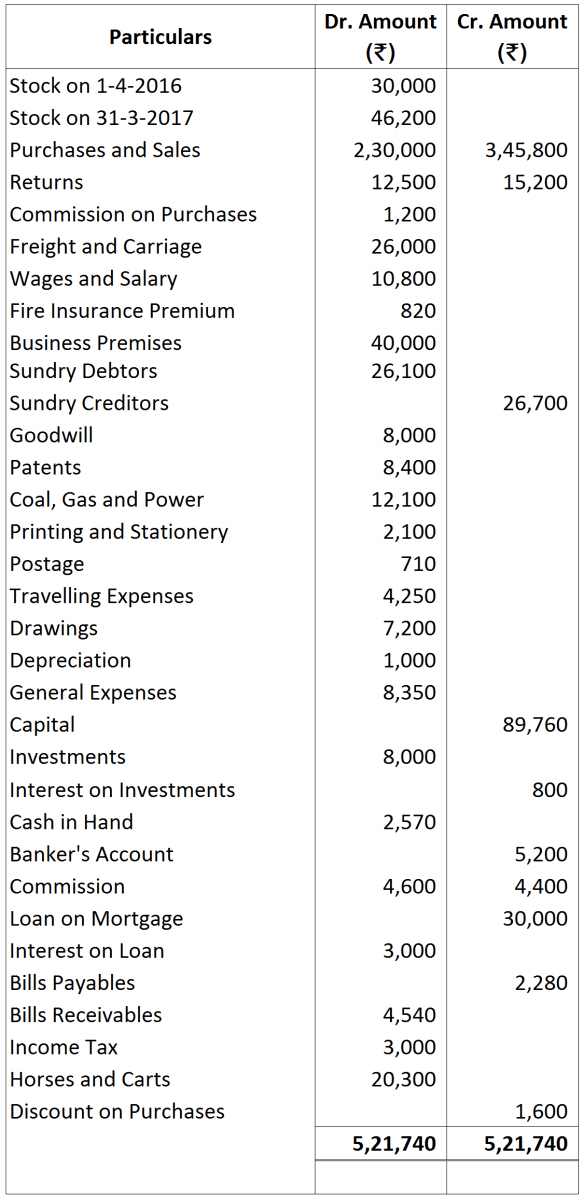
From the following balances of the Ledger of Sh. Akhileshwar Singh, prepare Trading and Profit & Loss Account and Balance Sheet :-
Prepare Bank Reconciliation Statement from the following particulars and show balance as per Cash Book:
  1. Balance as per Pass Book on 31st March, 2019 overdrawn ₹ 10,000.
  2. Cheques drawn in the last week of March, 2019 but not cleared till 3rd April, 2019 ₹ 20,000.
  3. Interest on bank overdraft not entered in the Cash Book ₹ 1,500.
  4. Cheques of ₹ 20,000 deposited in the bank in March, 2019 but not collected and credited till 3rd April, 2019.
  5. ₹ 100 Insurance Premium paid by the bank under a standing order has not been entered in the Cash Book.
  6. A draft of ₹ 10,000 favouring Atul & Co. was issued by the bank charging commission of ₹ 200. However, in the Cash Book entry was passed by ₹ 10,000.
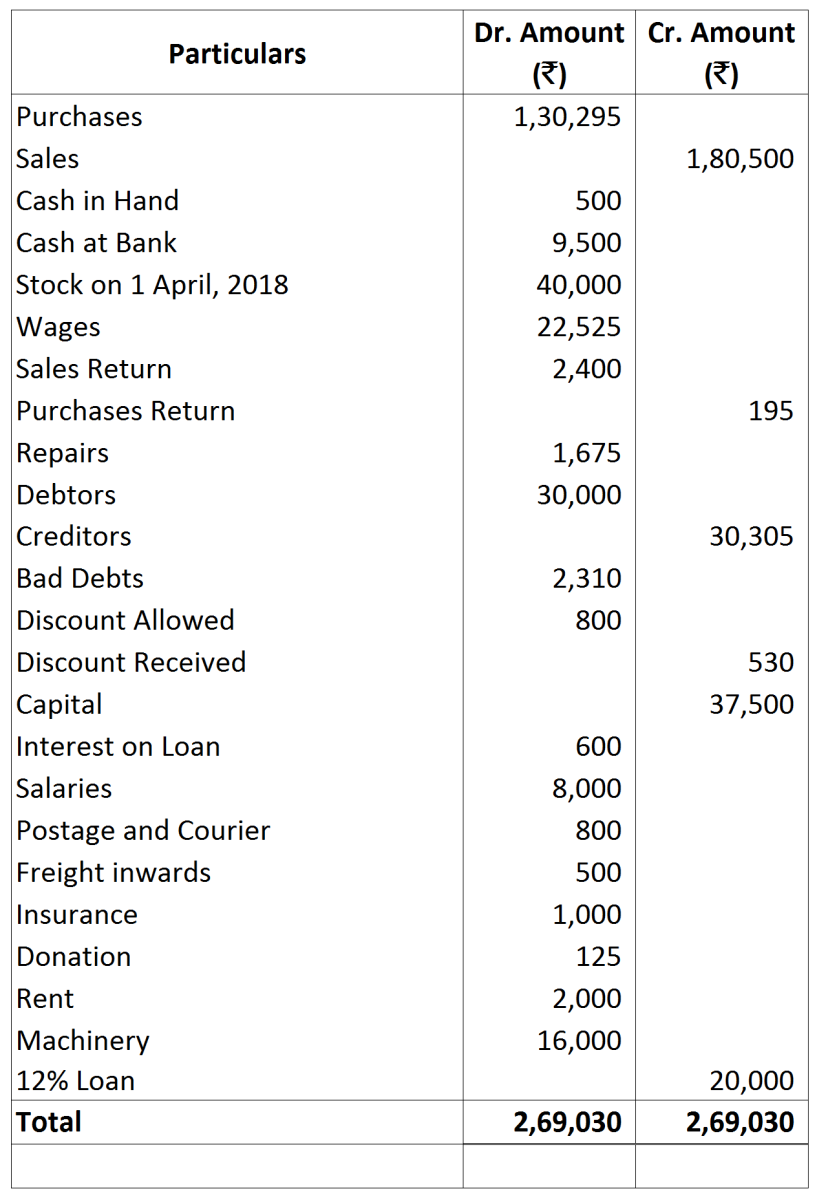
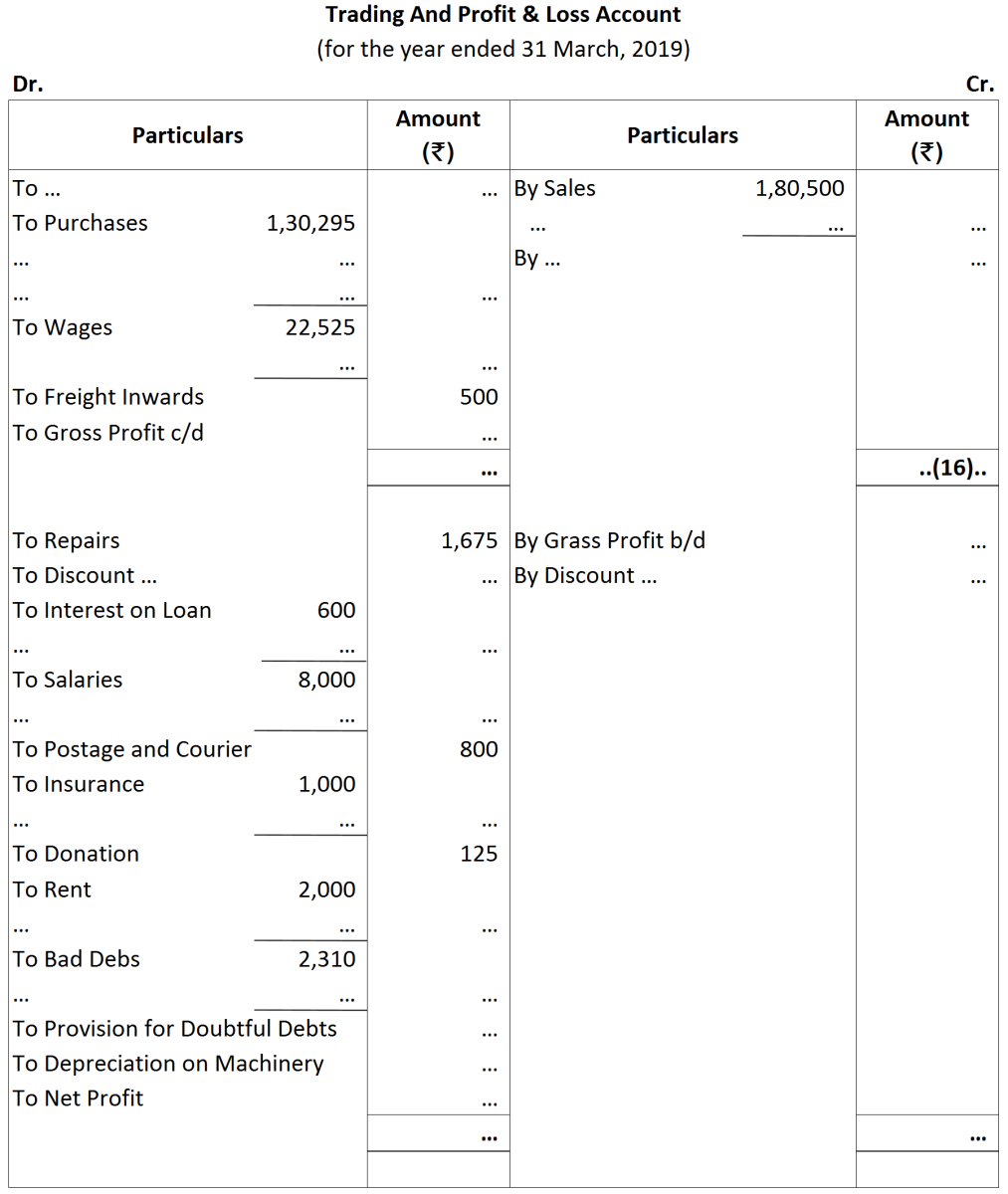
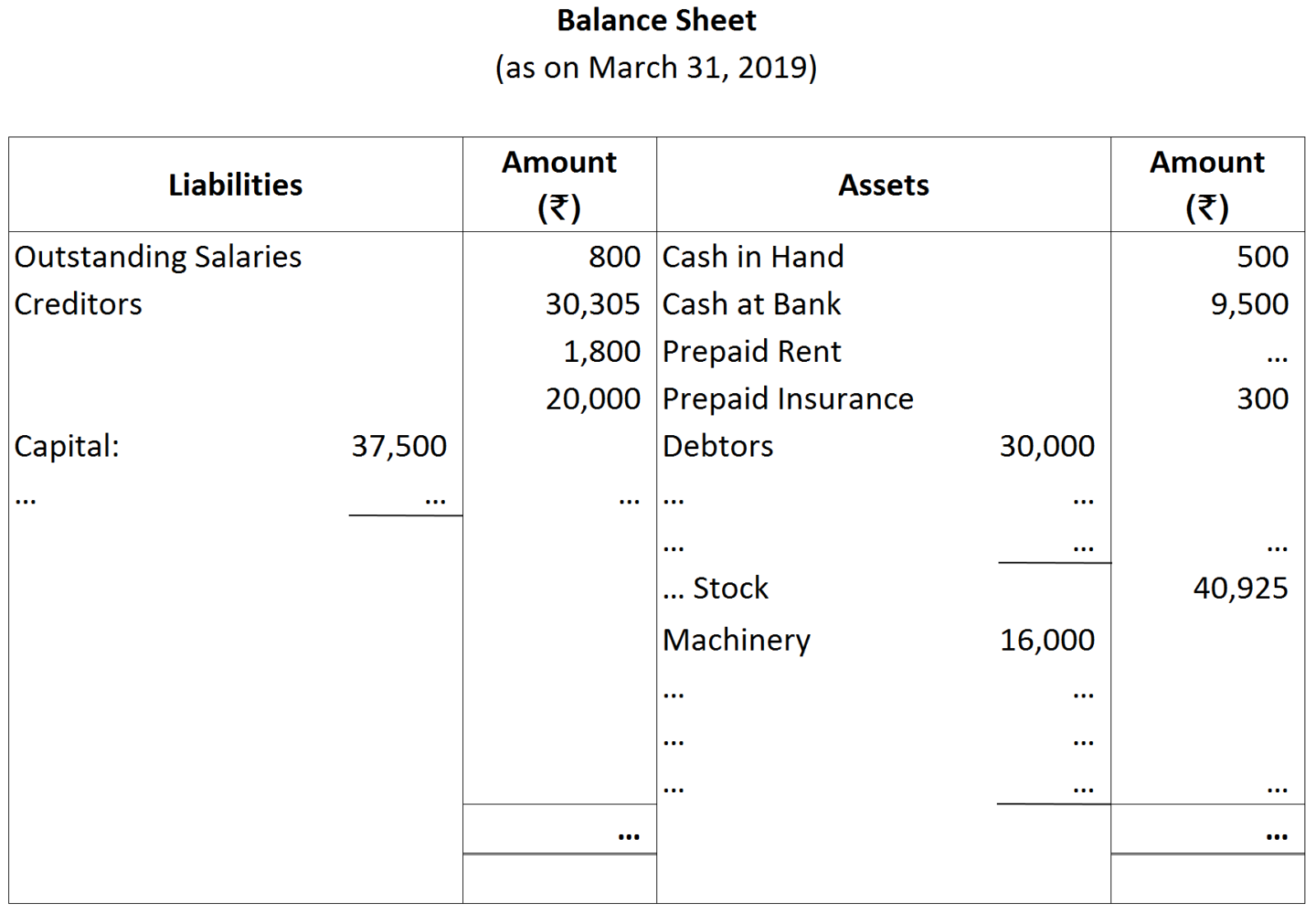
From the following Trial Balance of Mr. Ramesh, you are required to complete the missing figures of Trading Account, Profit and Loss Account and Balance Sheet for the year ending 31st March, 2019:
Adjustments:
  1. Amount of Purchases includes a machine purchased on 1st October, 2018 for ₹ 4,000 and wages include ₹ 2,000 paid for its installation.
  2. Provide for depreciation on Machinery @ 10%.
  3. Stock on 31st March, 2019 was worth ₹ 40,925.
  4. Salaries unpaid ₹ 800 and rent is paid up to 30th June, 2019.
  5. Write off further bad debte ₹ 400 and create a provision of 5% debtors for doubtful debts.
  6. Prepaid insurance ₹ 300.

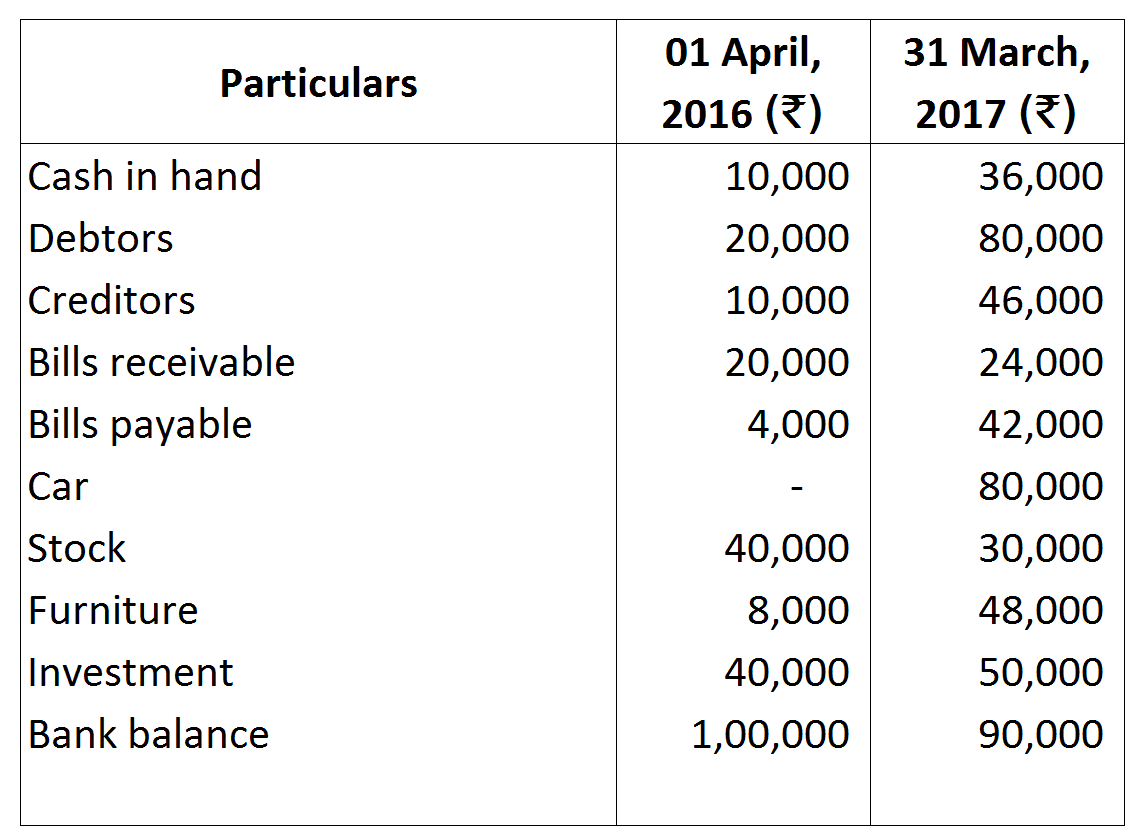
Krishna Kulkarni has not kept proper books of accounts prepare the statement of profit or loss for the year ending March 31, 2016 from the following information:
The following adjustments were made:
  1. Krishna withdrew cash 5,000 per month for private use.
  2. Depreciation @ 5% on car and furniture @10%.
  3. Outstanding Rent 6,000.
  4. Fresh Capital introduced during the year 30,000.
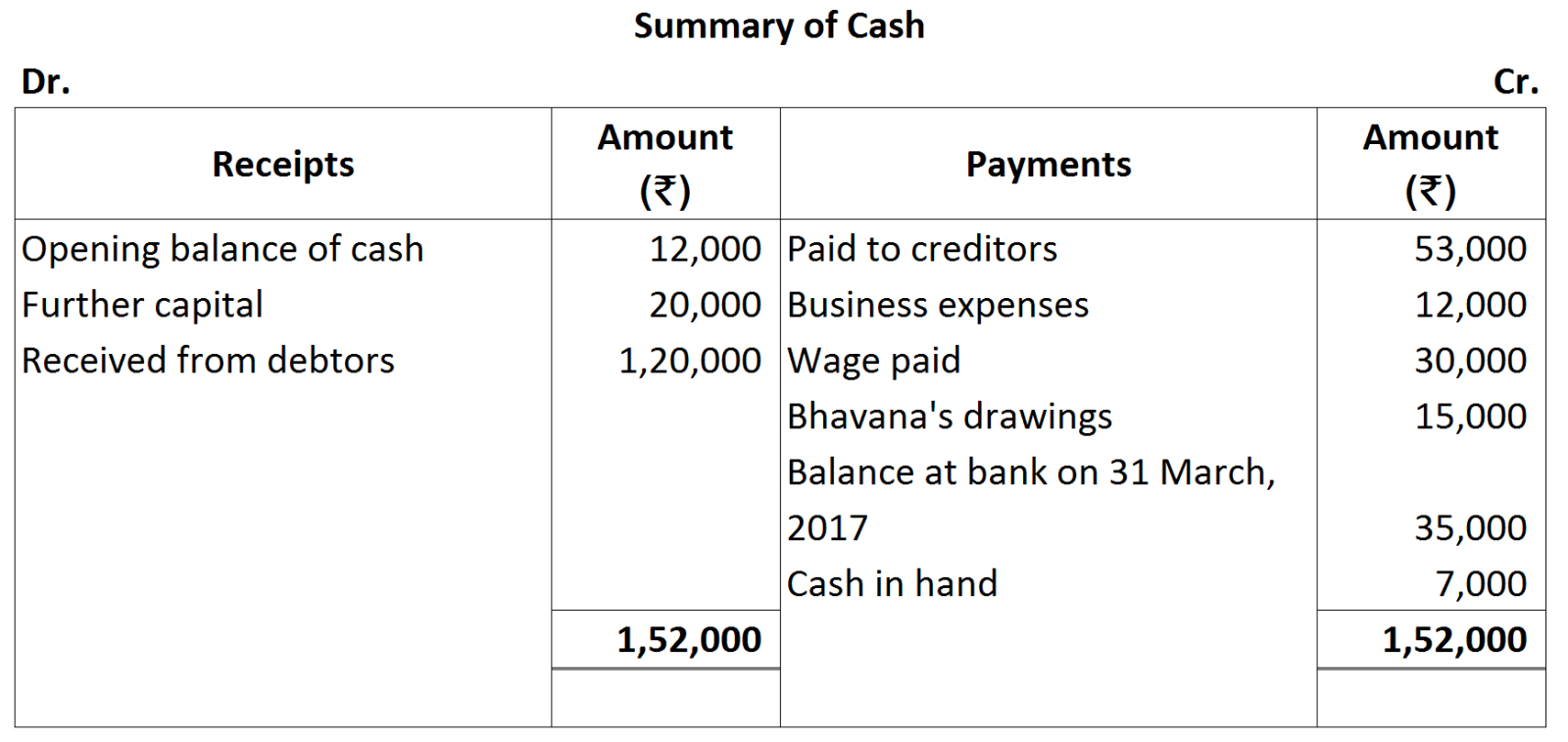
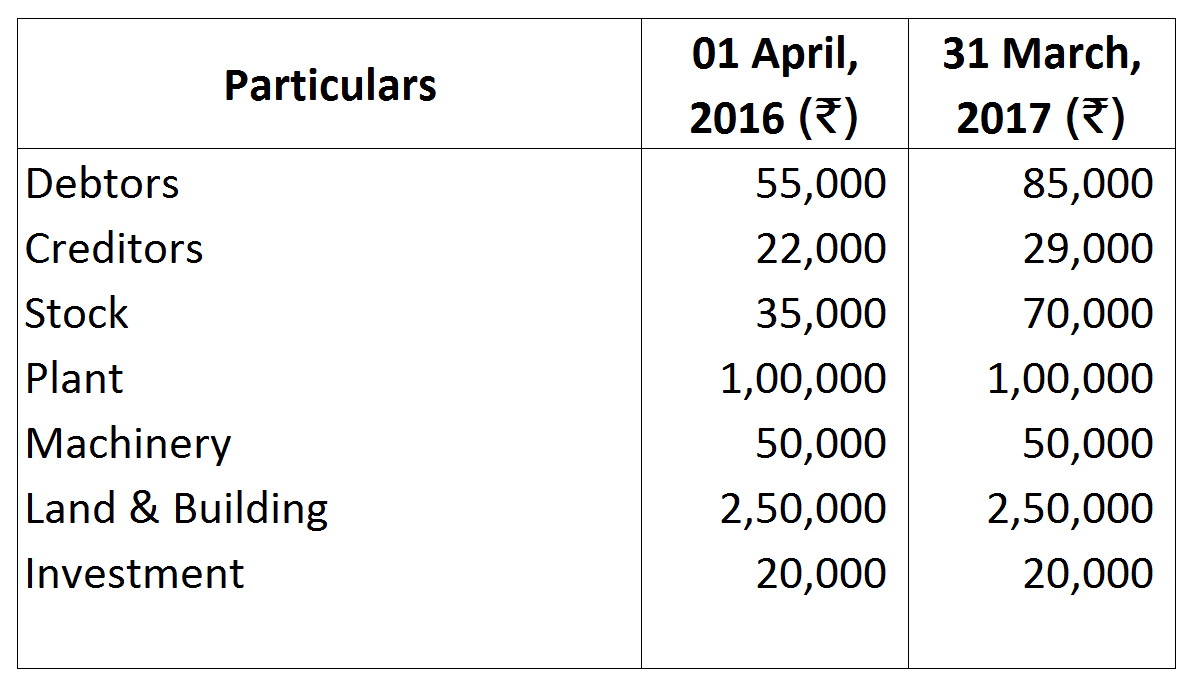
Mrs. Bhavana keeps his books by Single Entry System. You’re required to prepare final accounts of her business for the year ended March 31, 2017. Her records relating to cash receipts and cash payments for the above period showed the following particulars:

The following information is also available:

All her sales and purchases were on credit. Provide depreciation on plant and building by 10% and machinery by 5%, make a provision for bad debts by 5%.
From the following information prepare financial Statements of M/s Raj & Bros, for the year ending March 31, 2017.

Additional Information:
  1. Depreciation on Plant and Machinery @ 10% p.a., a Machine has been purchased on July 01, 2016 for ₹ 12,000.
  2. The manager is entitled to a commission of 10% of the net profit before charging such commission.
  3. Closing stock in trade is valued at ₹ 6,000 (cost), ₹ 6,200 (Market Price).
  4. Rent outstanding ₹ 5,000.
On 1st January, 2019, A drew a bill on B for ₹ 10,000 payable after 3 months. B accepted the bill and returned it to A. After 10 days, A endorsed the bill to his creditor C. On the due date, the bill was dishonoured and C paid ₹ 50 as noting charges.
Record the transactions in the books of A, B and C.
A Petty Cashier in a firm received ​₹ 15,000 as the petty cash imprest on 4th June, 2018. During the week, his expenses were as follows:
2018  
June 4 Conveyance charges for Manager's trip to the city 500
June 4 Wages to casual labourers 1,500
June 5 Bus fare to workmen sent to customer's premises 200
June 5 Stationery purchased for ₹ 1,000 plus CGST and SGST @ 6% each  
June 6 Sent documents to Head Office by registered post 400
June 6 Postage stamps purchased 1,000
June 6 Revenue stamps for payment of wages 500
June 7 Repair of printer 400
June 7 Paid electricity bill 1,700
June 8 Wages paid to coolies for shifting furniture, etc. 400
June 8 Taxi fare to Assistant Manager 500
June 8 Letters by registered post sent to different suppliers 1,000
June 8 Locks purchased for ₹ 800 plus CGST and SGST @ 6% each  
June 8 Stationery purchased for ₹ 400 plus CGST and SGST @ 6% each  
June 8 Refreshments to customers
200
Write up the Analytical Petty Cash Book and draft the necessary Journal entries for the payments made.
What do you mean by programmed or casual reports?