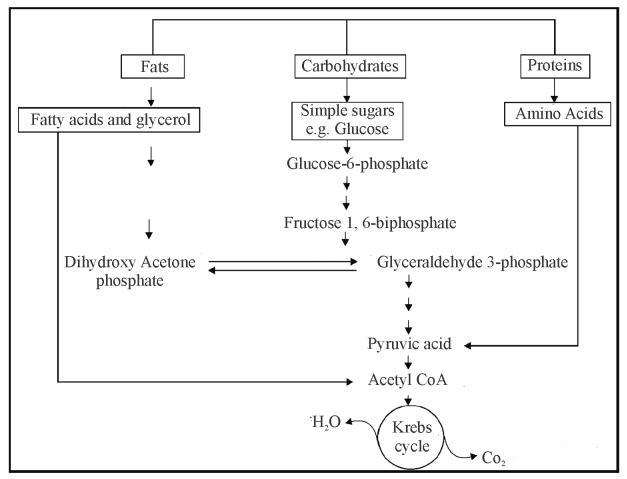
Glucose is a suitable substrate for respiration. All carbohydrates are first converted into glucose before they are used for respiration. Apart from carbohydrates, other substances like fat and protein are also used. Fats would need to be broken down into glycerol and fatty acids first. If fatty acids were to be respired they would first be degraded to acetyle CoA and enters the Krebs cycle. Glycerol would enter the pathway after being converted into phosphoglyceraldehyde (PGAL). The protein would be degraded by proteases and the individual amino acids (after deamination) and enters the respiratory pathway.
When fatty acids are used as substrate, they get disintegrated into acetyl CoA before being used in the respiratory tract. When the organism needs to synthesise fatty acids, acetyl CoA could be withdrawn from the respiratory pathway. Hence, the respiratory pathway is used both during breakdown and synthesis of fatty acids. Similarly, it also happens during breakdown and synthesis of proteins. Breaking down process within the living organisms is catabolism, and synthesis is anabolism. Therefore, respiratory pathway is called
amphibolic pathway.