CBSE BoardEnglish MediumSTD 12 CommercePhysical EducationKinesiology, Biomechanics and Sports5 Marks
Question
Discuss the various types of movements in detail.
✓
Answer
There are various types of movements in joints which may be divided into four major kinds, i.e., gliding and angular movements, circumduction and rotation and a few other movements.
Gliding Movement: Gliding movement is the simplest kind of motion that can take place in a joint, one surface gliding or moving over another without any angular or rotatory movement. Though it is very common to all movable joints, but in most of the articulations of the carpus and tarsus, it is the only motion permitted.
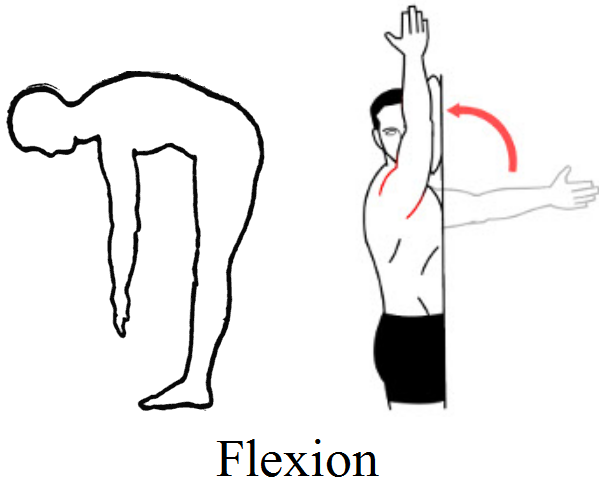
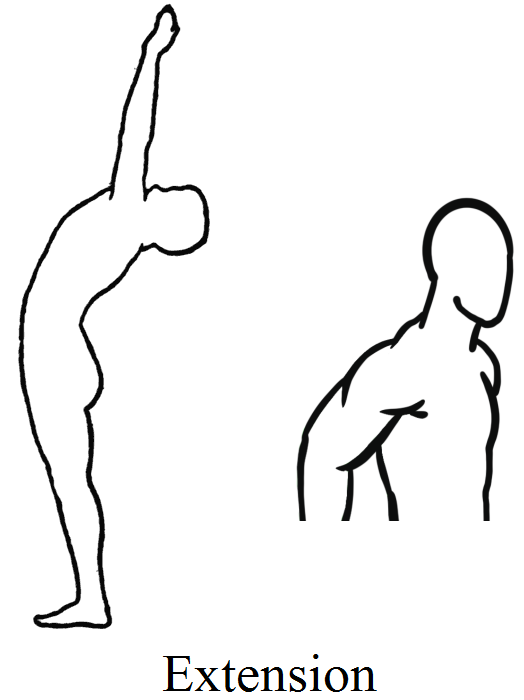
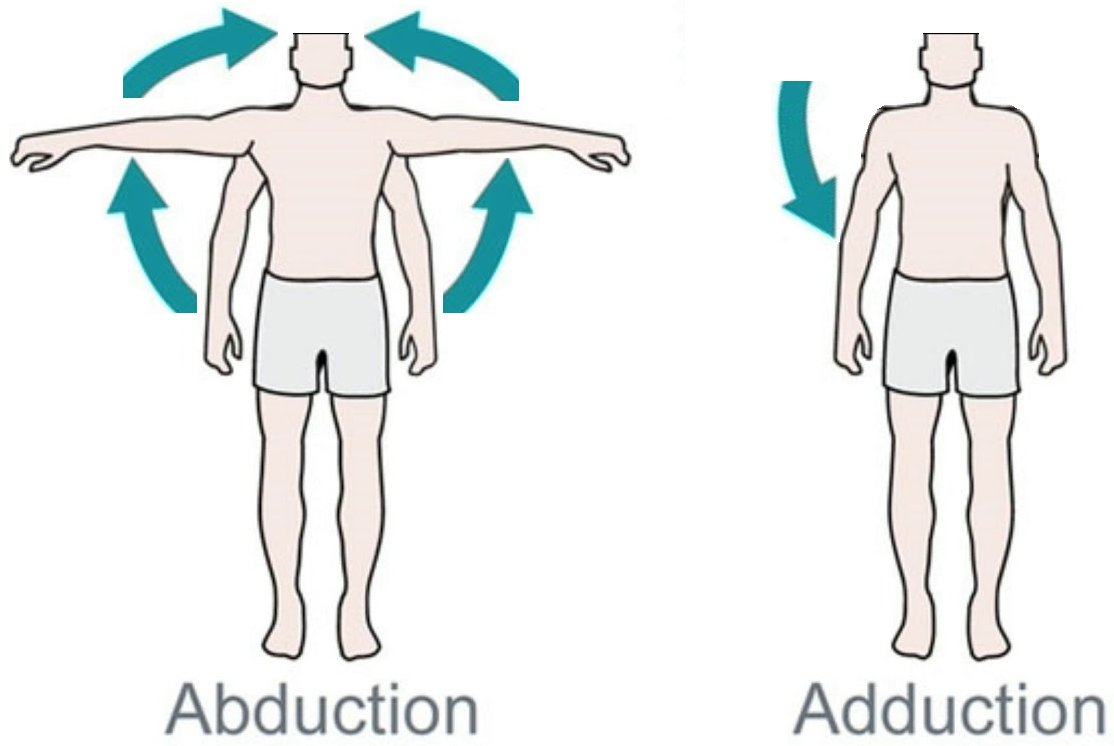
Angular Movement: Angular movement occurs only between the long bones. By angular movement, the angle between the two bones is increased or decreased. It may take place forward, backward, flexion, extension, adduction and abduction. Adduction and abduction combined with flexion and extension are met within the more movable joints as in the hip and the shoulder. The various movements which fall under angular movement are described below:
Flexion: Bending parts at a joint so that the angle between them decreases and parts come closer together (bending the lower limb at the knee).
Extension: Straightening parts at a joint so that the angle between them increases and the parts move farther apart (straightening the lower limb at the knee).
Abduction: Moving a part away from the midline (lifting the upper limb horizontally to form a right angle with the side of the body).
Adduction: Moving a part toward the midline (returning the upper limb from the horizontal position to the side of the body).
Circumduction: Circumduction is that movement which takes place between the head of a bone and its articular cavity. This kind of motion is best seen in the shoulder and hip joints. In fact, it is a compound circular movement which involves flexion, extension, adduction and abduction. In circumduction, a part moves in such a way that its end follows a circular path (moving a finger in a circular motion without moving the hand.)
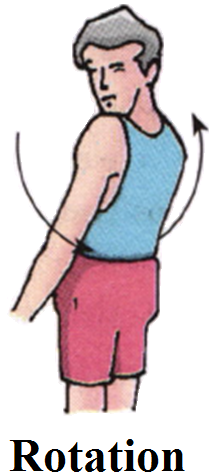
Rotation: Rotation is a form of movement in which a bone moves around a central axis without undergoing any displacement from this axis. Moving a part around an axis is called rotation e.9., twisting the head from side to side.
Other Movements:
Hyperextension: Excess extension of the parts at a joint, beyond the anatomical position (bending the head back beyond the upright position).
Dorsiflexion: Bending the foot at the ankle toward the chin (bending the foot upward).
Plantar flexion: Bending the foot at the ankle toward the sole (bending the foot downward).
Inversion: Turning the foot so the sole faces medially.
Protraction: Moving a part forward (thrusting the chin forward).
Retraction: Moving a part backward (pulling the chin backward).
Elevation: Raising a part (shrugging the shoulders).
Depression: Lowering a part (drooping the shoulders):
Supination: Turning the hand so the palm is upward or facing anteriorly (in anatomical position).
Pronation: Turning the hand so the palm is downward or facing posteriorly (in anatomical position).
Eversion: Turning the foot so the sole faces laterally.
Need a full question paper?
Generate a complete, print-ready paper with questions like this in minutes — across 16+ boards, with answer keys.