Question
Distinguish between: Asexual Reproduction – Sexual Reproduction
| Asexual Reproduction | Sexual Reproduction |
| 1. Fusion of sex cells or two compatible gametes is not involved. | 1. Fusion of sex cells or two compatible gametes is involved. |
| 2. It results in production of genetically identical progeny. | 2. It results in production of genetically dissimilar offspring. |
| 3. Offspring inherit genes of the parent. | 3. Offspring have combination genes from both the parents through their gametes. |
| 4. Variations are not observed in progeny. | 4. Variations due to recombination are observed which are useful for survival and evolution of species. |
Generate a complete, print-ready paper with questions like this in minutes — across 16+ boards, with answer keys.
|
|
Wetland
|
Location
|
|
(a)
|
Harike
|
Punjab
|
|
(b)
|
Chandra Tai
|
H.P.
|
|
(c)
|
Bhoj
|
M.P.
|
|
(d)
|
Ashtamudi
|
Odisha
|
| (1) Column A (Asexual) | Column B (Examples) |
| (1) Spore formation | (a) Spirogyra |
| (2) Conidia formation | (b) Yeast |
| (3) Fragmentation | (c) Chlamydomonas |
| (4) Budding | (d) Penicillium |
| Column A | Column B |
| (1) Neurons | (a) Earthworm |
| (2) Ladder type | (b) Hydra |
| (3) Ganglion | (c) Flatworm |
| (4) Nerve net | (d) Human |
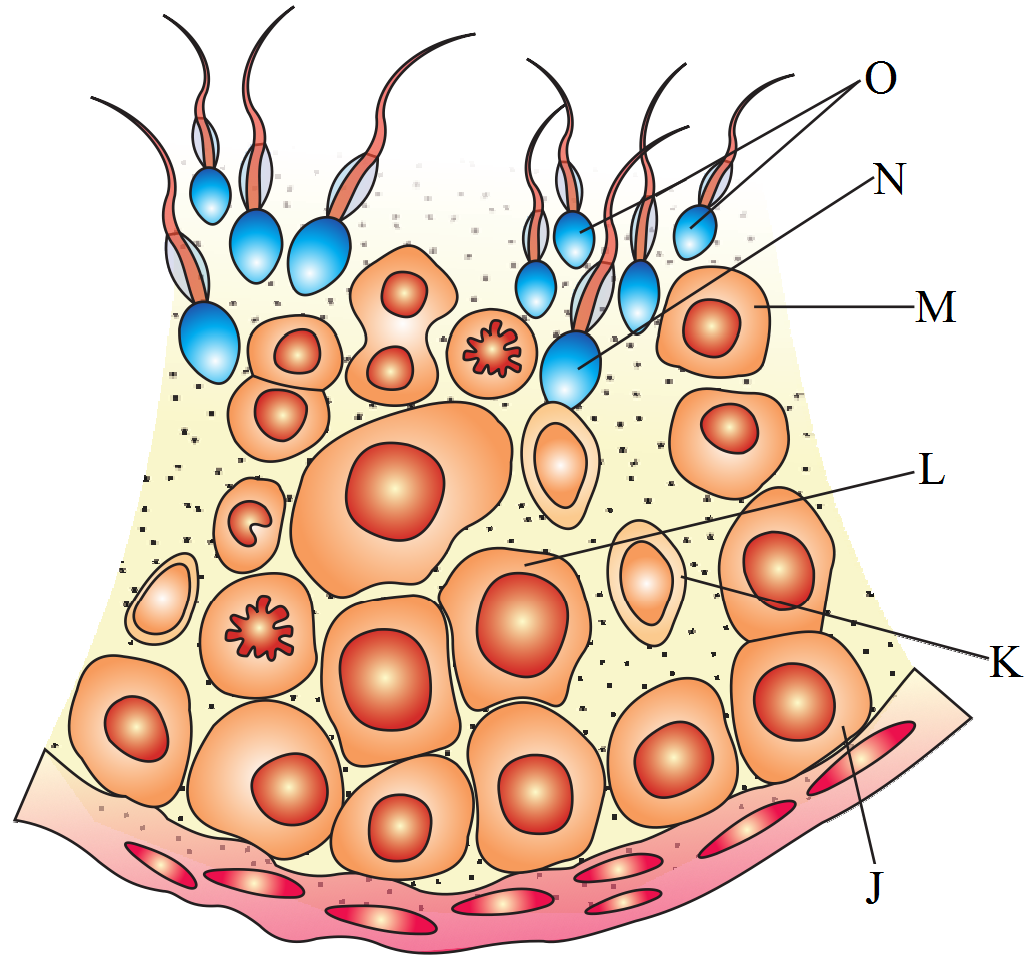
| Column A | Column B |
| Q.1. Neurons | (a) Earthworm |
| Q.2. Ladder type | (b) Hydra |
| Q.3. Ganglion | (c) Flatworm |
| Q.4. Nerve net | (d) Human |
| Column A (Part of Anatropous ovule) | Column B (Terminology) |
| (1) Opening at the apex | (a) Hilum |
| (2) Stalk of the ovule | (b) Integument |
| (3) Protective covering | (c) Micropyle |
| (4) Place of attachment of body and stalk | (d) Funiculus |